
March 25, 2026

Recently, public transit has been in the hot seat in nearly every major city across the country. During the pandemic, public transit received a significant increase in federal funding to keep services running amidst reduced ridership. Five years later, though, this funding is drying up. Additionally, the Infrastructure Investment and Jobs Act, which authorized $108 billion for investment in federal public transportation projects, is set to expire in September of 2026, and the future of the programs funded by this act is dependent on annual extensions. Many agencies transitioned to being fare-free when they had the extra support during the pandemic but are now struggling to sustain this choice. A combination of factors, including this short-term reliance on federal funding, increases in operating costs, and inflation, are leading transit agencies to propose or implement significant cuts to service, from Oregon’s TriMet to Pennsylvania’s SEPTA, as well as many smaller agencies nationwide.
Complicating these financial challenges, travel patterns have changed significantly over the course of the 2020s. Many workplaces retained remote and hybrid work options, spreading out what were distinct morning and evening commuter rushes throughout the day. And in many places, total levels of ridership are still recovering—as of May 2025, national ridership was 85% of levels from the same period in 2019. There is absolutely still demand for transit, but it is increasingly dynamic and often integrated with other modes, like walking, biking, and using rideshare. This shift can call for a revamp of routes and schedules to better fit when and where people are traveling today.
The tricky position so many agencies are in right now has spurred exciting conversations about where the future of transit is headed. At Kittelson, we’ve been doing transit service planning and long-range planning for decades, but in the past few years, we’ve seen a large uptick in transit operations and governance work. While every agency is dealing with different circumstances, one thing remains consistent: practitioners are reevaluating what it takes for an agency to deliver a successful transit service today. New directions, like regionally coordinating transit providers and reorganizing governance structures, have the potential to not only patch an immediate problem but to keep agencies strong and stable through future changes. Let’s dig into what these reorganizational strategies are and how they can make transit more effective, efficient, and expansive.
Regional Coordination: A Way Forward
When visiting any variety of places across the United States, one might notice multiple different transit agencies providing service to the same—or very nearby—places. Over time, more transit authorities have cropped up to serve the needs of growing regions, leading to many riders navigating a plethora of different routes, schedules, payment options, and communication platforms even as they travel fairly short distances. While fare integration across agencies is becoming easier and more popular, it’s not always enough. Take the San Francisco Bay Area, for example, where 27 official transit agencies operate (with even more different brands and operators) as a result of geographic separation and an abundance of state funding for county agencies in the 1970s.
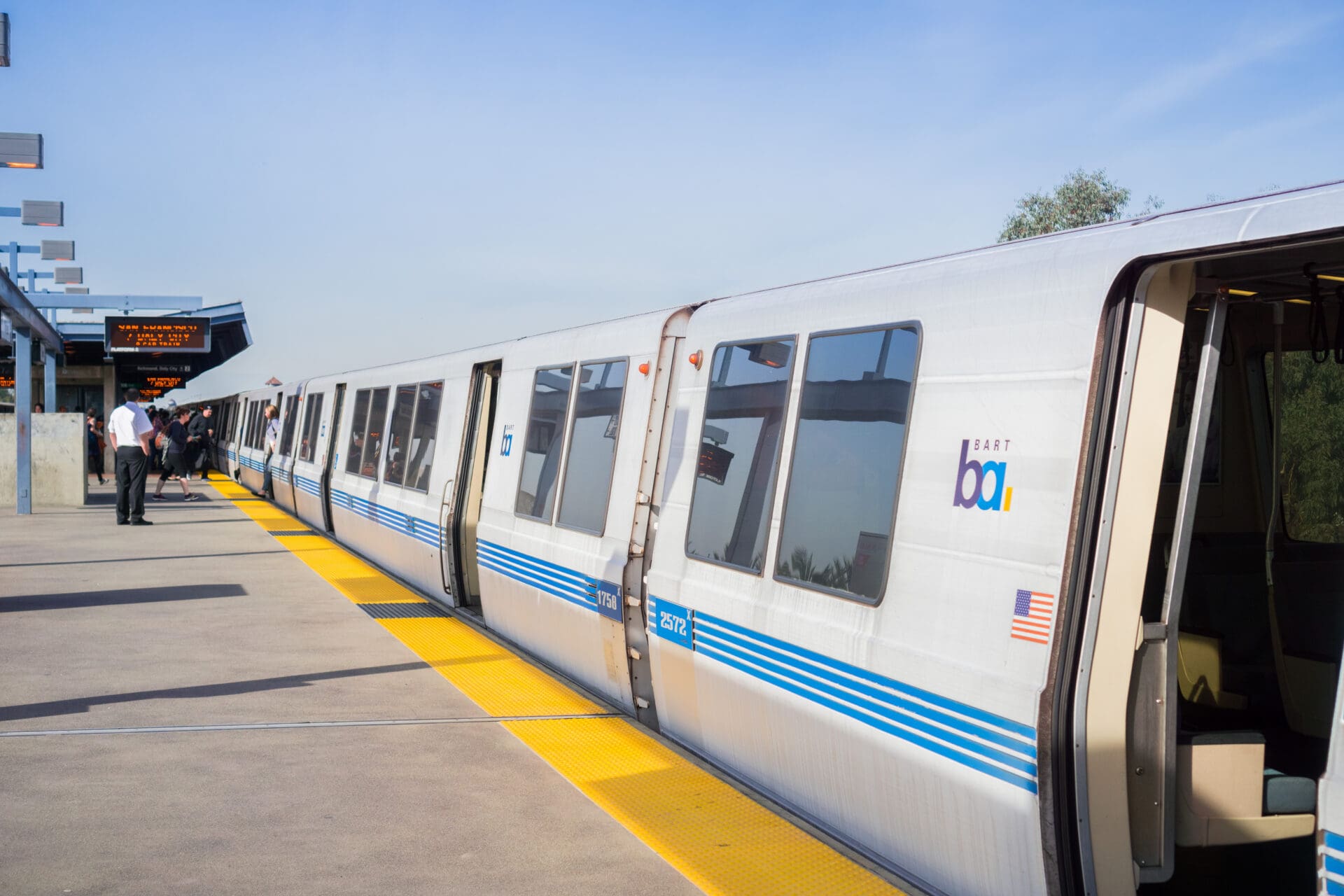
A Bay Area Rapid Transit (BART) train stops at Oakland’s Coliseum station. The seventh-largest heavy rail rapid transit system in the U.S. by ridership, BART is still just one of 27 official transit providers in the San Francisco Bay Area. Source: Adobe Stock
While the region’s Metropolitan Transportation Commission (MTC) oversees all agencies, the ENO Center for Transportation argues that the fragmentation makes it harder for the commission to make decisions through a regional lens, rather than a local one. The nonprofit Seamless Bay Area formed in 2018 to advocate for a more connected public transit system under a coordinated, regional vision that can better cater to the needs of contemporary riders.
“Transit riders now have much higher expectations about their trips than they did in the 20th century,” the ENO Center writes, citing the rise of convenient rideshare apps as one of the reasons for higher transit expectations. “Riders do not want to look at multiple maps and schedules to obtain that same information and prefer to use just one app to pay their fare. Higher expectations from both riders and elected officials have necessitated closer cooperation between transit agencies in every region.”
Understandably, rider expectations evolve to keep pace with advances in technology and new opportunities that become available to transit providers. A seamless, coordinated, and convenient transit experience is more possible than ever, and coordinating organization can be the bridge to get there.
Fragmented transit organization doesn’t just add unnecessary complexity for riders, but for employees too. When Kittelson helped out with a governance coordination project in one county, we learned that many people who sit on the county, town, and tribal leadership boards manage transportation issues—but only as a small slice of their packed workloads. If transportation management were made into one dedicated position, it would move 10% of 10 people’s jobs into 100% of one. Such consolidation would help keep staff from getting stretched too thin, and the county would benefit from a specialized, entirely transit-focused staff member.
Undertaking this consolidation of governance can be intimidating, but cities like Chicago are already showing its feasibility in action. In 2024, HB5823 proposed the consolidation of the area’s three transit providers, Chicago Transit Authority (CTA), Metra, and Pace Suburban Bus, into the Metropolitan Mobility Authority, as part of the broader Clean and Equitable Transportation Act. The MMA will be governed by a board of 19 voting directors and six non-voting directors. The new governance structure will still represent the same six counties, but instead of limiting eligibility based on geography, directors can be selected from anywhere in the region. It also removes current supermajority voting requirements to “encourage Directors to work across geographic boundaries to build working majorities,” as a summary of the MMA Act states. The new regional entity is taking over responsibilities across a four-year transitional period, which is hoped to ultimately result in more unified, cost-effective, and representative service.

A CTA train line and buses pass through busy downtown Chicago. CTA is one of Chicago’s three transit providers that will be merging into the new Metropolitan Mobility Authority. Source: Adobe Stock
While the creation of a regional authority isn’t practical or beneficial for every region, it can be a gamechanger for areas where multiple agencies offer redundant or overlapping services. This isn’t just prevalent in metropolitan places like the Bay Area; many small towns and rural locales see the same issues playing out in their transit systems. The creation of regional governance can help reduce administration costs that bog down agencies. It can also better serve a riding population that is arguably more mobile than ever. Many people don’t work in the same neighborhood or even city as they live, particularly in metro areas with high housing costs.
Further bolstering regional accessibility, agencies have been coordinating with “microtransit,” partnering with rideshare providers to offer discounted rides. These on-demand rides help close first-/last-mile gaps in transit networks, helping people access transit routes that are too far away to comfortably walk to. Agencies are taking a range of approaches to making these rides affordable and convenient. In Georgia, the Metropolitan Atlanta Rapid Transit Authority (MARTA) links its app to the Uber app to allow for easy ride booking, which is further encouraged by promotional discounts. In Texas, the Denton County Transit Authority (DCTA) uses GoZone, where riders can use DCTA passes to book rides to and from any designated zone in the region, reducing a ride that would traditionally be tens of dollars to just a few.
Whether through the consolidation of public agencies or public–private partnerships, regionally coordinated transit makes it easier for people to move across larger distances to access employment, social needs, healthcare, and recreation. A system that supports broader connectivity will ideally boost ridership, increase accessibility, and reach a more diverse range of people.
Simpler Structures, More Progress
Regional coordination reflects a broader goal guiding many agencies: simplifying structures and processes. Progress can easily get muddled when filtered through many departments, hierarchies, and decision-making processes. Generally, the more complex the pathways through governance are, the more difficult it is to get things done. But the best way to simplify these pathways varies across agencies and regions. The National Association of City Transportation Officials published Structured for Success, a guide to transportation governance, in 2022. It outlines three different categories of governance structures: transportation-focused, transportation-inclusive, and transportation-diffuse. Although this guide focuses primarily on city transportation departments, its principles still offer helpful takeaways for transit agencies.
Transportation-focused structures have a dedicated transportation department or group that reports to transportation-specific officials. These are often found in larger cities, where there are enough resources and staff to make such organizational separations feasible. Transportation-inclusive structures house transportation within a larger department, such as public works. Within these structures, internal coordination and project delivery can often be smoother, but without sufficient staff or leadership distinctions, transportation progress can stagnate. In transportation-diffuse structures, many different groups and staff address transportation issues. While such integration can help reduce silos and bring together multidisciplinary missions, it can also result in a lack of clarity. Similar challenges with leadership and collaboration can be found in transit agencies, whose leadership structures can vary from appointed boards to an authority like a general manager. Beyond this, most public transit agencies are overseen by local or state government, where the structures NACTO identifies are prevalent.
No matter the structure, it’s important to have a “transportation champion,” someone with a direct line to the mayor or governor whose priority is elevating transportation issues to the top of the decision-making chain. Without one, even structures crafted with the best of intentions can see projects fall through the cracks. While transportation-focused structures often lend themselves well to a built-in champion, transportation-inclusive and -diffuse structures have lots of room to dedicate champion roles. Transit agencies benefit from the same kind of champion to raise transit priorities to levels outside the agency, like the governor or state department of transportation.
The Chief Executive of King County Metro, Michelle Allison, shared her governance experience in an American Public Transportation Association conference panel. At the Metro, which is governed by King County commissioners, transit must compete with other County priorities. Transit may not be a top priority in parts of the county without a lot of transit service and instead come second to more pressing issues for a commissioner’s appointed area. Too, because commissioners oversee so many different facets of county governance, they may not have expertise in transit. Allison expressed that transportation-focused governance above her—a transportation champion—would likely ease these challenges that come with advancing transit in her community.
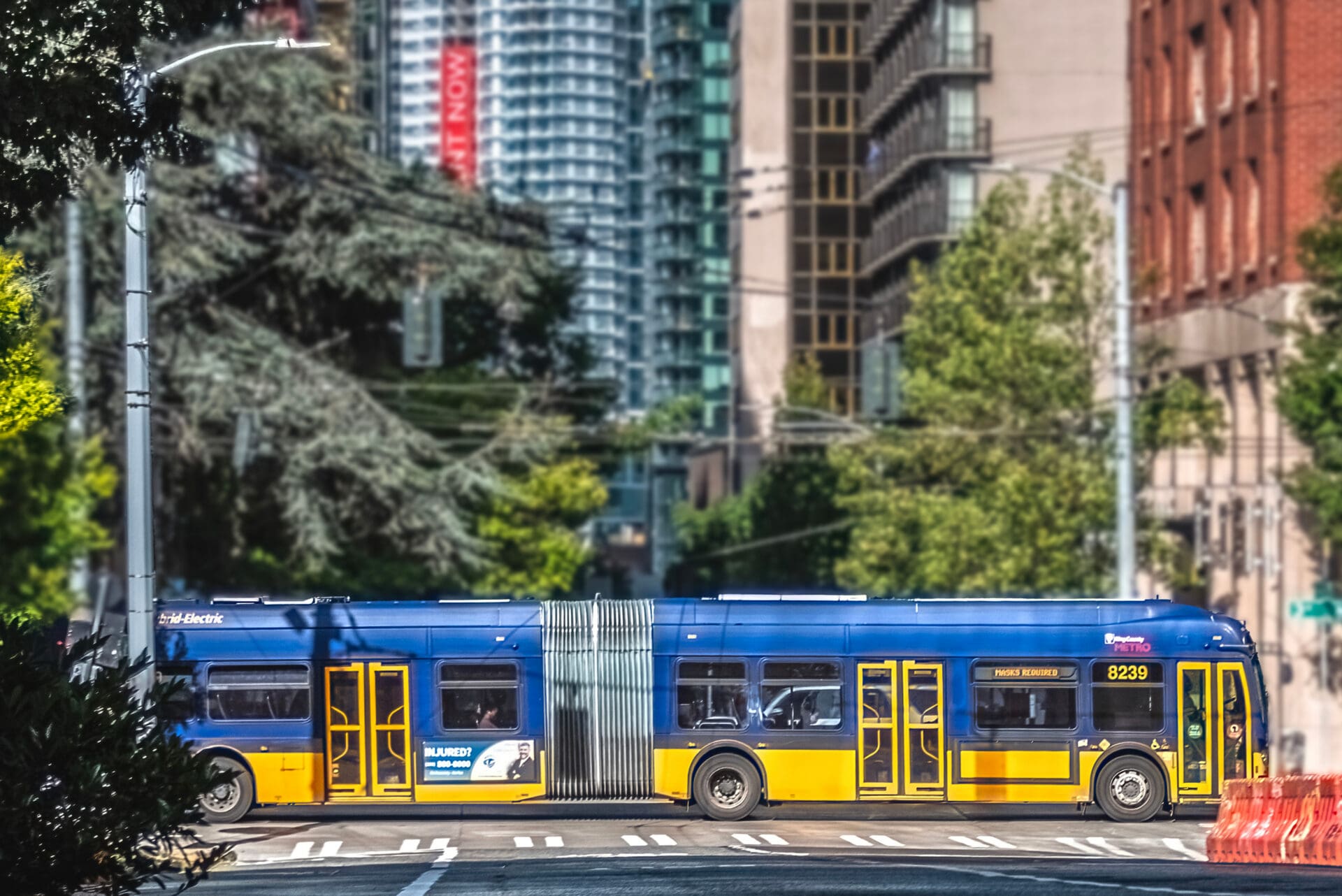
In the Seattle area, the governance structure of King County Metro means that transit often has to compete with other county needs. Such competition can make it more challenging for practitioners to get traction on transit-specific issues and advancements. Source: Adobe Stock
Convoluted governance structures can also obscure accountability for leaders. The TransitCenter explains in their report Who Rules Transit? that when many different jurisdictions appoint board members, it can be difficult for the public to understand who is responsible for agency choices and how to advocate for change using their votes. Having one distant leader in charge can lead to the same issue, like when a state governor appoints a transit agency’s board that serves only one region or major city, not the whole state. Keeping governance connected to the region it serves helps riders make informed political decisions that reflect their priorities and helps agencies respond to what riders need.
Simpler, more clearly organized governance structures can facilitate the efficient realization of opportunities like regional coordination. As Structured for Success describes, disparate transportation governance is often functional for maintaining the status quo—but to make the kind of changes that will strengthen our transit systems, unified, simple, effective governance is essential.
So Where Does This Leave Us?
There is no “one size fits all” solution; rather, each agency must assess its needs and context to find the structure that works for them. For some, this might mean contracting out services like paratransit to a private operator. For others, it might mean absorbing all contracted services to be operated in-house by the agency itself. Contract prices have risen a lot in the last few years—in big cities, this isn’t as much of a problem, because competition can drive down prices. But in smaller areas, it can be more cost-effective in the long run to “self-perform” services, even if it means taking a financial hit in the short term. When making these kinds of big decisions, regionally focused visions and simplified governance structures will help enact change that will best serve riders as soon as possible. In transit planning, identifying a vision and goals that reinforce decision-making is a major step to guide agency change.
And it’s important to remember that transportation is constantly adapting. Public transit today looks vastly different from how it did 50 years ago and will look vastly different still in another 50 years. Agencies are currently exploring innovative practices like “value capture,” or higher property taxes near transit stations to reflect the value added by transit. Many agencies have also piloted autonomous shuttles, which can help close the same gaps in transit networks that microtransit addresses, as well as posing major opportunities for paratransit accessibility.
To maximize the benefits of such changes, cohesive organization is essential. Transit has been put under strain in recent years, but agencies are responding with innovation, creativity, and perseverance. Making fundamental changes to internal structures can redefine the external effects of public transit on our communities. Keep up with your local transit agencies to see how they might be restructuring for a stronger future. Reach out to us is you’re interested in learning more about where transit governance is headed.