
February 25, 2026

Where do we draw the line between engineering resilience and engineering away the natural world? As I stood on an artificial salt marsh in Venice, Italy, this distant philosophical question became a concrete dilemma under my feet.
The engineered salt marsh embodies a paradox. On one hand, it is a testament to humans’ determination to protect Venice’s fragile ecosystem. It restores lost habitats for birds and plant species, and it’s hardier than the natural salt marshes that are eroding from the wakes of passing boats. On the other hand, the engineered salt marsh is a replacement for the natural wonders that once defined the lagoon in which Venice sits—a carefully constructed proxy for what centuries of natural processes created.
My time in Venice revealed a tension that I now realize is embedded in the work we as transportation engineers and planners do. It’s the tension between progress and preservation. Innovation can distance us from the natural world even while it’s successfully solving other problems. Our profession is not just about building new structures and systems, but about choosing which existing parts of the world we allow to endure, change, or disappear. These choices carry significance, and whether we realize it or not, we’re making them every day.
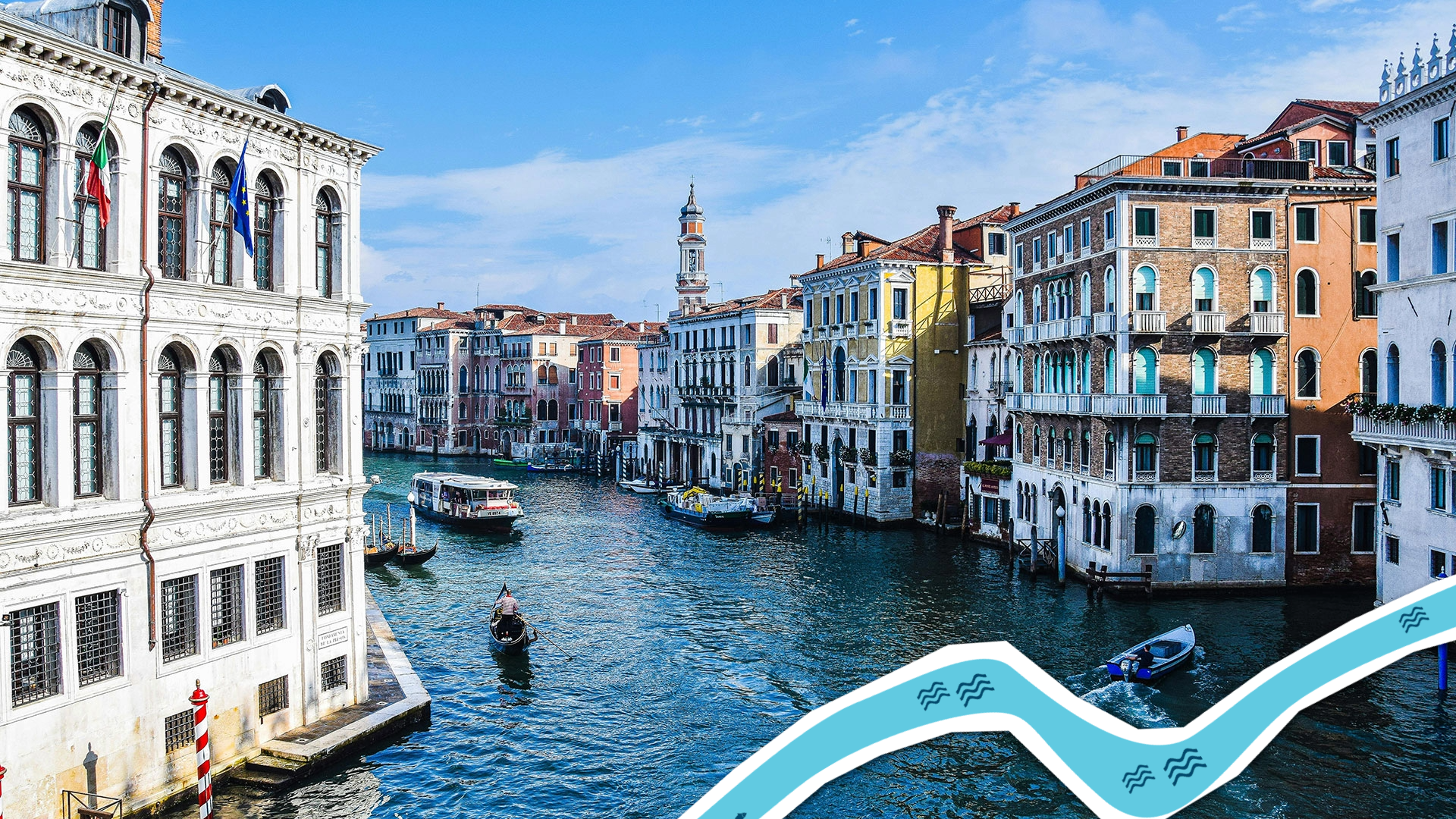
Our profession is not just about building new structures and systems, but about choosing which existing parts of the world we allow to endure, change, or disappear. Photo AXP Photography on Pexels.
Venice Is Disappearing
In Summer 2023, I had the opportunity to spend time in Venice as a part of my graduate program with Drexel University. For me, one of the benefits of pursuing a master’s degree a few years into my career was having a clearer understanding of how I wanted to grow as a transportation engineer and consultant. I found myself gravitating toward transportation-adjacent topics—like urban strategy, community engagement, and water resource engineering—that could widen my perspective of how transportation interacts with other elements of the natural and built world, especially in cities. In the three weeks I was there, Venice delivered, opening my eyes to the complex tradeoffs behind human innovation and what it means to develop solutions that preserve our connection to nature instead of severing it.
Alberto Barausse, a professor at the Università Iuav di Venezia, says there are two types of erosion occurring in the City of Venice. The first is environmental erosion, like the steady loss of the lagoon’s salt marshes. Salt marshes are coastal ecosystems that are flooded and drained by saltwater tides. They provide habitats for fish, birds, and diverse plant species. They also sequester carbon and provide a wave crash barrier between the sea and the coastline. In the past 100 years, more than 100 square kilometers of Venice’s salt marshes have disappeared. They are sinking below rising sea levels and eroding from the constant wakes created by boats.
The second type of erosion is social: the loss of the Venetian people and their culture. At its peak in the 1950s, Venice’s historic center had 175,000 residents. Today, fewer than 50,000 Venetian residents remain. Flags on windows and balconies around the city make a political statement by displaying the number “49,999.” People are leaving Venice for a variety of reasons, including rising costs of living, a lack of career-building, sustainable jobs, and the constant onslaught of tourists. But most significant is the flooding: extreme high tides render first floor businesses and homes uninhabitable, wreaking havoc on people’s livelihoods, reducing the housing stock, and limiting access. In late 2019, tides submerged 80% of the city during a historic flooding event, the worst in a series of floods that increased in frequency and severity.
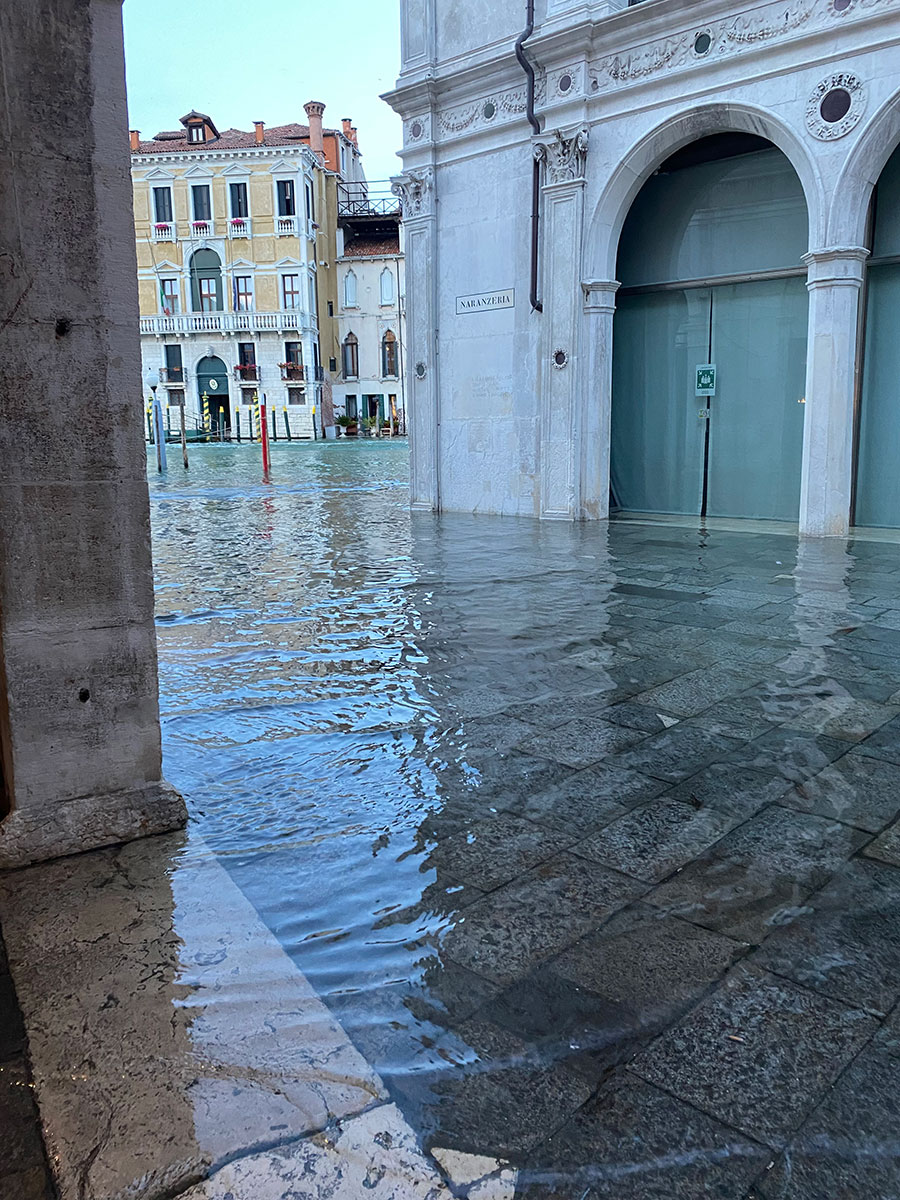
At its peak in the 1950s, Venice’s historic center had 175,000 residents. Today, fewer than 50,000 Venetian residents remain. Photo credit: Tara Hofferth
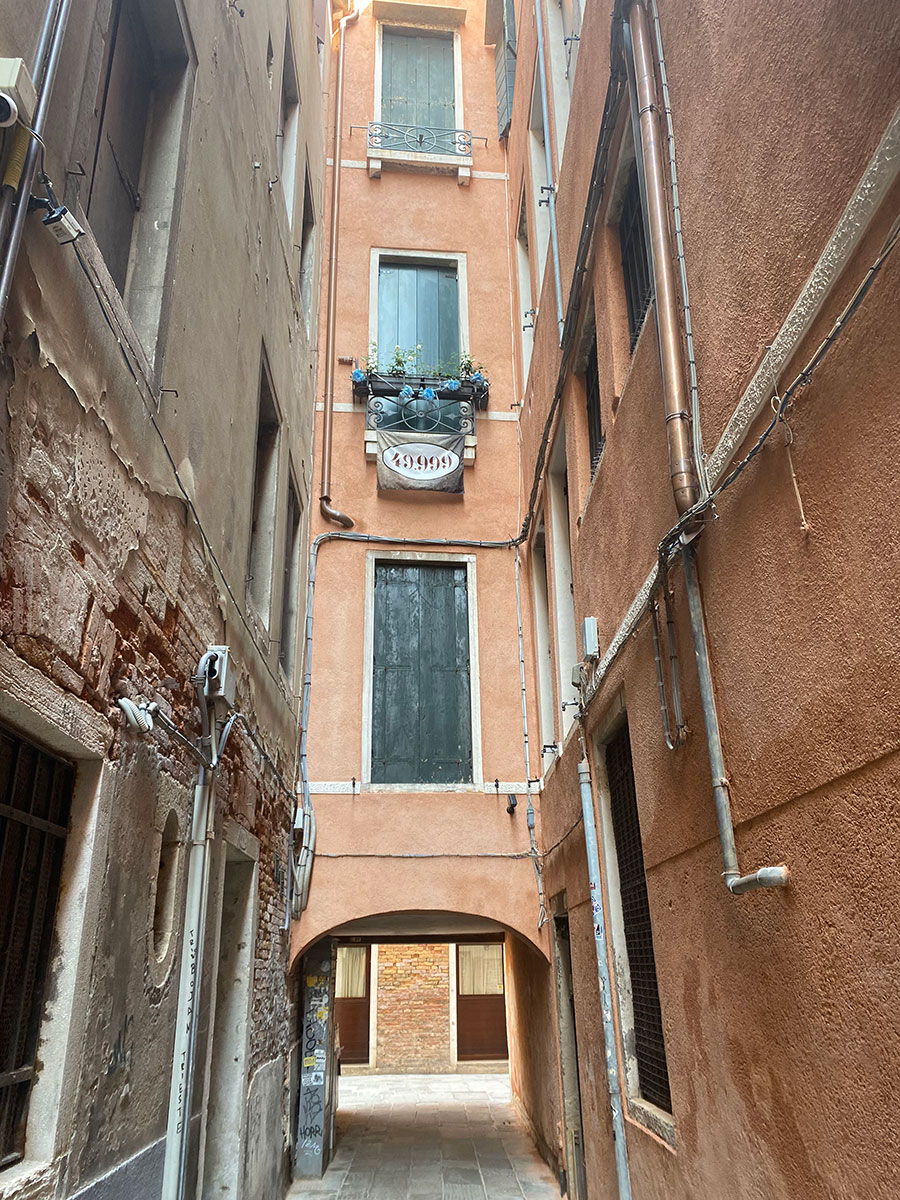
Flags on windows and balconies around the city make a political statement about the population loss by displaying the number "49,999." Photo credit: Tara Hofferth
Can Venice Be Saved Through Engineering?
The Modulo Sperimentale Elettromeccanico (MOSE) flood barrier is the civil engineer’s solution to the flooding crisis. Comprised of 78 massive yellow gates that rise from their dormant position on the sea floor to create barriers at the three mouths of the Venetian Lagoon, MOSE prevents high tides from paralyzing the city. It was first activated in October 2020 and as of early 2025, had already been raised nearly 100 times. MOSE has been effective at keeping Venice dry during tides that would otherwise be very destructive—but it is also lined with controversy, and not just because it cost $6 billion to build and costs more than €300,000 each time the gates are raised.
Adriatic Sea levels are predicted to continue to rise, meaning the MOSE barrier will need to be used more and more frequently. Some models indicate that at the end of the century, MOSE may be activated more than half the year. MOSE wasn’t designed to remain raised for long periods of time, not only because of operating expense and the wear-and-tear it would cause on the system, but also because it is destroying the lagoon’s ecosystem.
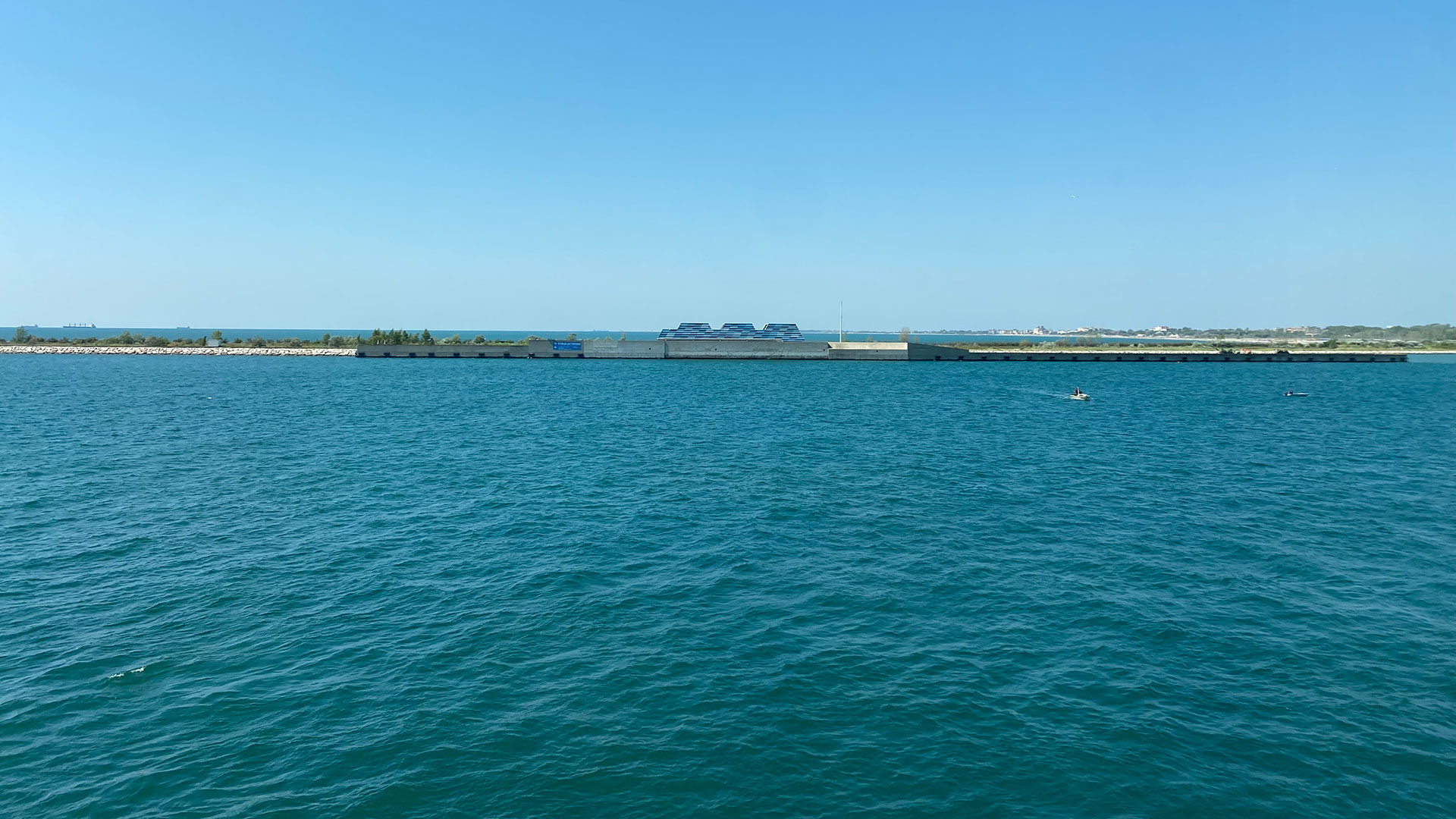
MOSE is comprised of 78 massive yellow gates that rise from their dormant position on the sea floor to create barriers at the three mouths of the Venetian Lagoon. Photo credit: Tara Hofferth
For the hours that the MOSE flood barrier clogs the openings to the lagoon, the salt marsh ecosystem is disrupted. The tide that keeps the salt marshes in equilibrium, nourishing them with a natural pattern of flooding and draining, is halted at the hands of humans. In other words, MOSE is accelerating the disappearance of the natural salt marshes that were already fighting for survival in the face of rising sea levels and boat activity. Addressing one of the city’s existential problems exacerbated another one.
So Venetian engineers have responded with more solutions. They employed local fishermen to build new, erosion-resistant artificial marshes. These marshes are lined with a barrier that helps them resist the boat wakes.
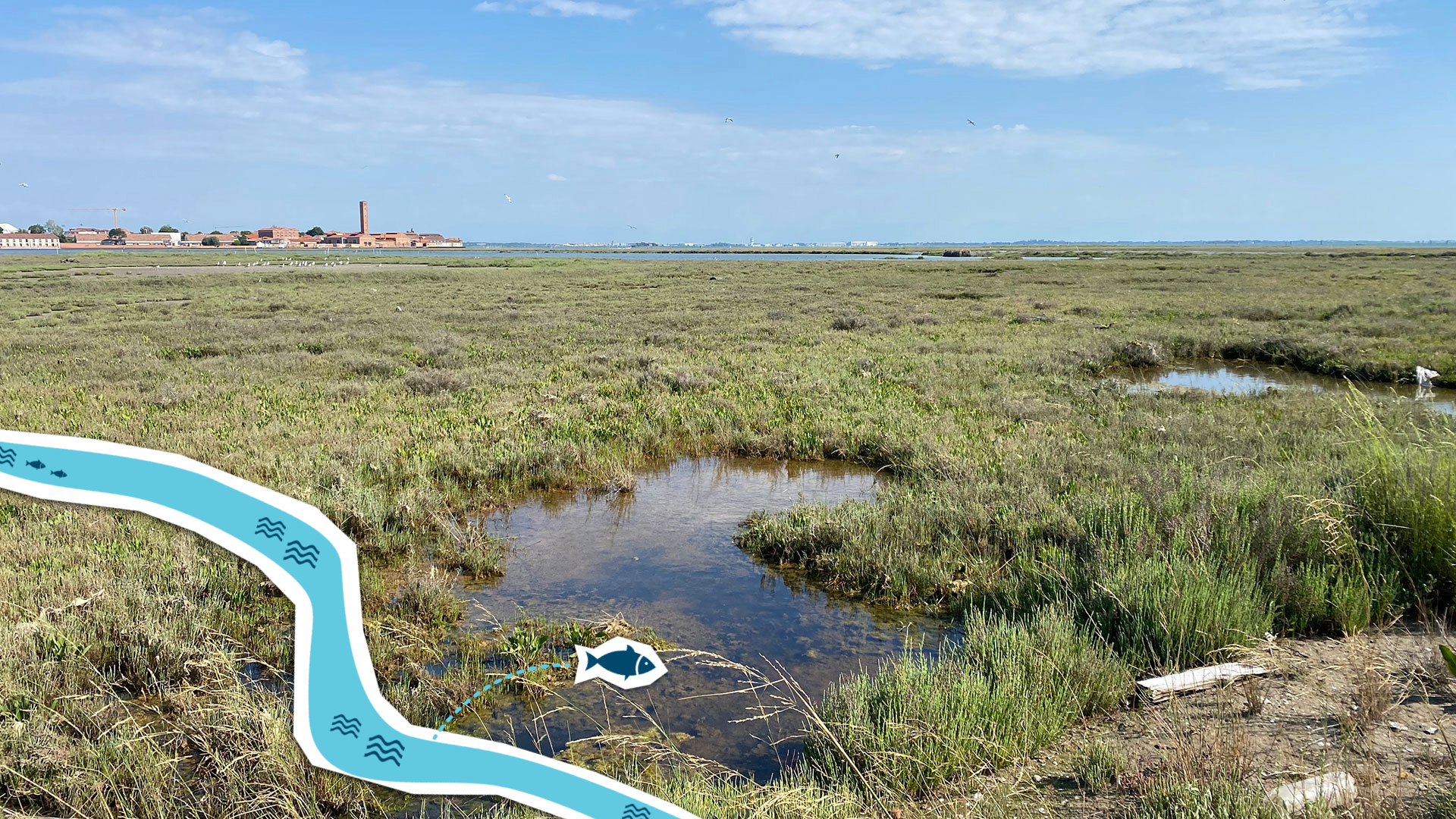
As Venice’s natural salt marshes continue to erode, engineers have designed artificial marshes, lined with a barrier that helps them resist the boat wakes. Photo credit: Tara Hofferth
But are the artificial salt marshes a good thing? This is the question Professor Barausse posed as we watched the wind ripple through the grasses on the marsh. Looking around, our group noticed greater plant diversity on an artificial marsh compared to the neighboring natural marsh. Birds seemed content to congregate on both. Building the salt marshes also created jobs. Clearly, the innovation had introduced benefits. Yet I couldn’t help but wonder if it was another ripple outward: is this engineered fix, while solving an immediate problem, setting off new disruptions in other parts of the natural world?
Is this engineered fix, while solving an immediate problem, setting off new disruptions in other parts of the natural world?
Engineering is miraculous. I am proud to work in an industry that combines technology and creativity to save lives, build and resource cities, clean water, and connect people around the globe. But the natural world is miraculous too. So miraculous, in fact, that we do not sufficiently understand its intricate, systematic design well enough to replicate it without disrupting a delicate equilibrium. Plus, every time we recreate the natural world, we give society permission to continue destroying it. If we create our own version of the environment as it succumbs to our actions, then there is a lack of incentive to take care of the environment and prevent its disappearance. NASA tells us more than 500 square miles of salt marshes have been lost in the last 20 years. As salt marshes erode, they release carbon dioxide into the air, accelerating climate change.
The Price of Protection: New York City’s East Side Coastal Resiliency Project
Much closer to my office in Philadelphia than Venice, there’s another major city installing flood barriers. New York City is constructing the East Side Coastal Resiliency project, designed to protect the residents on the east side of Lower Manhattan from rising water levels and major storm events through raising the shoreline. Described by its designer as a “park-ipelago,” the waterfront is being rebuilt as a series of elevated green spaces linked by a continuous esplanade. It essentially involves covering existing spaces with 8-10 feet of fill and rebuilding new parks and amenities on top. The project is intended to protect more than 100,000 New Yorkers from future storm surges, but not everyone is happy about it—particularly residents for whom the existing East River Park is a beloved recreational space. Members of the community who were previously engaged in the planning process for a very different vision for the park felt blindsided by the change in direction to bury and rebuild it (over years of construction) and dismayed about the destruction of trees and animal species in the process. So, who’s right?
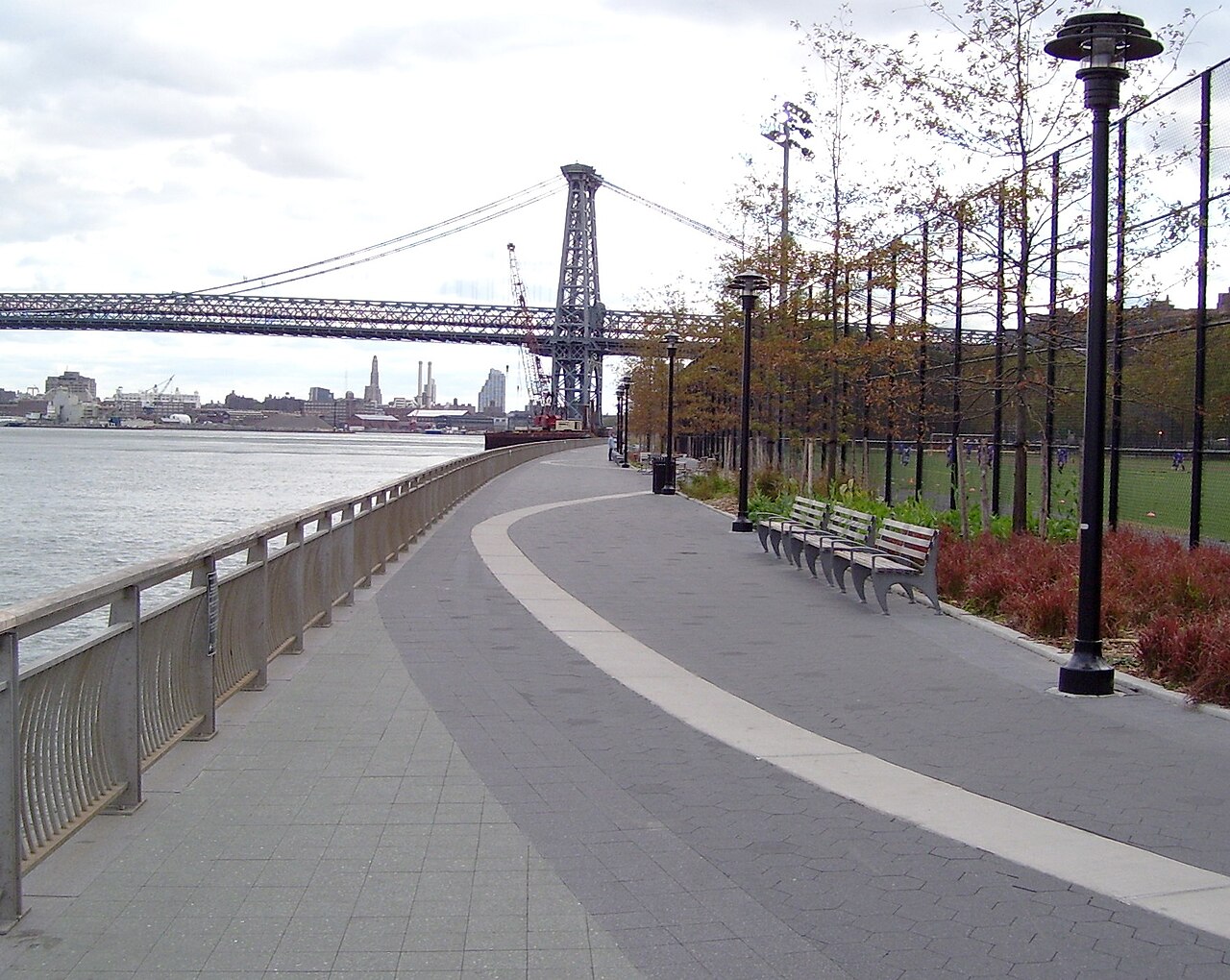
The East Side Coastal Resiliency project is designed to protect Lower Manhattan residents and visitors from rising water levels, but not everyone is happy about it. Photo credit: Beyond My Ken, Wikimedia Commons
At the beginning of my Venice trip, my professor sat us in a classroom to fight the jetlag. Slightly delirious from the heavy pull of sleep, we were tasked with thinking about where the line should be drawn between engineers and the environment. He asked us if every type of environmental or civil infrastructure project has tradeoffs or if it is possible to achieve neutral or positive outcomes for everyone with creative, well-engineered solutions. My answer on that day was that tradeoffs always exist. I felt even more resolute in that answer as I buckled my seatbelt on the flight home. It is the response of a humble engineer looking to disrupt a pattern of overreliance on human-generated solutions.
It is simply not possible to understand an infrastructure project’s every implication, whether it be among human communities or those of plants, animals, and other environmental systems. These systems are too complicated for one person, one team, or even a whole industry of people to properly calculate. Even a computer algorithm is constrained by the origins of limited human perspective. The job of a civil or environmental engineer is not to find a solution without tradeoffs, but rather to constantly ask what the costs might be and who or what might be negatively impacted. The goal is balance, both in costs and benefits.
The job of a civil or environmental engineer is not to find a solution without tradeoffs, but rather to constantly ask what the costs might be and who or what might be negatively impacted.
As a transportation engineer, I could not wait to walk through the streets of Venice: the land of pedestrians. I dreamt of a utopia where the fumes of cars are a distant idea. But reality hit once my feet touched the Venetian sidewalks. I saw boats destroying the natural landscape and a pedestrianized world that is uninhabitable for people with disabilities and a hassle for people delivering goods or getting to work. Then I visited Lido, the neighboring island where most Venetians live. There, I saw balance: some space for cars, some space for bikes and scooters and vespas, some space for canals and boats, and some space for people walking. The mix of modes made life easier and more sustainable. It reminded me that as engineers, our job isn’t to chase extremes. It’s to design systems that balance tradeoffs.
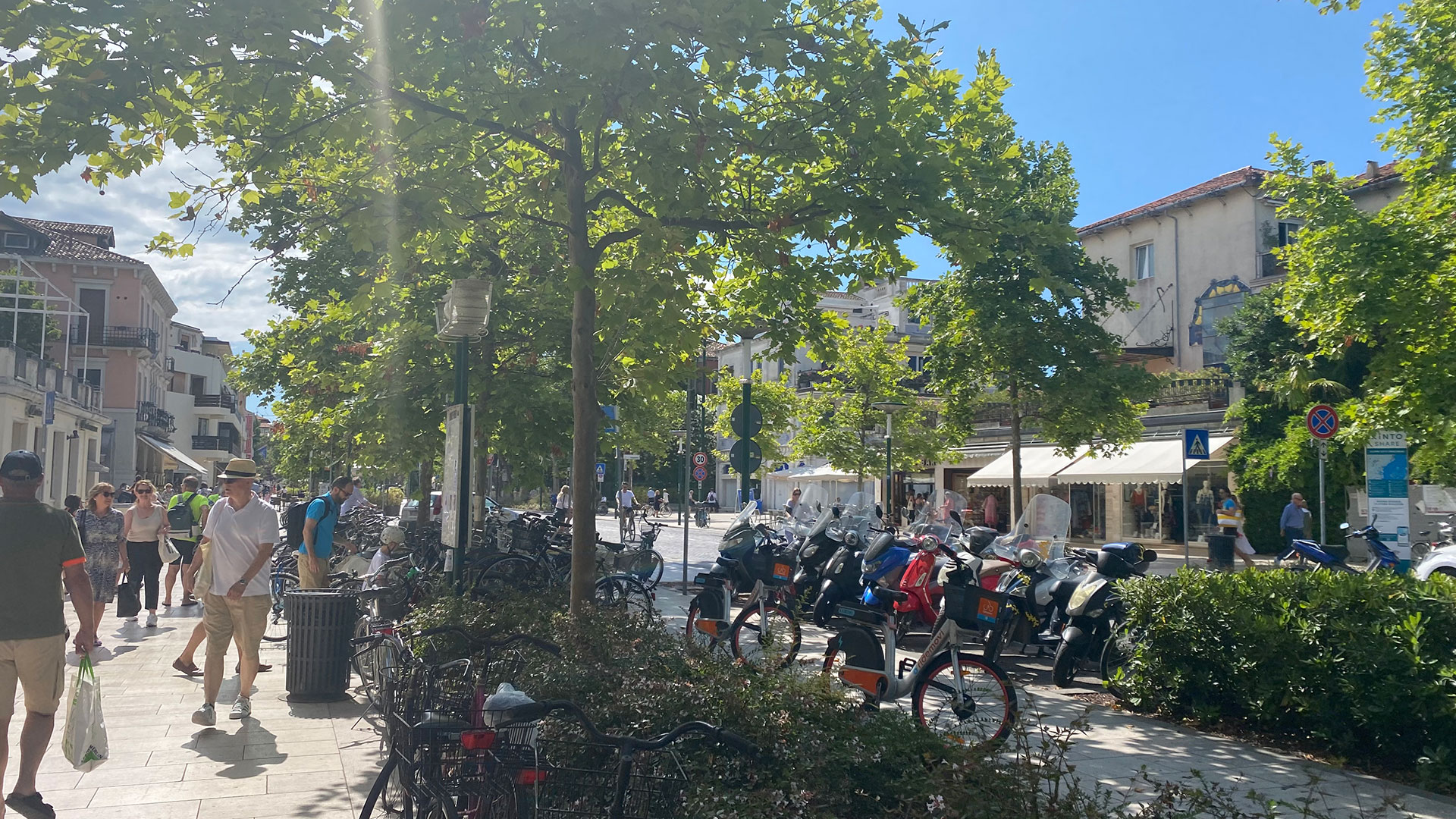
The mix of modes in Lido, a neighboring island to Venice, makes life easier and more sustainable. Photo credit: Tara Hofferth
So, What Do We Do?
If I presented a decisive opinion on the ethics of artificial salt marshes or on whether sacrificing East River Park to protect Manhattanites from storms is appropriate, I’d be contradicting the primary lesson Venice taught me: engineers must be humble learners, quicker to ask questions than give answers. What I do know is that as engineers, it is our obligation to explore solutions from every angle, including the perspective of the sometimes-silent natural world.
As engineers, it is our obligation to explore solutions from every angle, including the perspective of the sometimes-silent natural world.
Perhaps marching through a salt marsh in Venice is part of the answer. When I squatted down to observe the plant species on the marsh, my eyes were opened to the beautiful system surrounding me. I noticed how the plant species intertwined with each other. We observed how the plants differed based on their distance to the water channels or their elevation on the marsh. I quickly realized which plants grew in sinkable mud and figured out how not to step in those spots. I got away from my desk and noticed the beauty, intricacy, and inspiring design of a natural system. I also learned a new language, ate different food, and immersed myself in a centuries-old history. My perspective of both the human and the natural world expanded, and I feel better equipped to design infrastructure as a result.
Nature is amazing. The city of Medellin, Colombia addressed rising temperatures from climate change and widespread concrete usage by installing nature’s air conditioning system: planting tens of thousands of native trees and plants along roadways and sidewalks. They’ve reduced temperatures by more than two degrees Celsius, and a report by the Transformative Urban Mobility Institute tells us the green corridors have led to more walking and biking in the city. Curridabat, Costa Rica is pioneering an even more radical shift to integrate nature into urban spaces through giving citizenship to pollinators, trees and native plants! This recognizes their critical role in sustaining a healthy ecosystem and integrates the planning, construction, and maintenance of green spaces and pollinator habitats into city planning. Perhaps the greatest innovation isn’t in replacing nature, but in learning from it: engineering solutions that amplify its strengths rather than trying to come up with something better.
Perhaps the greatest innovation isn’t in replacing nature, but in learning from it: engineering solutions that amplify its strengths rather than trying to come up with something better.
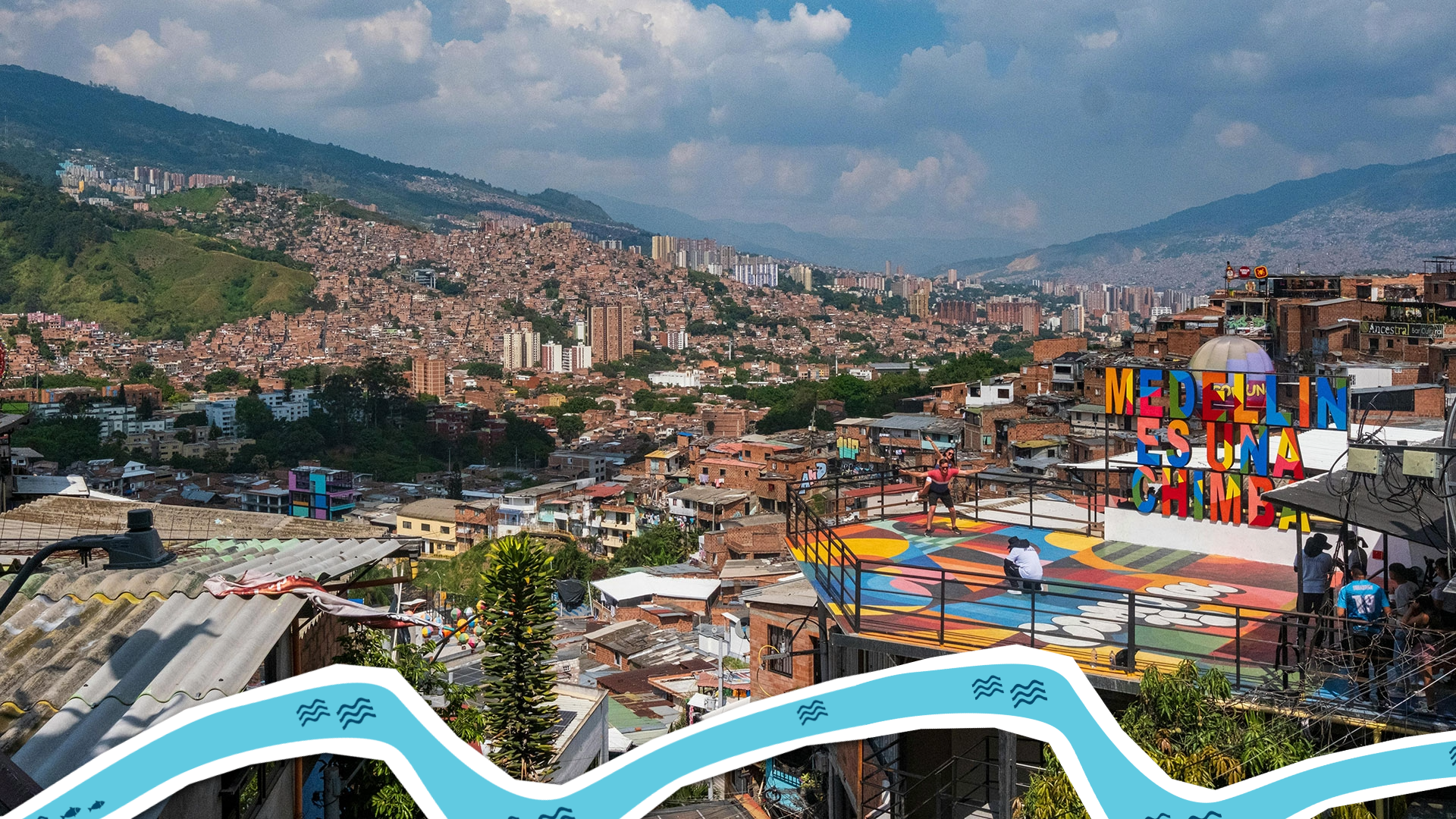
The City of Medellin, Colombia’s green corridors are reducing temperatures and leading to more walking and biking in the city. Photo by Pierre Matile on Pexels.
We have work to do. As engineers, we must play a role in repairing salt marshes and building storm barriers and cultivating fish farms. Maybe we should design a modern subway system through an ancient canal. However, we have a responsibility to sustain and repair existing systems rather than prioritize creating something brand new. When we choose collaboration over control, engineering becomes a partner to nature—creating solutions that protect life while honoring the systems that sustain it.