
January 6, 2026

For most people in our industry, the new year means resolutions, fresh starts, and the advent of one of the most important gatherings in the profession: the Annual Meeting of the Transportation Research Board (TRB).
This year’s gargantuan get-together will, like always, convene experts from all over North America and across the world for several days of rigorous intellectual exchange in D.C. This event is not just impressive for its size but for the knowledge it contains. The projects that will be presented represent decades of work; the professionals that will be leading workshops, giving papers, presenting posters, and asking questions from the audience collectively have millennia of experience in the transportation field.
This article highlights a few of the research topics we are most excited to learn about amidst the wealth of knowledge at this year’s meeting. We hope this digest of the program will help make choosing your sessions and preparing your questions a little less daunting.

The TRB Annual Meeting is not just impressive for its size but for the knowledge it contains. The professionals leading workshops, giving papers, presenting posters, and asking questions from the audience collectively have millennia of experience in the transportation field.
Using AI in evaluation, not just practice
You can expect to find applications of artificial intelligence (AI) all over TRB this year. There will be discussions of how AI can help us do the work of transportation planning more efficiently and effectively, including applications like predictive modeling, traffic optimization, and scenario planning. But we’re really excited to learn more about how practitioners are using AI to study the work that has already been done. How are practitioners leveraging these nascent technologies to analyze the outcomes of decades of planning decisions? How is AI being used to identify patterns that can inform future strategies? This work is not just about using AI to expedite and improve our preexisting techniques; it’s about emboldening the practice to ask bigger, more complex questions about what has worked, what hasn’t, and why.
Timeless topics—but with a new slant
Much of the Annual Meeting’s programming revolves around familiar topics: think the connection between speed and safety, context classifications, and the Safe System Approach. Speakers this year, however, will be exploring these familiar topics from new angles. From looking to Oceania for better ways to institutionalize elements that are essential to the Safe System Approach (like road safety audits) across all phases of a project, to an increased focus on the behavioral and human factors of crashes, this year promises to add dimensionality to ongoing discussions.
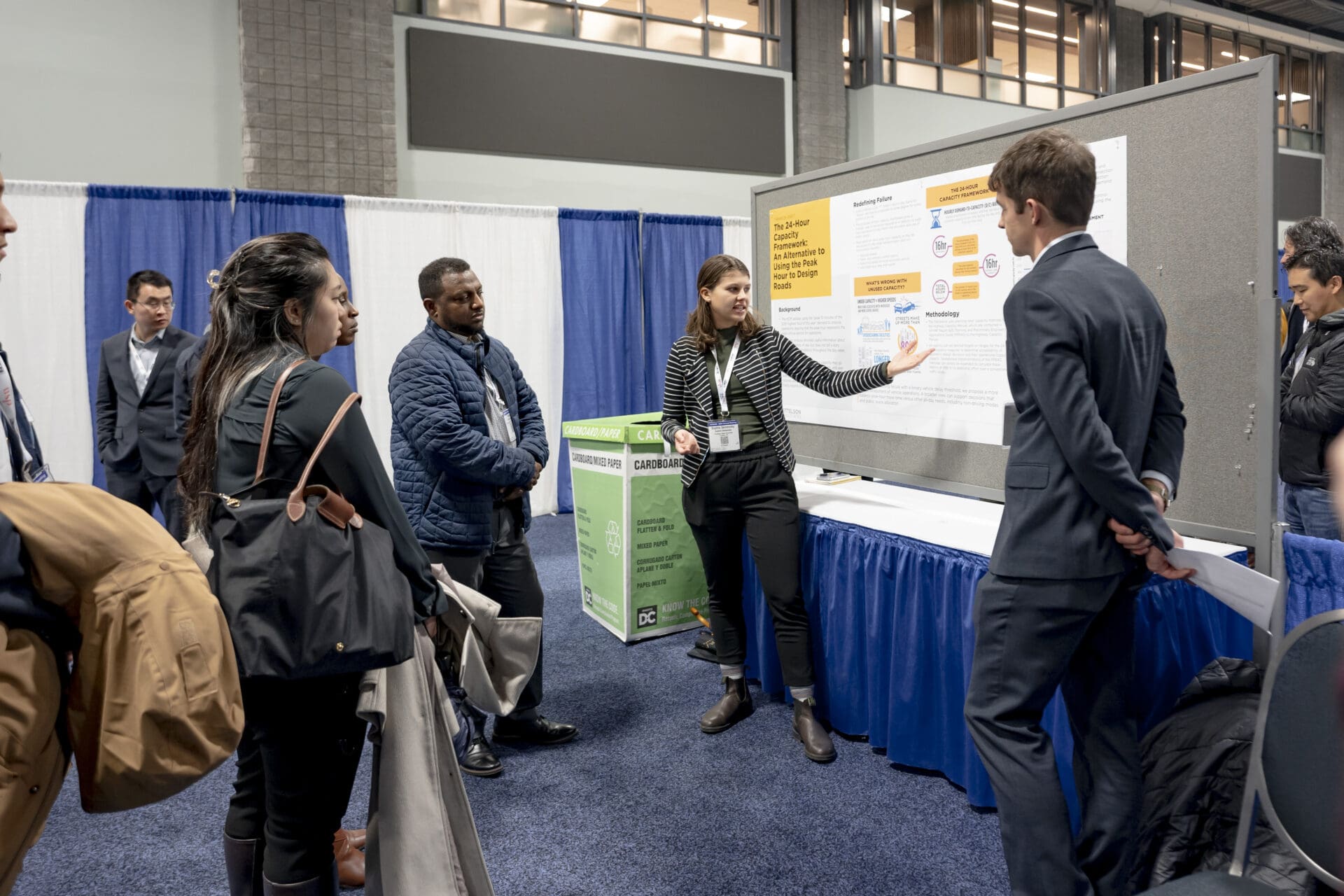
From looking to Oceania for better ways to institutionalize elements that are essential to the Safe System Approach (like road safety audits) across all phases of a project, to an increased focus on the behavioral and human factors of crashes, this year promises to add dimensionality to ongoing discussions.
Big data, big technology
Although our industry is still figuring out the capabilities and potential of AI, when it comes to data and other forms of technology, the transportation field is ready to flex its muscles. At TRB this year, expect to encounter many sessions led by researchers from across the globe about ways of harnessing innovative technology to do things we already do, just better. There are sessions on using virtual reality to improve bridge inspections; employing 3D sonar to assess underwater steel structures; making work zones “smarter”; and deploying sensing and fusion techniques for AADT estimates, turning movement counts, incident detection, and emissions monitoring. And because all this new data has to live somewhere, we’re looking forward to lively discussions about data management, hosting, storage, and even cybersecurity.
Improving AV operations and safety
Expect to find automated vehicles (AVs) and connected and automated vehicles (CAVs) throughout TRB’s discussions this year. Researchers engaging with these intelligent vehicles are especially concerned with understanding how AVs and CAVs move, how to support them with lane markings, and with finding technology that strengthens their sensing capabilities. And that sensing technology is complex: look forward to learning about multimodal fusion of LiDAR, radar, cameras, and drone imagery; object detection and tracking algorithms; and traffic reconstruction and grid mapping.
In addition to improving AV and CAV safety via crash analyses, researchers are concerned with how these vehicles can improve safety for other, more vulnerable road users like pedestrians. Other noteworthy sessions include a discussion of what counts as “good” CAV driving behavior, conversations on issues in remote driving operations, and ways to improve first responders’ relationships with AVs.
Plus, we are excited to hear from AV and CAV partners. Local governments, state departments of transportation, the federal government, and vehicle manufacturers all have important roles to play in the successful operations of AVs and CAVs. One session gathers representatives from these groups into the same room to share their perspectives and answer questions.
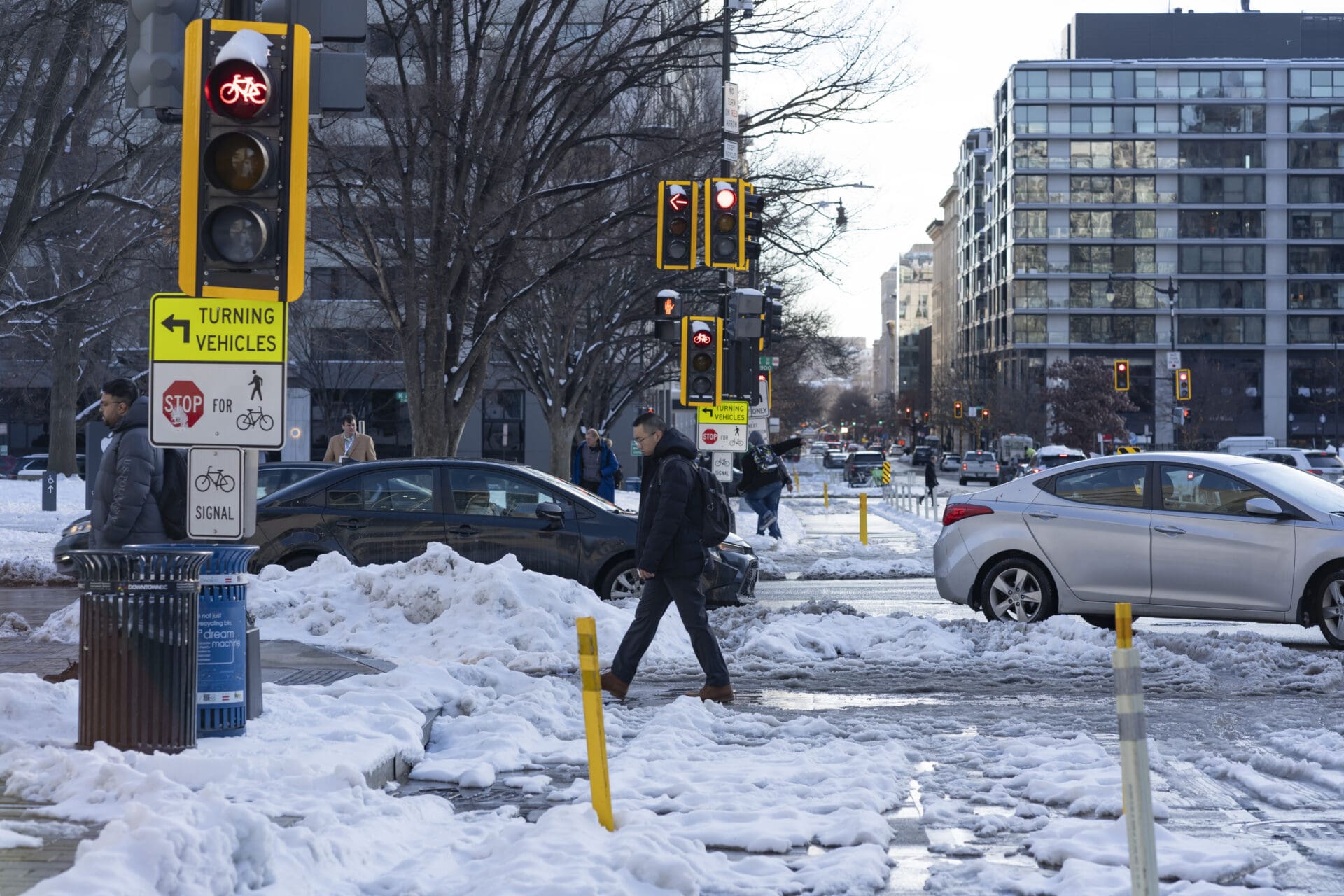
At the Annual Meeting, you’ll be able to attend sessions that unpack how severe heat, heavy rains, and other weather events impact travel behavior and shape evacuation policies.
Weather events and disaster recovery
In an age of higher global temperatures and stronger storms, it’s no surprise to see weather (often extreme weather) and disaster recovery throughout this year’s program. At the Annual Meeting, you’ll be able to attend sessions that unpack how severe heat, heavy rains, and other weather events impact travel behavior and shape evacuation policies. Many researchers focused on extreme weather and disaster recovery are presenting lessons learned from specific events, offering close looks and detailed case studies of specific cities, regions, and disasters. Together, these presentations and posters offer ideas for hardening our infrastructure against future weather- and climate-related hazards.
The big picture
In reviewing the Annual Meeting program for this article, we were reminded of two very important things. The first is that the many, many researchers who devote their careers to understanding transportation systems are working toward the same goal: getting people where they need to go safely and efficiently. These researchers come from different cultural, geographic, and linguistic backgrounds, making this gathering of minds a truly astounding feat of knowledge sharing and global collaboration.
Second, our deep dive into the program reminded us of the connections that knit our industry together. As we tried to pull out discrete top-of-mind categories, time and time again we found relevant sessions that straddled one or more topics. There are sessions on how AVs behave during flood conditions and sessions on cybersecurity for CAVs. There are poster sessions on how to reduce fuel use across traditional, electric, and even hydrogen vehicles via both driver behavior and machine learning. Such interconnectivity makes the TRB Annual Meeting an ideal event for deepening existing connections and making new ones.
Exposure to new ideas and information is what helps us grow as professionals and people. In addition to your regular areas of expertise, consider dropping in on something totally outside your comfort zone. What might you learn from a poster session on pollinator habitat success stories? Or one on injury severity in three-wheeled rickshaw crashes? Who might you meet at a session about how high temperatures affect airfield asphalt or at one on winter road maintenance innovation? The connections to your own work might surprise you!
If you’d like to find us at the TRB Annual Meeting, find our complete schedule of presentations and workshops here. See you in D.C.!