
May 4, 2026

Anyone walking through a city with all its busy streets, complex traffic patterns, and fast-moving vehicles can see that streets aren’t designed for kids. Faced with safety concerns, even parents who live within walking or biking distance of their child’s school often choose to drop off and pick up their child each school day. But what if kids could bike to school in the comfort of a large group and an organized route?
This Bike and Roll to School Day, we’re celebrating the marvelous and ever-growing world of bike buses. Like school buses, bike buses travel on a fixed route that stops periodically at stations for kids to join. Guided by adult volunteers on bikes, these groups give young students a fun, social, and safe way to get to school, which can be especially pivotal for working parents who may not have the time to drop their kids off each morning. Bike buses also teach kids good biking practices from an early age, setting them up to be safer travelers when they grow up.
Bike buses have been around for decades, but they’ve become a global movement in the last few years. The first big wave was Barcelona, then took off in Portland, Oregon, where physical education teacher Sam Balto channeled his passion for helping kids get active into a movement spurring parents and community members across the country and the globe to start their own bike buses. To continue spreading the word on this simple yet transformational initiative, we’ll look into how bike buses got to where they are; what they can do for kids and communities; and how just about anyone can start or join one.
First stop: More than a trend
Biking to school used to be far more common, but it’s declined sharply over the last 50 years, largely due to growing traffic safety concerns and more students living farther away from schools. Bike buses try to revive the practice of student bike commuting and make it safe and practical for streets that feel very different than they did in the 1960s.
It’s tricky to determine the exact origins of bike buses, but City Lab Barcelona credits Brecht, Belgium, with the first formal, documented initiative in 1998 and Bogotá, Colombia, with the first large-scale bike bus network in 2014. Yet the widely recognized pivot to mainstream popularity began with community organization to reduce vehicle emissions and promote traffic safety in Barcelona, Spain, in 2021. During the 2020–2021 school year, it’s estimated that 700 people joined a bike bus route in Barcelona.
In the Eixample, the sprawling developments that unfold around Barcelona, the streets are wide and choked with traffic. For kids to bike on them safely, their bike bus—or bicibús, as it’s called in Spain—needs to occupy the whole road. This is a perfect example of safety in numbers: by riding as a large group, cyclists avoid being passed or encroached upon by cars, instead acting like a single vehicle with its own place in traffic. And it’s fun, too; organizers bring speakers and play music throughout the ride, drawing kids in with a social activity before school.
In the U.S., there were earlier efforts to launch bike-to-school programs, but the timing wasn’t quite right. In 2010, bike advocate Kiel Johnson led the same idea, then dubbed “bike trains,” at a Portland elementary school. Johnson promoted the train on Facebook and other online spaces but didn’t see the same traction Balto later would. Without the help of the video platforms that would take the digital world by storm in the coming decade, his effort fizzled out after about two years.
Balto explained to The Guardian that social media means scalability: the opportunity to reach huge audiences without quite as much labor on the organizer’s part helped the trend catch on—and become way more than a trend. When Balto launched his bike bus on Earth Day of 2022, things really took off. His videos on Instagram, TikTok, and Twitter have gone viral, leading not only to the growth of his local bike bus but to the proliferation of them in places from Utah to South Africa.
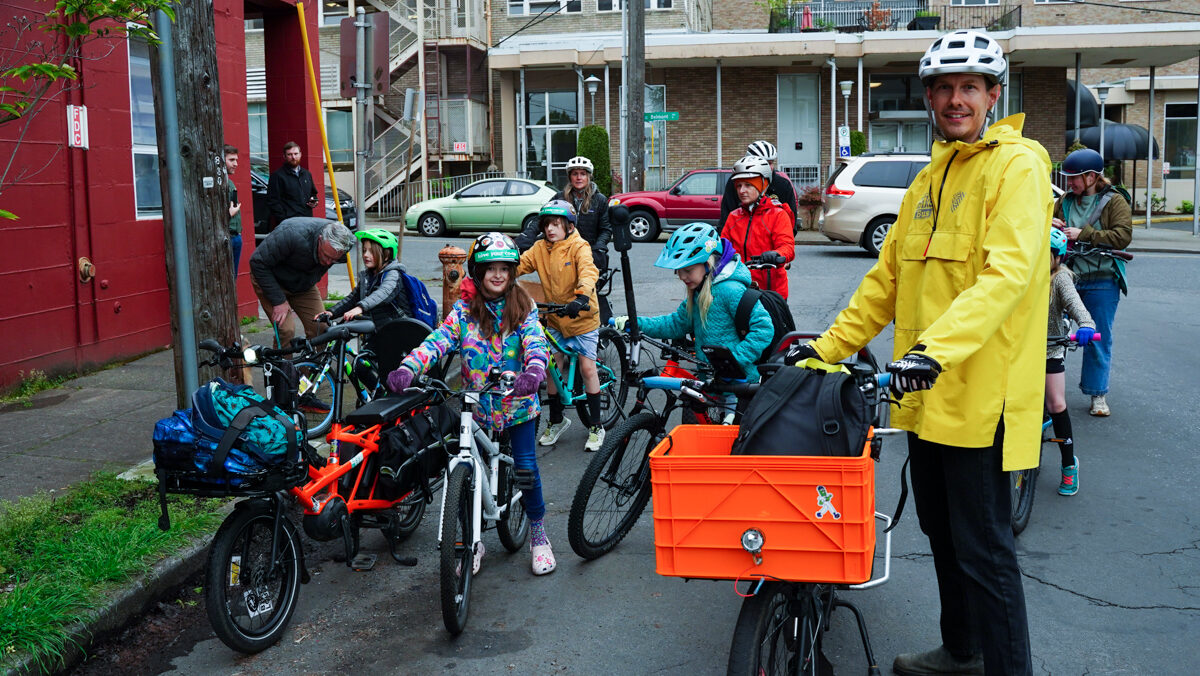
The Glencoe bike bus in Portland stops for students to join the ride. Source: BikePortland via Flickr
In Portland, there are now 32 bike bus routes in action. Balto has even promoted bike buses with celebrities joining the ride; if a kid wasn’t interested in biking before, they sure were once Benson Boone and Justin Timberlake showed up. Now, Balto runs the nonprofit Bike Bus World, which promotes the movement and helps communities everywhere organize bike buses. We’ll dig into how organizing works once we go over all that bike buses can do.
Next stop: More connection, less car dependency
Bike buses are one of those pretty rare win-win-win situations. In addition to promoting safe road habits and opening access to biking, bike buses have major impacts on communities. They allow kids from different schools who might otherwise have never met to connect with each other. For kids who grew up during quarantine, the social connection that comes from being part of a group is especially vital. Taking charge of their journeys to school through active transportation also builds agency and independence, an empowering experience after spending so much time in virtual spaces.
Bike buses are also major players in reducing traffic congestion around schools. Bike buses are primarily geared toward students who live close enough to a school not to be on a school bus route, but whose streets might be too dangerous to walk or bike alone on. This means that these families are doing a lot of driving for drop-off and pickup. With bike buses, the cars that would normally be shuttling kids to school aren’t on the road; bikes are. This improves air quality—particularly by cutting back on the harmful pollutant nitrogen dioxide—making schools and the neighborhoods around them healthier places to learn and live.
What’s more, popularity of bike buses is now influencing legislative change. In 2023, Oregon Governor Tina Kotek signed House Bill 3014, which allows for flexibility in how state transportation funds are spent. Schools can now apply for reimbursements for transportation-related activities like crossing guards and—you guessed it—bike buses. Volunteers typically supervise bike buses, but with this new bill, staff could get paid to “drive a bike bus,” increasing the feasibility of running bike buses. While volunteers are vital, such government support and resources are central to sustaining movements like bike buses consistently in the long-term.
Building on this growing movement, we’re seeing that adults want in on the fun. In Oregon, the Portland Bureau of Transportation (PBOT) created a series of monthly bike rides on nine different routes for adults commuting downtown. This furthers the same goals that student bike buses center on: improving safety, building community, and reducing pollution.
In fact, bike buses have gained so much momentum that an international Bike Bus Summit took place in April of 2026 in Lisbon, Portugal. It brought together educators, organizers, government officials, researchers, and mobility advocates to share knowledge and innovate on advancing safe school travel.
Bike buses aren’t the only way we’re seeing change, though. They complement other initiatives associated with the federal Safe Routes to School Program. Events like bike rodeos (obstacle courses to practice stopping and turning on bikes) and traffic gardens (child-scale replicas of streets for kids to practice navigating) all help kids learn the rules of the road and build familiarity traveling on streets in a protected environment first. For many, it’s one small thing that can make the difference in how they get around each day.
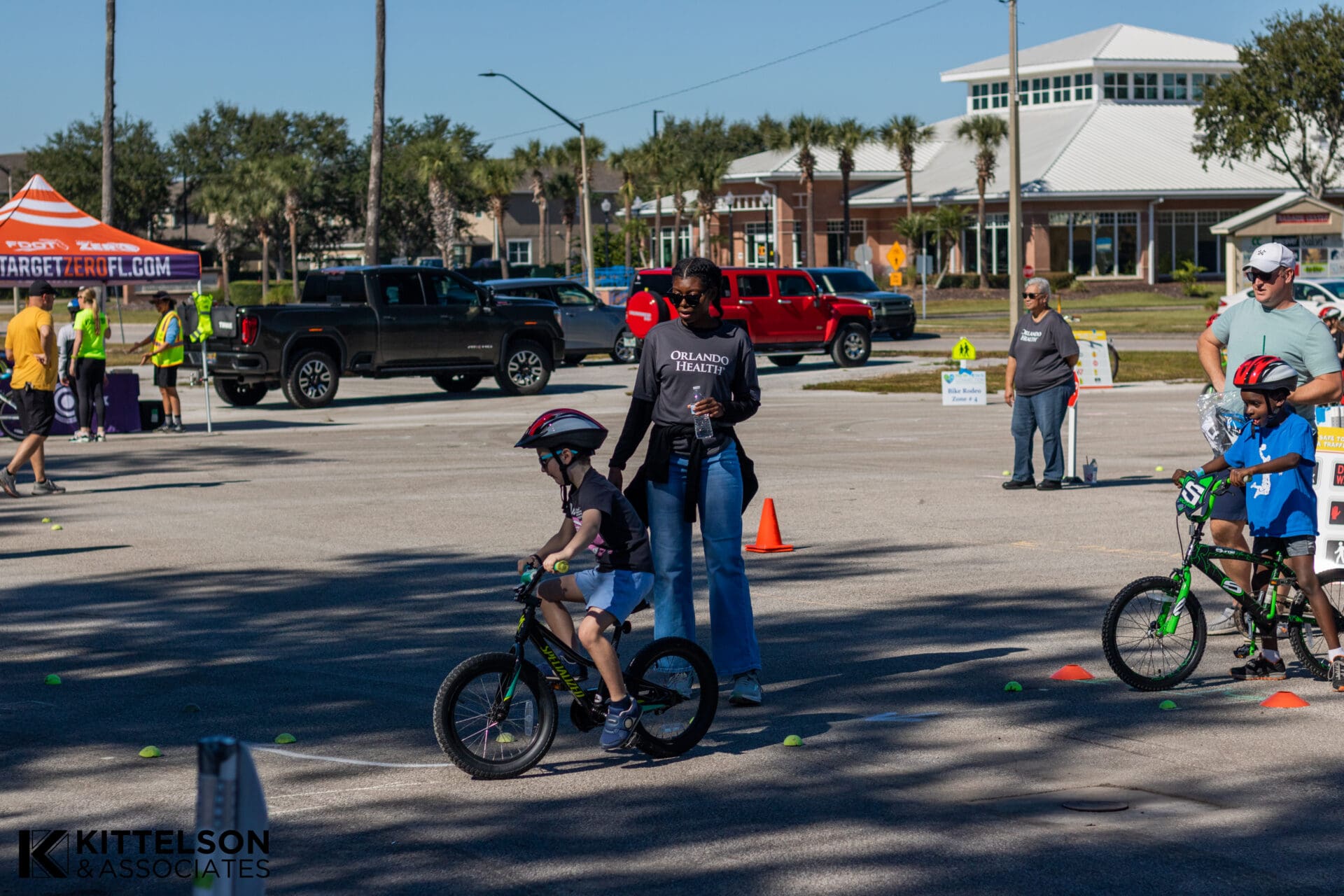
Organizers guide children through a bike rodeo led by Kittelson in Winter Garden, Florida. Source: Kittelson
Events that teach parents how to ride bikes are just as important, so they can effectively teach and guide their children to bike safely. Community helmet-fitting events also enhance safety, teaching kids and parents alike best practices. Comic-book style pamphlets educate kids about traffic safety in an engaging way, encouraging kids to safely flex their independence through walking and biking around their communities. No matter the way people are getting involved, efforts like these all contribute to building a society with greater awareness of how to get active and get around safely—not alone, but as part of a community.
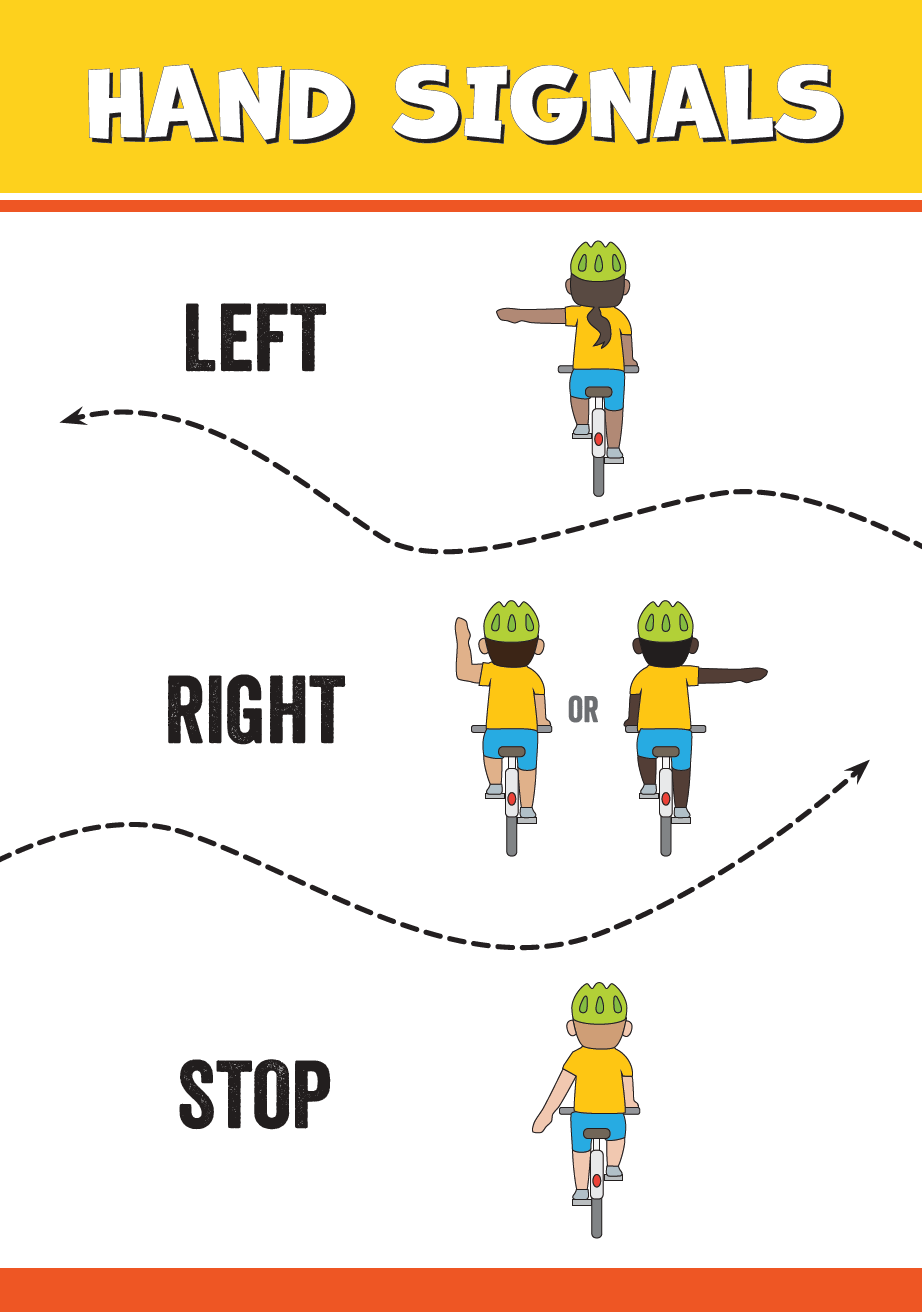
An education poster teaches kids how to use hand signals to turn on bikes. Source: Kittelson
Last stop: Get your wheels on the road
Feeling inspired yet? If you want to launch a bike bus in your community, it’s surprisingly simple to get started. One parent recounted her experience starting a bike bus in WIRED, which boiled down to a few main steps:
1) Gather volunteers: Having one adult for every four children is best for a safe bike bus, as Hood River County School District Safe Routes to School Coordinator Megan Ramey told WIRED. Generally, there should be an adult at the front to lead the bus and watch for traffic, one at the back to make sure no stragglers get left behind, and some in the center to keep kids together. Family members of students and school staff are often folks who might be interested in volunteering to help out.
2) Set a route and schedule: Decide where and how often the bike bus will travel. When choosing a route, consider coordinating with the school to find where most students live and select meetup spots along the route that serve them. Aligning routes with neighborhood greenways and designated slow streets can also make the bike bus experience safer and more approachable. Consistency is critical to build steady participation, allowing parents to plan around school transportation and students to look forward to a specific day each week.
3) Spread the word: Many organizers promote their bike buses with posters and on social media. Some even hand out bike swag (like lights and reflective bands) at community events to raise awareness of bike safety. Coordinating with school administration and community centers can be the most surefire way to reach potential bike bus participants, especially when bike buses are featured in newsletters and announcements. Ramping up outreach and turnout for events like Bike and Roll to School Day and Earth Day is another popular way to increase visibility and draw in bikers.
More details, like estimating timing and finding bike parking, are addressed in BikePGH’s “How to Start a Bike Bus” guide. Yet, bike buses still rely on kids having bikes. Bike giveaways help increase access for lower-income families by saving bikes that would be trashed, refurbishing them, and redistributing them. Portland bike bus organizer Jessica Fletcher works with Portland Metro and the nonprofit Reborn Bikes to host giveaways. It’s these kinds of opportunities that help bike buses reach those who can benefit from them most.
Here at Kittelson, our very own Conor Semler started a bike bus in his Boston area neighborhood. His group is smaller, so they take up the whole road on neighborhood streets and ride single file in bike lanes on busier, wider streets, in contrast to the way bike buses in Barcelona and Portland operate as a “single vehicle.” This just goes to show how bike buses can be adapted to work for different groups and areas.
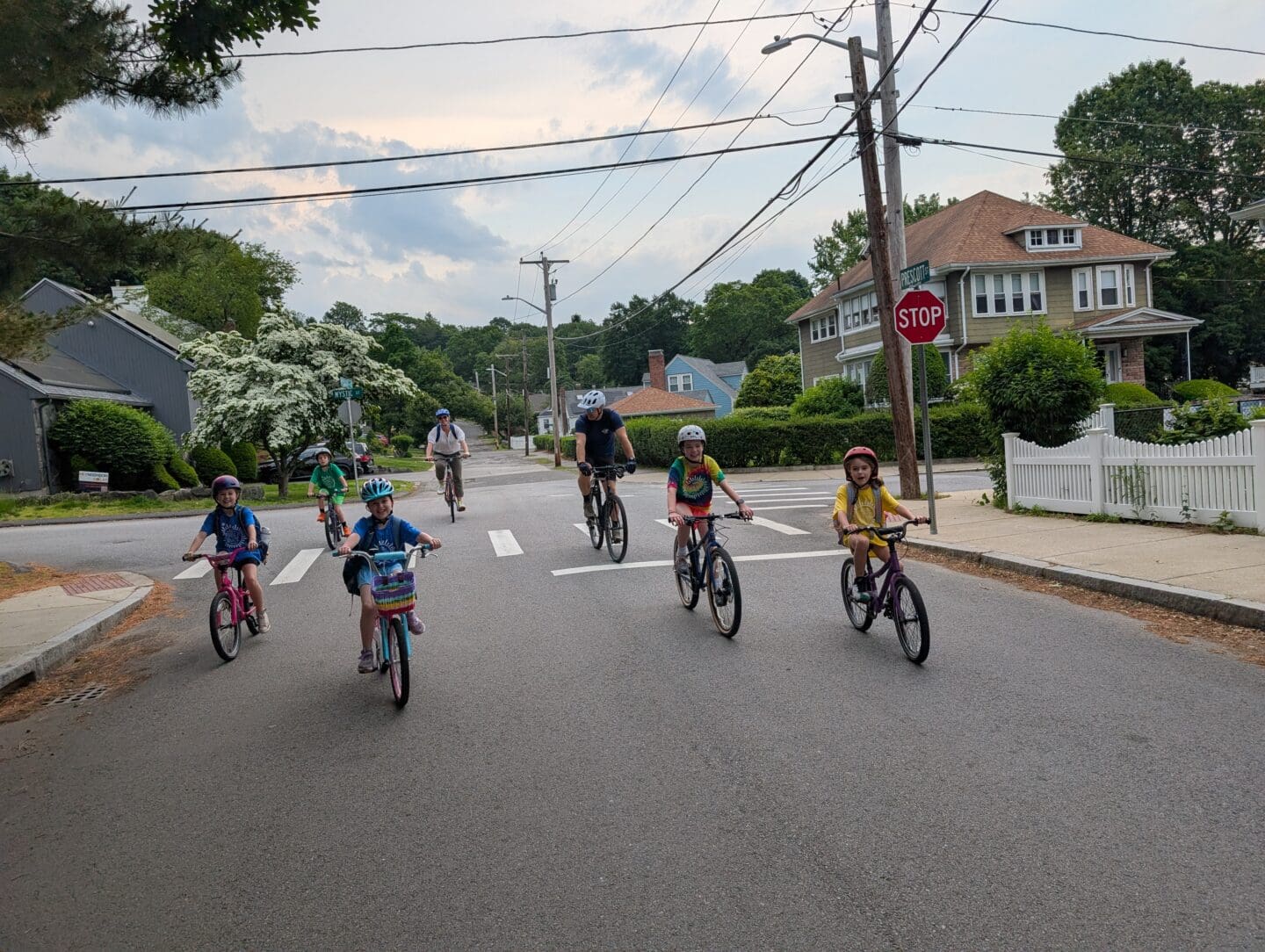
Conor’s local bike bus rides to school on low-traffic, neighborhood streets. Photo Source: Conor Semler
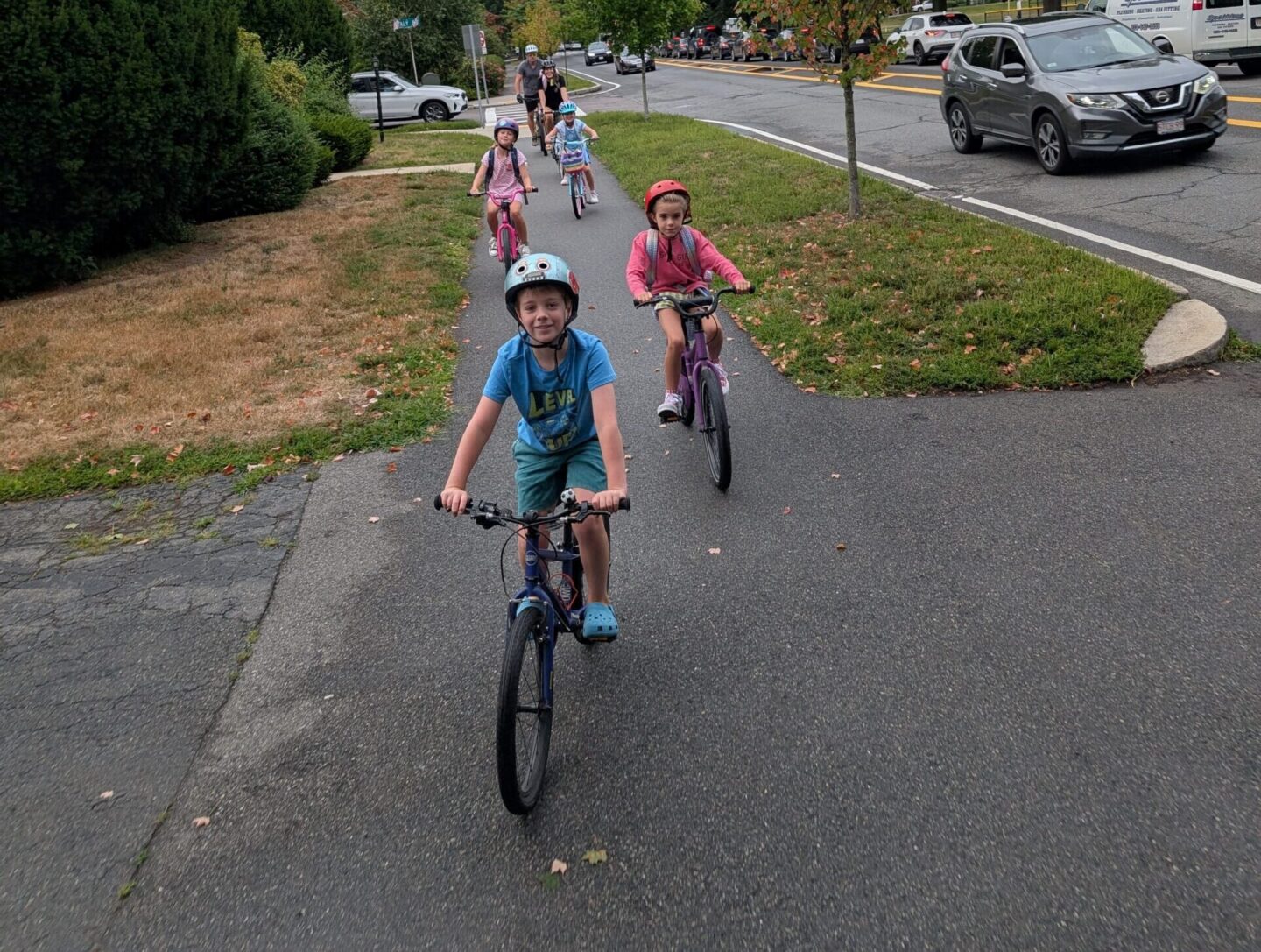
Conor’s bike bus transitions to riding on a path once they connect to a busier street. Photo Source: Conor Semler
Semler found it inspiring to see how with just one ride, kids went from feeling nervous and unsure that they could bike in traffic, to being confident and excited to interact with the built environment in a new way. Today’s streets are tough to move through safely even as adults; for children to build comfort navigating transportation systems from such a young age is transformative. Bike buses are building a generation of bicyclists who will grow up to make our streets safer, healthier, and happier with their very presence.