
March 11, 2026

How the University of Portland Connects Real-World Experience to the Classroom
On a weekday afternoon in Clark County, Washington, a project team walks an intersection slated for redesign. They’re studying sightlines, measuring curb ramps, and talking through signal phasing options prompted by nearby development. It looks like a typical field visit, but it’s not a typical team—instead of transportation consultants and agency staff, this group comprises students from the University of Portland (UP) working on their senior capstone.
Okay, the students aren’t actually the design consultants on the project (a Kittelson team is). But the students from UP, while not actually contributing to the official design, are working on the project in parallel with us. At the same time that Kittelson’s Ryan McFadden is leading an intersection redesign, the students are working through the steps to develop their own 30%, 60%, and 90% design plans, mimicking the engineering design process to be approved. The final product of their capstone will be a report and presentation on the methodology, challenges, and potential compromises during the design process.
These students are continuing a legacy, now decades in the making, of UP students with a curiosity about transportation taking on a real transportation project (current or past) as though they are the consulting team. What started as a connection between a Kittelson employee and a UP professor has turned into a 30+ year relationship that’s strengthened both academia and practice.
We’re highlighting this model as one example of how consulting firms and universities work together to prepare the next generation of transportation planners and engineers. The structure is simple, replicable, and profoundly beneficial on both sides. In this article, we’ll explore how it works, why it works, and where to start if you’re ready to bring something like this to your firm, agency, or academic institution.
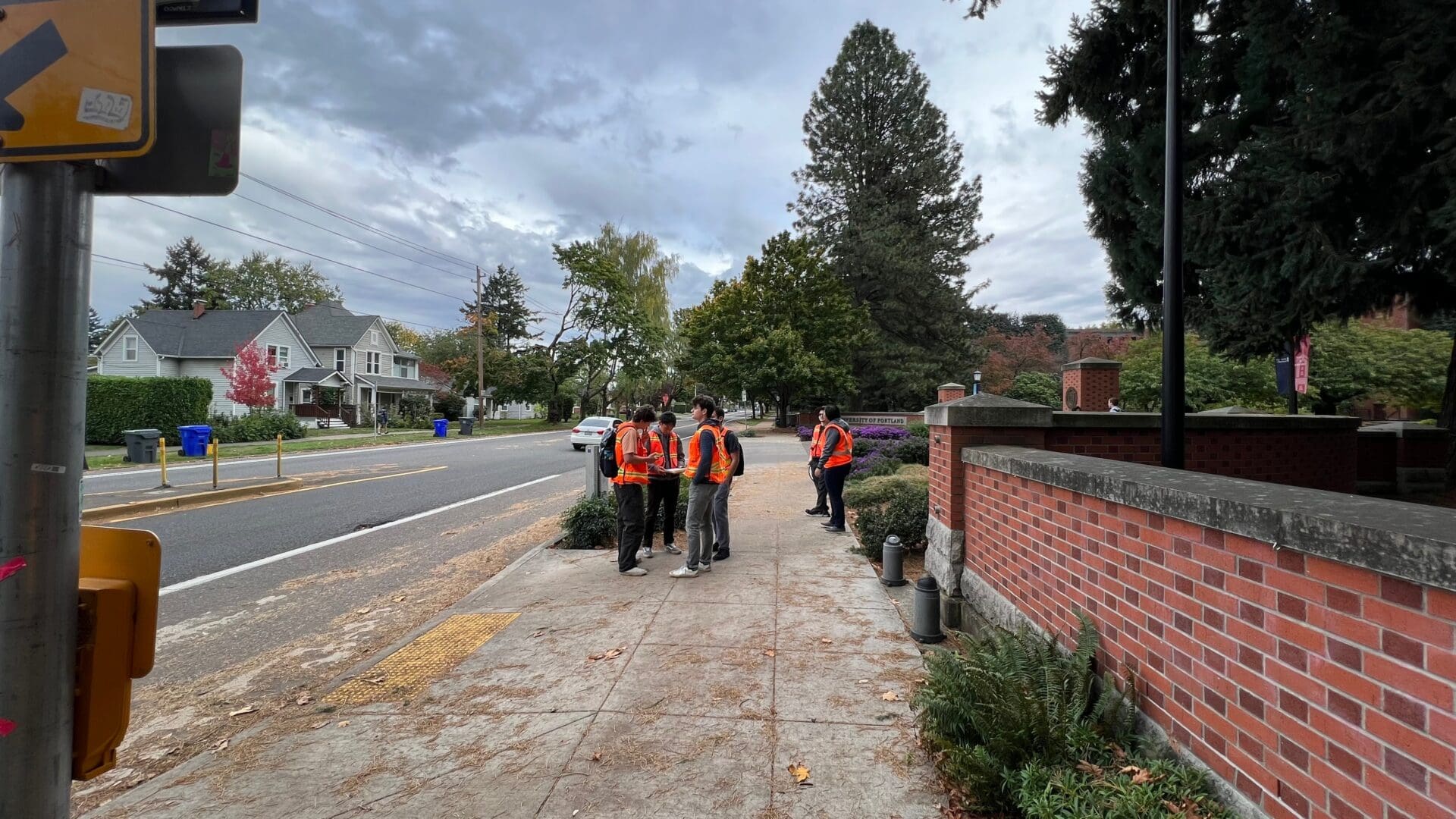
Prior to graduation, civil engineering students at UP select a capstone project designed to apply classroom concepts to real-world challenges.
How It Works
Kittelson’s connection with UP began more than three decades ago through Dr. Mojie Takallou, who taught the University’s transportation and traffic engineering courses for many years. Dr. Takallou met Wayne Kittelson while the former was getting his PhD at Oregon State University. Upon launching Kittelson and Associates in 1985, Wayne reached out to ask if the professor could recommend any students who might be interested in transportation consulting. Dr. Takallou did have a recommendation: Mark Vandehey. (Yes, the Mark Vandehey who would go on to have a 40+ year career with the firm and succeed Wayne as CEO. You could say this was a strong start.)
Seeing the win-win potential of closer collaboration between academia and practice, Dr. Takallou and Wayne began exploring how the firm could help students learn about transportation outside of hiring conversations. This led to Kittelson getting involved in the university’s Senior Capstone Program.
Prior to graduation, civil engineering students at UP select a capstone project designed to apply classroom concepts to real-world challenges. Students who work with Kittelson on their capstone take on a completed or current transportation project, learning the context, goals, and constraints and then developing plans as if they are the consulting team, working through key milestones and receiving feedback along the way.
“At the time, senior capstones weren’t yet a very organized program on our end,” said Dr. Takallou. “Wayne and Mark brought a high degree of thoughtfulness and structure. Students who worked with them would go into the Kittelson office, walk through the steps of a real project, and learn the practical aspects of science and engineering. It became a highly sought-after capstone experience.”
One of those students was Anthony Yi, who now serves as a senior principal engineer with Kittelson. Anthony worked with a Kittelson team on his senior capstone project in 1999 and says the experience set the trajectory of his career.
“I was getting a general civil engineering degree,” said Anthony. “Transportation was new to me, but the capstone project and connection to Kittelson broadened my view of how transportation impacts our daily lives.”
After graduating, Anthony became part of a growing group of UP alumni who maintained ties to the university while building careers at Kittelson. Alongside capstone advising, from early on that partnership also included teaching in the classroom.
“I used to teach the first part of the course—things like traffic theory, highway capacity, and the MUTCD,” said Dr. Takallou. “Then someone from Kittelson would come in and share how those concepts actually show up in planning and engineering projects.” Some years, Kittelson staff even taught entire semesters at UP while Dr. Takallou was on sabbatical, serving as adjunct professors and developing their own curricula.
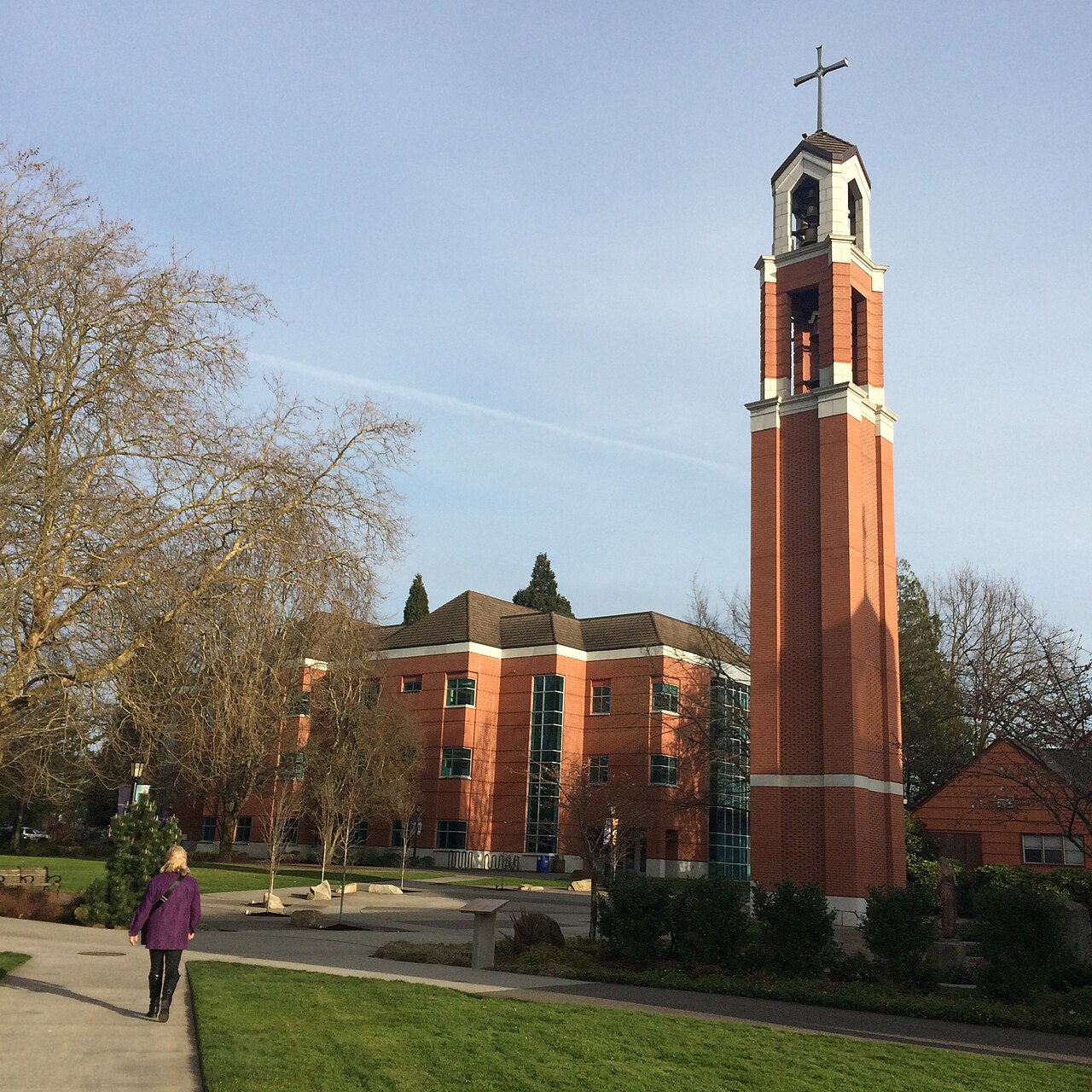
Two of the most meaningful and longstanding ways we’ve partnered with UP are advising senior capstone students and teaching in the classroom. Photo by Emily Allstot on Wikimedia Commons, CC BY-SA 4.0.
Anthony and other team members have also served on the university’s Engineering Advisory Council, with the purpose of helping the university stay attuned to evolving industry needs. Through these roles, Kittelson staff gain deeper insight into how university engineering programs are shaped, and in turn, help influence how future transportation professionals are trained.
“Consultants share trends in the industry and hiring, and the university presents what they have going on and solicits feedback on things like student presentations and mock interviews,” said Anthony. “It helps them stay in touch with the industry and prepare students appropriately.”
Overall, we’ve been amazed at how the partnership between Kittelson and UP continues to naturally provide opportunities to work side by side in the effort to equip the next generation of transportation professionals.
Why It Works
While by no means the only firm/university partnership of its kind, our connection with UP has carved a meaningful place in Kittelson’s history. For more than three decades, the relationship has given students hands-on experience with real transportation projects, often shaping how they see both the profession and their place within it.
“The biggest benefit to our students is the quality of their education in transportation engineering,” said Dr. Takallou, who retired in 2022 but has been pleased to see the partnership continue. “Many of them pursue transportation careers because their interest is sparked through the capstone project or a transportation class.”
Kittelson team members Becca Mosunic and Cameron Thompson, UP alumni who now serve as mentors for senior capstone projects, worked with Kittelson during their own capstones in the 2020–2021 and 2021–2022 academic years. For each of them, the experience helped clarify how they wanted to apply their civil engineering degrees.
“Our capstone project was a transportation impact study, which is a fairly common consulting project, but the ‘hit home’ aspect for me was realizing this is what I want to do with my career,” said Becca. “Working through the capstone helps students learn what they enjoy within the vast world of transportation.”
“I remember the feeling of, ‘Wow, this is how an actual project happens,’” added Cameron. “That was big for me. As a mentor, I’ve seen students have their own lightbulb moments at different points in the projects. For many students, the amount of back-and-forth communication involved in designing and redesigning based on feedback is eye opening. It better prepares them for a transportation career.”
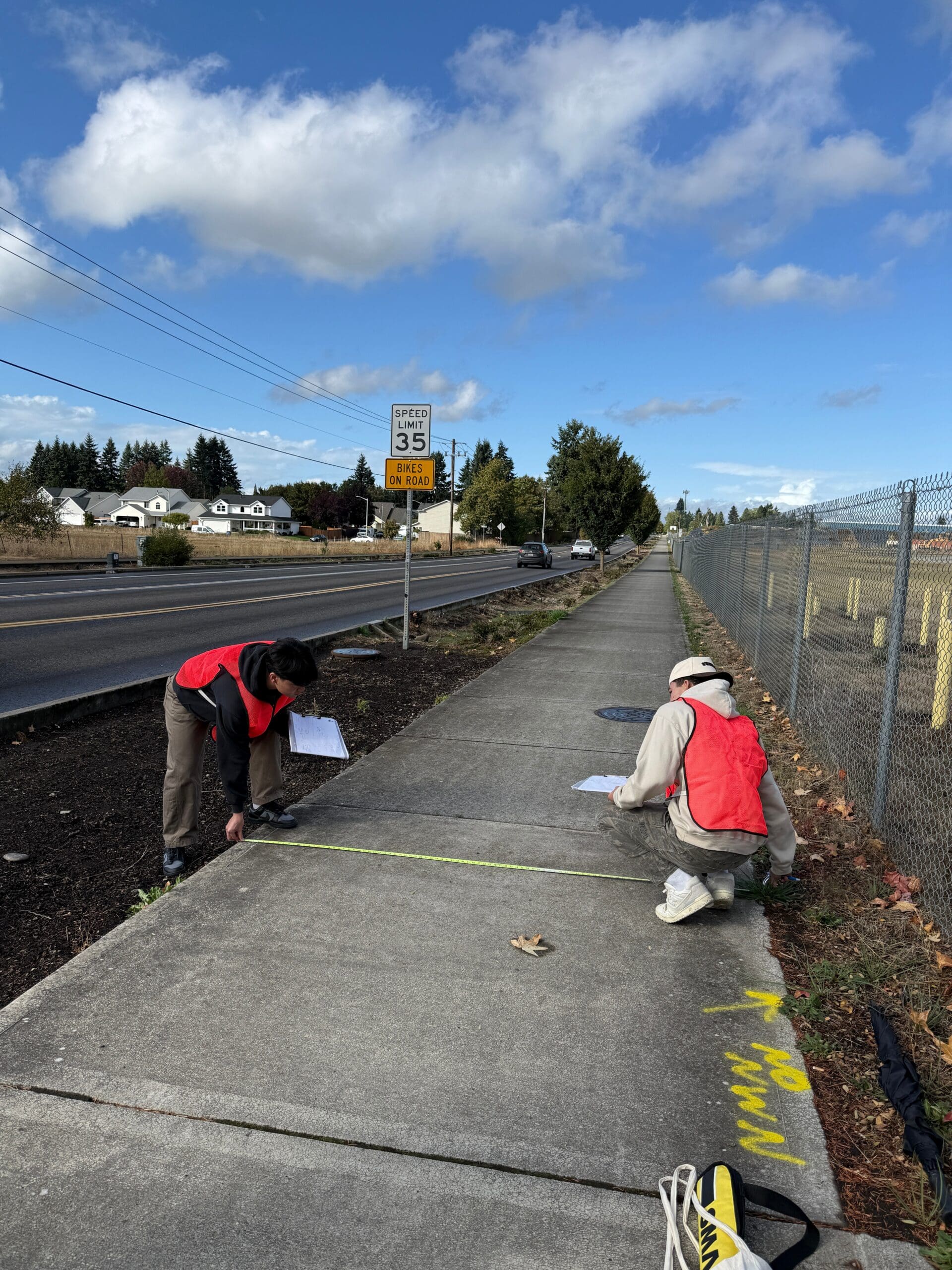
For many UP students, a senior capstone project sparks a lifelong career interest.
The sustained, early engagement with students who are already curious about transportation is exciting and meaningful. As with our internship program, we see how students think, communicate, respond to feedback, and navigate real-world project constraints over an extended period of time. While the partnership introduces them to real-world transportation projects, it also provides the opportunity to experience Kittelson’s culture, values, and way of operating through week-to-week collaboration, which results in a more enriching information gathering and deeper immersion than could be provided in an interview setting alone.
“During my capstone, I felt the outward focus that Kittelson talks about,” remembered Anthony. “Seeing how the people I worked with lived out the firm’s core values made Kittelson the place I wanted to build my career.”
Working with UP students also provides many professional growth opportunities for individual Kittelson team members. Joey Bansen, a 2006 UP grad who is now a principal engineer with Kittelson, has been teaching in UP classrooms on behalf of Kittelson for more than 15 years. In addition to his desire to give back to a program that led him to a rewarding career, Joey says the reason he’s still teaching is the ways it makes him a better transportation professional.
“Teaching Traffic Engineering year after year has been one of my biggest opportunities for growth,” says Joey. “It’s improved my public speaking and made me a better mentor—both in the classroom and in the office. You have to really understand the material to teach it effectively.”
Joey believes the success of the partnership comes down to shared purpose. “Both the university and the firm are invested in coaching and mentoring the next generation,” he said. “Individuals rotate in and out, but the organizations share the same vision.”
Where to Start
In your own career history, you can likely point to a moment when coursework, mentorship, or a real project clarified what you wanted to do next. The programs that create these moments don’t have to be elaborate. Based on our experience, here are a few pointers we’d offer to anyone interested in exploring how a partnership like this could grow and evolve in your context:
Start small, with existing connections. Where do you already have connection and trust built? Whether it’s an alumnus, a former colleague, an advisory board member, or a professor, existing relationships often provide the credibility and momentum needed to take a first step. Sustained partnerships depend on people who see value in the work and are willing to invest time and energy over the long term, so it’s better to start with a simple step in which there’s excitement on both sides.
Ask how your organization is uniquely positioned to help students prepare. Over the years, Kittelson’s involvement with UP has taken many forms—classroom lecturing, capstone advising, curriculum input, advisory board participation, and internships—each aligned with real needs on both sides. The key question isn’t “What should we do next?” but “What do we have to offer?”
Think long-term and allow the partnership to evolve. The greatest benefits often come as the outcome of a cumulative effect over time. Rather than aiming for immediate outcomes, organizations may find more value in treating partnerships as living relationships, allowing new opportunities to emerge organically.
Your Turn!
For students, a senior capstone or engagement with an industry professional in the classroom is often the first time the work feels real. For practitioners, it’s a chance to connect with students actively exploring transportation as a career—and remember what it felt like to learn it all for the first time. And that’s really what this model is all about: sharing real projects, making time for conversations, and giving students opportunities to engage with the work as it actually happens. In our experience, those small efforts have added up to tremendous benefits on both sides.
Speaking of conversations, we’d be happy to chat further if partnerships like this one are of interest to you! To learn more, reach out to Diego Arguea, who leads our involvement in UP’s capstone program, or Joey Bansen, who leads our contributions in UP classrooms.