
March 11, 2026

Conor Semler is a Principal Planner in Kittelson’s Boston office. Conor has been working in the transportation profession since 2007 and has a wide range of experience partnering with public agencies to address transportation challenges, with a focus on improving conditions for walking and bicycling through better evaluation and design. This article represents Conor’s views on this topic and is meant to inspire thought and discussion within the profession.
Speed is a staggering safety problem. The connection between speed and severe crashes is one of the clearest findings in transportation, and it’s understood (even just intuitively) by the traveling public as well. Yet drivers continue to drive fast.
When we get behind the wheel of a car, our awareness of the dangers of speeding seems to get eclipsed by the pressures of the moment—whether that’s the desire to be on time, the annoyance from the driver behind us, or the fear of wasting precious minutes in an overpacked schedule. In most parts of the United States, the casual relationship with speed is also cultural. Driving 5-10 mph over the speed limit is practically an expectation.
But here’s the thing. For everything speed costs us—and the costs go beyond what meets the eye—it’s not getting us to our destinations much faster at all. Let me explain, then get to the good news.
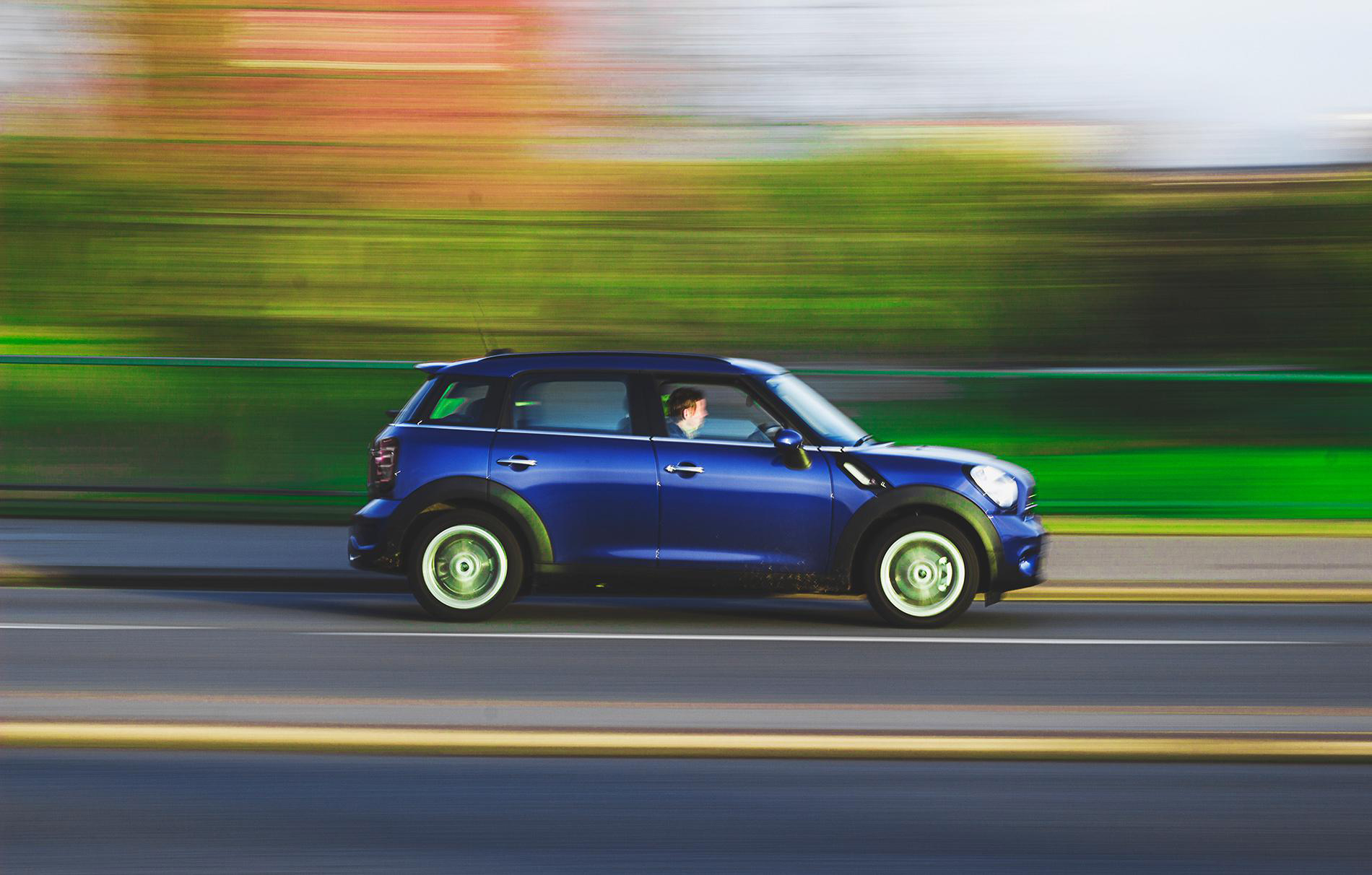
Speed drives nearly every design decision we make. Photo credit: Wikimedia Commons
The Hidden Costs of Speed in Roadway Design
We may think of speed as one factor among many in roadway design, but its influence is more pervasive than that. Speed drives nearly every design decision we make. Speed dictates how wide our streets must be and how much infrastructure we need to add to protect people from inevitable mistakes. Once we select a target speed (whether explicitly, or implicitly through defaulting to a certain type of roadway), everything downstream is determined by it. Here are just a few examples:
Clear zones. On higher-speed streets, designers provide unobstructed space in case a driver loses control. In practice, this means restricting things like street trees that make walking more comfortable.
Sight triangles. At stop-controlled intersections, drivers turning onto a main road need to be able to see traffic coming to judge whether they have time to pull out. The faster traffic is moving, the further people need to see, which means less on-street parking can be allowed to provide for that visibility.
Cross‑section width. At speeds of 30 mph or higher, guidance increasingly calls for greater separation between vehicles, pedestrians, and bicyclists. As documented in FHWA’s Separated Bike Lanes on Higher Speed Roadways: A Toolkit and Guide, this should mean buffered sidewalks and separated bikeways—choices that frequently require additional roadway width or tradeoffs with parking and frontage.
Pedestrian crossings. Fast-moving traffic requires more robust pedestrian crossings, which introduce delay for everybody. The cost and inconvenience means fewer crossings will be constructed in these contexts.
The list goes on. And don’t get me wrong: I’m not saying these design standards aren’t appropriate at high speeds. What I want to highlight is that speed is where it all starts. We design roads to move vehicles quickly, then reshape entire streets to manage the consequences of that choice. And design implications are only part of the equation.
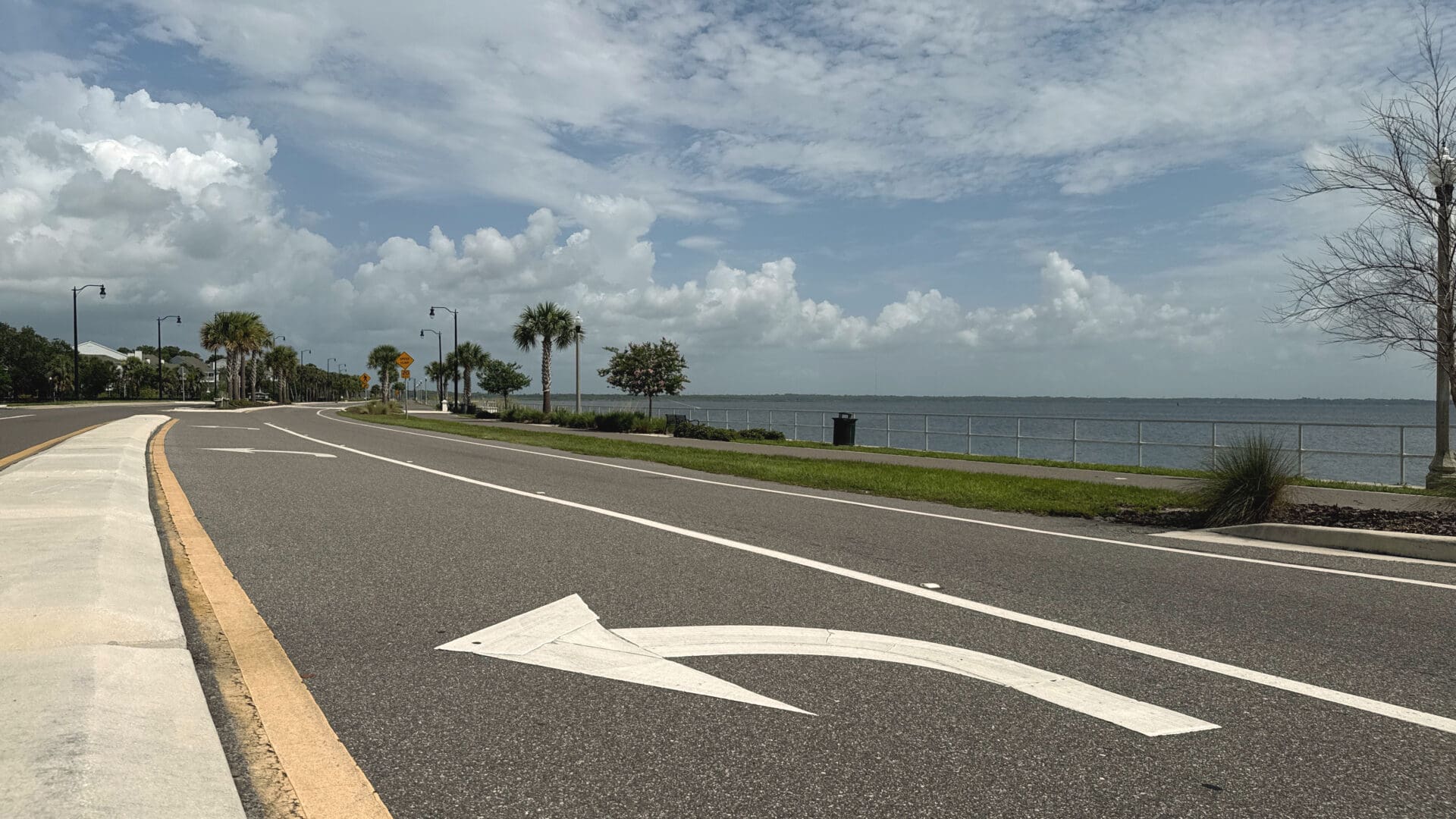
At higher speeds, the taper length into a turn lane must be longer, which means a wider road for a longer distance. Photo credit: Derek Baker.
The Expense of Speed
As speeds increase, the money agencies spend to address the repercussions shoots up as well. Cities and towns are spending millions of dollars on speed humps, raised crosswalks, speed cameras, and other devices to simply compel drivers to travel at safe speeds.
These are good projects (Kittelson has led many traffic calming efforts, and I support their benefits), but it’s economically inefficient compared to designing a road for a lower speed in the first place. Simply put: speeding is expensive. The faster we design roadways to operate, the wider, more complex, and more expensive they become.
The Stress of Speed
I’ve participated in dozens of public meetings in my career so far, and concern about speeding is one of the most consistent themes I’ve heard. Residents regularly cite vehicle speeds as a source of stress, discomfort, and perceived risk. Fast‑moving traffic affects who feels safe using the street. It discourages walking, biking, and lingering, thus reinforcing the vicious cycle of traffic and speed.
In light of all these costs—added to the most significant cost of thousands of lives every year—there’s a case to be made that vehicle speed is the single most important issue in transportation today.
Does It Actually Get Us There Faster?
Here’s what’s remarkable, and not widely understood: for all the economic waste, design limitations, and safety risks, higher speeds often have a negligible difference on travel time. Sure, if you’re taking a 500-mile road trip, driving 70 mph versus 60 mph on the freeway could save you about an hour over the course of the day. But the proportions are not the same in urban areas. Monash University in Melbourne, Australia, published a literature review showing that reductions in driver speeds in urban areas had only a marginal difference in travel time.
It turns out that speeding up in between signals is not very productive because the speed at which we drive is only one of many factors dictating how quickly we’ll arrive at our destination. Other factors in the mix include intersection density, signals, congestion, and the behavior of other drivers. (Is someone crossing the street on foot? Is a driver waiting for space to make a turn? Are other people driving more slowly?) And all of these things are outside our control. For as much as we think we’re in charge when we buckle up in the driver’s seat, we have less agency behind the wheel of a car than we think we do, whether we’re revving up to 35 mph or going slow and steady on a stretch between signals. Infrastructure Victoria has a great explainer video on this topic.
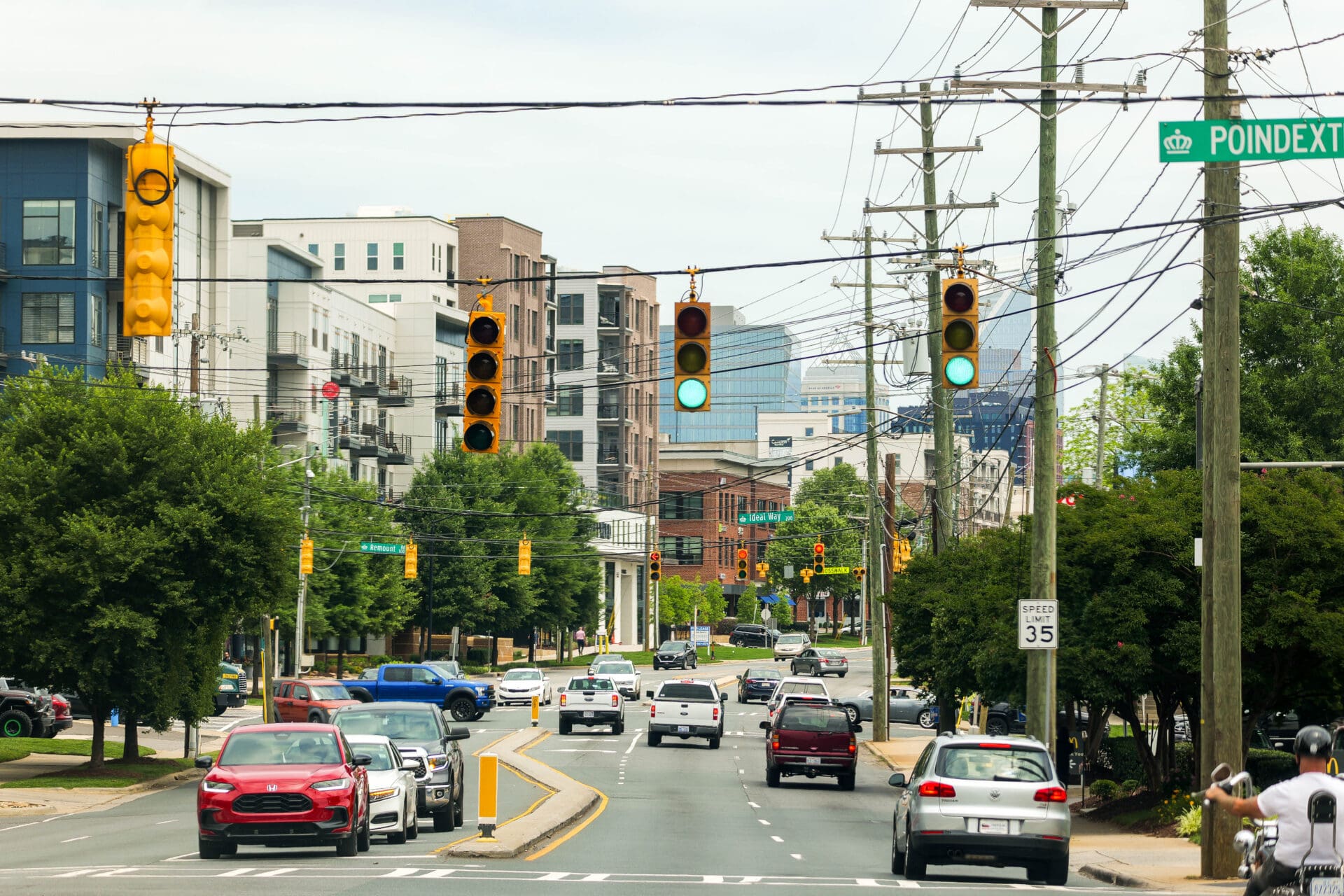
Speeding up in between signals is not very productive because the speed at which we drive is only one of many factors dictating how quickly we’ll arrive at our destination. Photo credit: Brisa Hannah.
A few years ago, I decided to try a personal experiment. I decided that I would always drive the speed limit. I would fight the urge to inch up to 5–10 mph over the number on the sign no matter how much of a hurry I was in. I’m just one person, but I haven’t found myself arriving at destinations any later than I did before. Not only that, I’m more relaxed as a result. (Studies show that living more slowly reduces stress and increases mindfulness—but I’ll stay in my lane.) When I realized that stressing about moving quickly wasn’t getting me anywhere faster, I found a sense of calm around the whole driving trip.
What Do We Do About This?
If you’re tracking with me, we’ve covered that:
- speeding creates outsized problems; and
- slowing down in urban areas is both safer and far less costly—in lives, in dollars, and in actual travel time—than we tend to assume; but
- people will still drive fast when given the chance.
So what’s the path forward? It’s clearly not simple: if the issue of speed were easy to solve, crash fatalities wouldn’t be one of our biggest public health crises today. Is it even possible to pull back on high speeds after they’ve been allowed and once our streets, travel habits, and expectations have adapted to them? I’ve heard from many an engineer that you can’t just change the number on a speed limit sign and expect people to comply. I agree that a sign alone is likely not enough to achieve the behavior modification we need.
But I said I was going to get to good news, and here it is. Remember how speed influences just about every aspect of street design? That means we have tools available to design streets that support safer, more reasonable speeds. Essentially, we can work backward from the issues I listed earlier in this article and use more compact street design in urban areas to facilitate target speeds.
Roadway Design for Safer Speeds
Think about European cities that were built long before people were driving. The built form dictates how wide and long the roads can be. I see aspects of this in Boston, where I live. Who needs traffic calming when you have naturally crooked streets, tight spaces, and discontinuous grids? I’m being facetious, of course, but there’s a clear principle in there. We can design our roadways to naturally guide drivers to drive at target speeds, rather than relying on a driver’s adherence to a posted speed limit to uphold safety standards.
This can include fewer and narrower lanes, landscaping and other vertical elements that narrow sight distance, and treatments like chicanes and mini roundabouts that break up long straightaways. All of these cues (and typically a combination of them) can make speeding difficult or even impossible. The Transportation Research Board is working on guidance for self-explaining/self-enforcing roads, which is exactly what it sounds like: roads that achieve target speeds and road user behaviors through the way the roads are designed.
The curved geometry of roundabouts naturally guides drivers to slow down. Photo credit: Mariordo Mario Roberto Duran Ortiz, Wikimedia Commons.
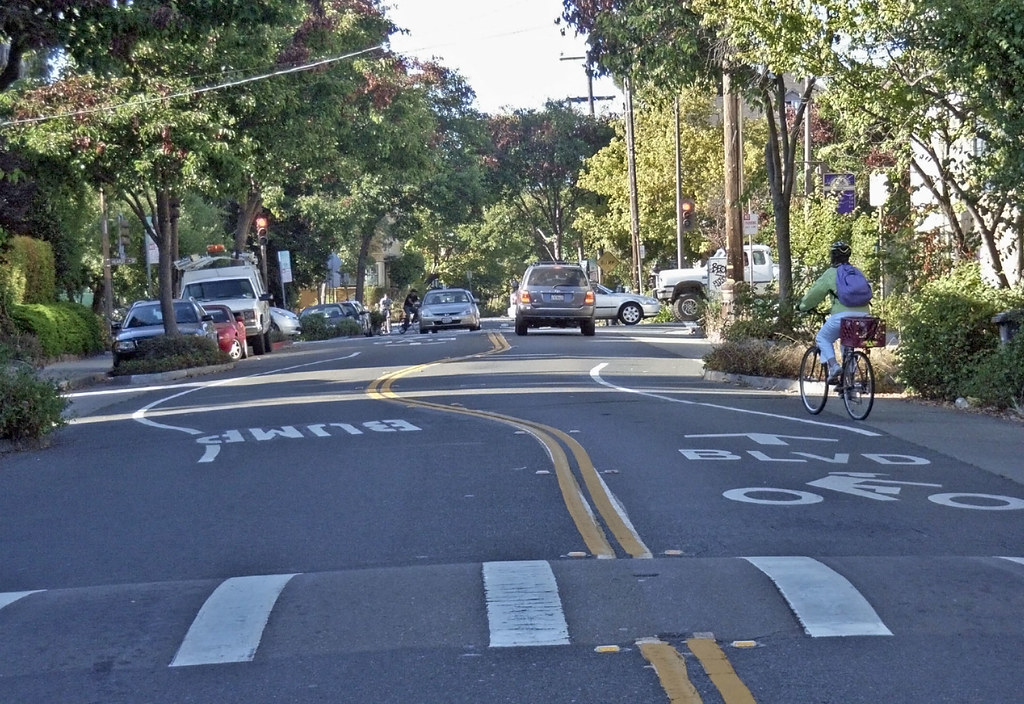
Treatments like chicanes and mini roundabouts break up long straightaways, reducing the ability of drivers to speed. Photo credit: Dorret Oosterhoff.
Technology for Safer Speeds
The other factor worth considering is that the technology to require people to drive the speed limit exists. Speed limiters—specifically Intelligent Speed Assistance (ISA) systems—can use in‑vehicle technology to automatically prevent drivers from exceeding posted speed limits. This can be done passively, like beeping when a driver exceeds the speed limit (just like if that driver was not wearing a seatbelt), or actually programming the car to not surpass the posted speed limit (just like newer cars now automatically brake when the vehicle is traveling too quickly toward a fixed object), except in emergency cases in which the ISA can be temporarily overridden. I recognize this is a complex topic, and I encourage you to read more about its nuances and why I think it has the potential to save thousands of lives every year.
It’s been exciting to see movement in the realm of ISAs. Starting in July 2026, judges in Virginia will be able to require drivers caught exceeding 100 mph to install speed-limiting technology. In 2024, Washington, D.C. passed legislation around putting ISA devices in the vehicles of drivers convicted of major speeding crimes. New York City ran a pilot between 2022 and 2024 to study the effectiveness of ISA technology. In a cohort of 270 vehicles equipped with it, the pilot saw a 64.18% decrease in time spent speeding 11 mph or greater over the speed limit compared to a previous 60-day analysis period. (In contrast, a “control” cohort of 270 similar vehicles without ISA technology was studied in the same timeframe and actually saw a slight increase in time spent speeding.)
Redefining Mobility Freedom
I get that some of these suggestions sound more appealing from behind my transportation planner’s desk than from behind the wheel of my car. But when did sitting behind the wheel of a car—the instrument of 40,000 deaths in the U.S. every year—become the place we expect unhindered freedom? Getting people to drive at slower, safer speeds isn’t about restricting freedom; it’s about saving lives.
I also find it helpful to zoom out. In addition to reducing the likelihood of severe crashes, a slower street makes more trips possible without a car, and that’s a form of freedom too, especially as those choices get better. Every time we design for spaces like public transit, walking, bicycling, and other ways of getting around, we’re expanding options through modal variety, predictable travel times, and less stress. If we really want quicker journeys to our urban destinations, more transit routes or a convenient citywide bicycling network can actually get us there—unlike hitting the gas pedal a little harder in between red lights.
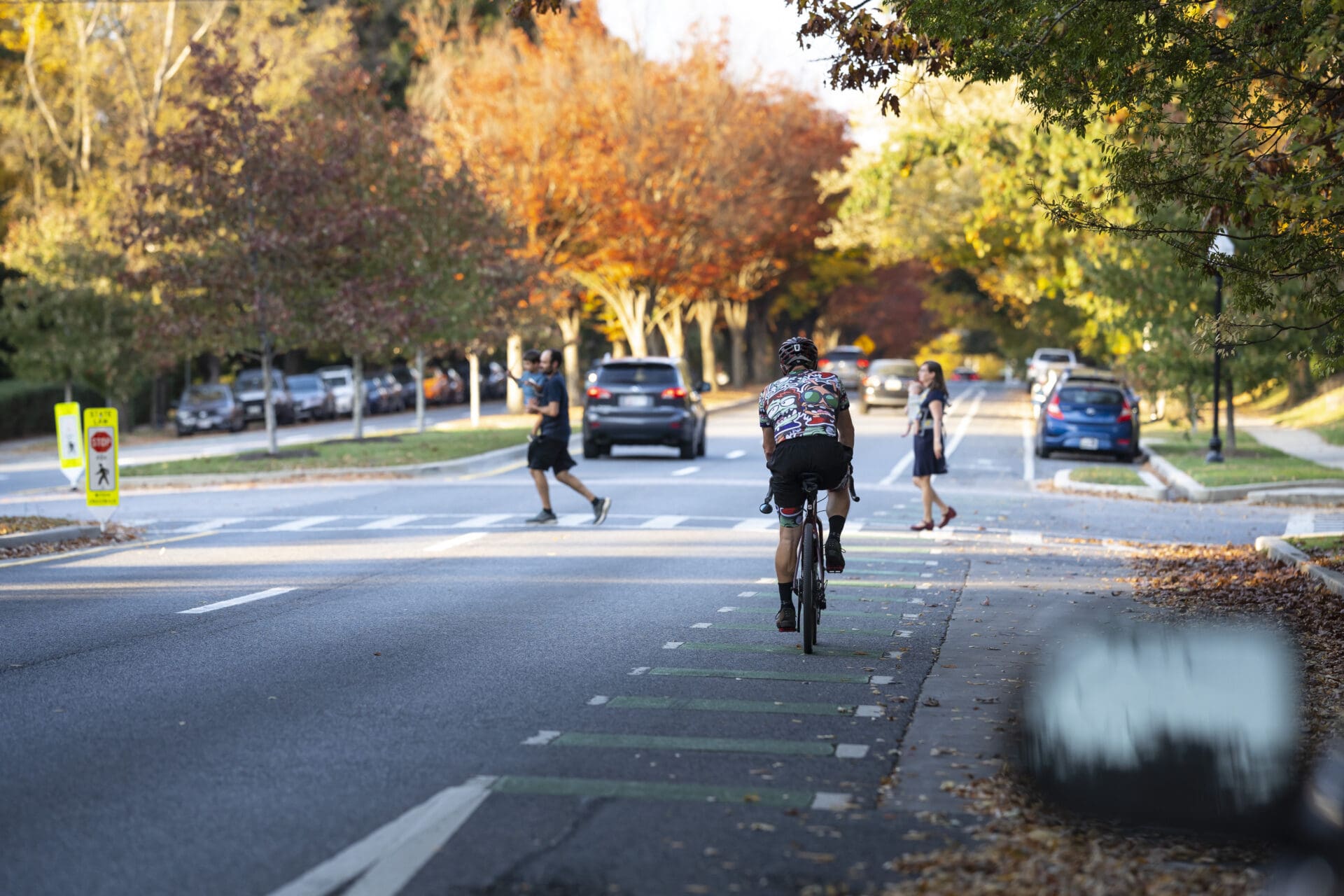
In addition to reducing the likelihood of severe crashes, a slower street make more trips possible without a car, and that’s a form of freedom too. Photo credit: Dorret Oosterhoff.
Continue the Conversation
There’s a lot to think and talk about here. I welcome the dialogue—in fact, I most value engaging with transportation professionals who bring different ideas and perspectives to this topic, because at the end of the day the safety of our streets should not be a divisive issue. It should be one that urges us to learn from one another and find common ground from which to move forward. If you’ve read this far, I know this is an important topic to you, and that’s what matters to me. Reach out at csemler@kittelson.com and let’s chat!