Challenge
As electric scooters, e-bikes, and other micromobility devices become increasingly common on U.S. streets and trails, transportation agencies and law enforcement organizations face new challenges in managing safety, enforcing traffic laws, and understanding crash trends. Agencies need guidance to develop regulations and policies that are practically enforceable and informed by a more complete picture of safety data.
Solution
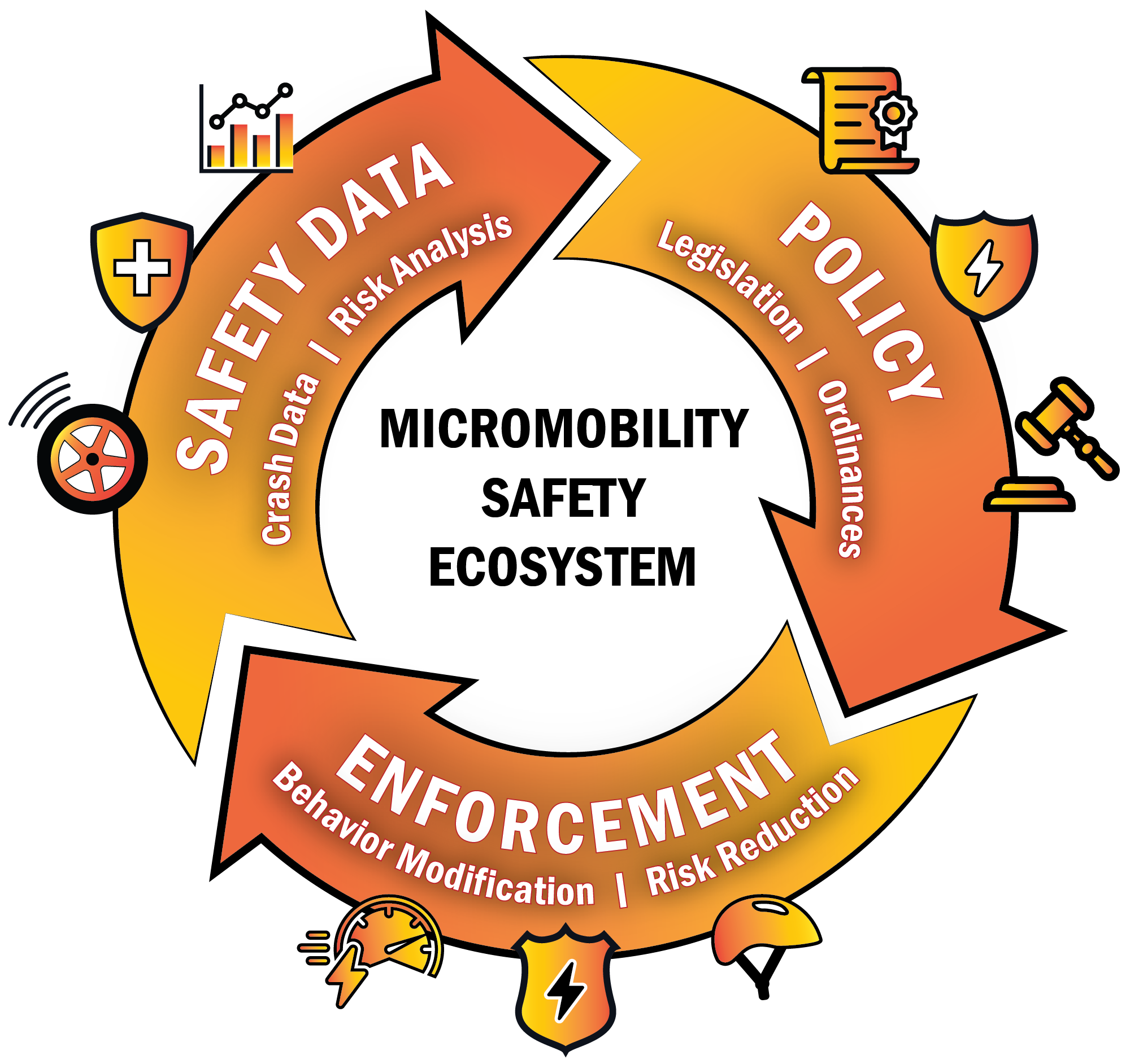
A Kittelson-led research team is leading BTS-46: Tools to Support Enforcement of Micromobility Traffic Laws and Crash Reporting to examine the “micromobility safety cycle” of quality data, well-written policy, and effective enforcement. A key focus of the project is understanding how crashes involving e-scooters, e-bikes, and other micromobility devices are documented and reported. In many communities, inconsistent crash report forms and protocols, as well as confusion when documenting device type and legal status, make it difficult to understand safety issues and identify effective countermeasures. Through BTS-46, we’re evaluating emerging crash reporting practices, complementary data sources (like hospital and EMS records), and developing recommendations to make micromobility safety data more complete, consistent, and useful.
We are also working to understand how state laws and municipal ordinances clarify device characteristics and their legal use so that police can more effectively enforce those laws, and where communications and partnerships with retailers, schools, and other community-based organizations can help encourage the safe and legal use of micromobility devices as a complement to police enforcement. Through a nationwide review of policies and practices, interviews with transportation professionals and law enforcement personnel, and evaluation of emerging technologies and data sources, our team is identifying common challenges and promising strategies for more consistent and effective enforcement.
The Outcome
Building a Clearer Picture of Micromobility Safety
The practical resources developed through this project will help practitioners navigate evolving regulatory environments, improve coordination among stakeholders, support equitable and effective enforcement strategies, and strengthen the data needed to make informed safety investments. By advancing both enforcement and crash reporting practices, BTS-46 is contributing to safer integration of micromobility into the transportation system and helping agencies better understand and address emerging transportation safety challenges.