
September 22, 2026

Japan’s geography does not naturally lend itself to the easy movement of people and goods. Many of the country’s transportation challenges are baked into its very crust: an archipelago nation, 70% of Japan’s surface area is mountainous, and its four main islands are often visited by powerful tsunamis, earthquakes, and blizzards. This past July, a magnitude 7.1 earthquake in Kumamoto, a prefecture on Japan’s southernmost main island, Kyushu, liquefied soil, snapped bridges, and created large, vertical drops in formerly smooth roadways. It’s one of 38 seismic events of magnitude 6 or greater that have taken place in Japan in the last 15 years alone.
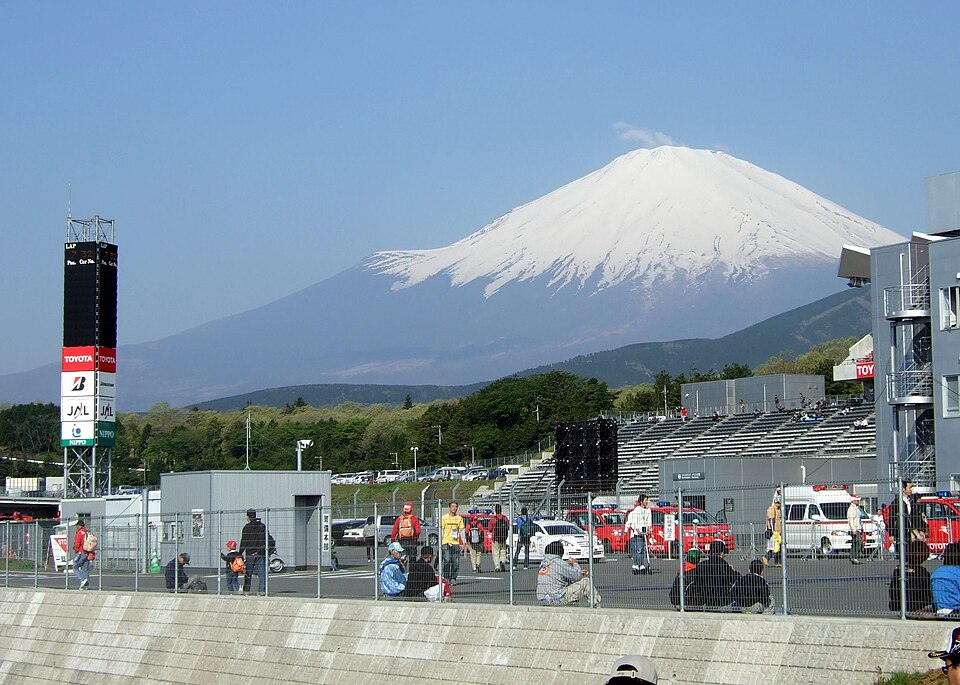
In Japan, manmade transportation systems exist alongside the natural environment in a delicate relationship. Photo: Wikimedia Commons
Yet despite these huge obstacles, the Japanese government and the nation’s inhabitants do quite a good job of getting people and goods around. Today the country has completed 90% of its planned intercity highway network, and it safeguards its mobility with a sophisticated disaster response system that enshrines the government’s ability to quickly rehabilitate destroyed roads. When a magnitude 9 earthquake—the fourth most powerful on seismic record—hit the northeastern regions of Honshu in 2011, it killed at least 20,000 people, triggered the meltdown of a nuclear facility that then contaminated the water supply, and rendered major highways, including the Tohoku Expressway, impassible. Yet despite the devastation, the Tohoku fully reopened within two weeks.
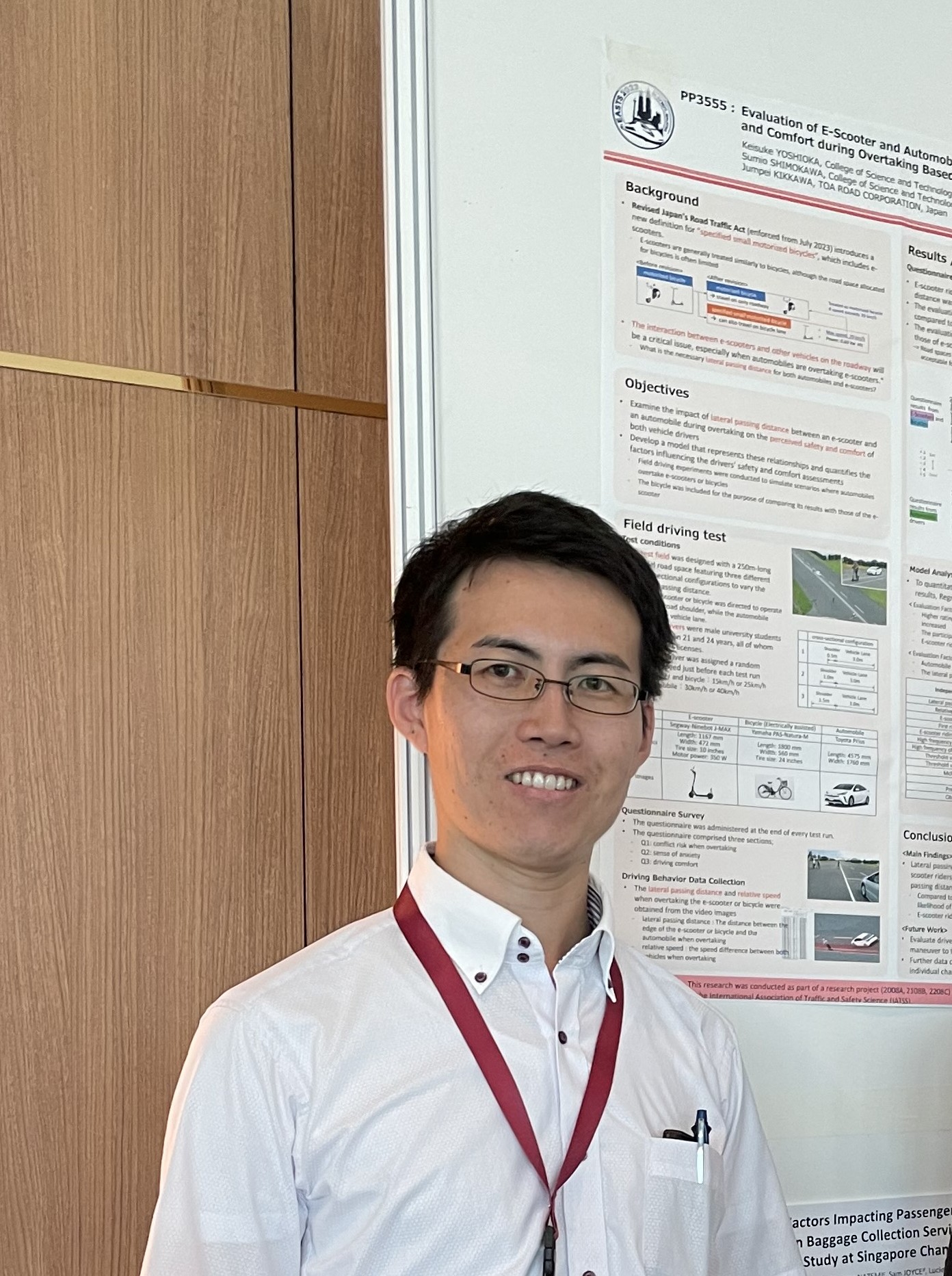 This summer, we had the privilege to learn more about Japan’s transportation network when we welcomed Dr. Keisuke Yoshioka for an extended stay in our Portland, OR, office. We first met Dr. Yoshioka at TRB’s Annual Meeting in 2014. That meeting was parlayed into an office visit, during which he studied roundabouts with Lee Rodegerdts. Now a professor in the Department of Transportation Systems Engineering at Nihon University, Dr. Yoshioka returned this summer to study alternative intersection forms with us as part of his work on the forthcoming third edition of Japan’s national Roundabout Manual. Our faith in the roundabout’s ability to make roadways safer and more efficient is well-documented; Yoshioka’s own interest in the roundabout stems from his conviction that it could play an important role in preparing Japan to face a major threat looming over its transportation network—one that, surprisingly, isn’t related to natural disasters.
Today, we’ll look at the transportation question that brought Yoshioka to the states in the first place, learn about his ongoing research, and check in on the state of alternative intersections in a place most of us seldom get to travel: Japan.
The Generational Problem Facing Japan’s Roadway Network
First things first: the consistency of extreme natural phenomena is a problem. Yet while the routine natural disasters require ongoing problem-solving, relentless diligence, and constant innovation by Japan’s Ministry of Land, Infrastructure, Transport and Tourism, the regularity with which they occur in Japan has normalized responses to them. These occurrences are big problems, but they’re known problems.
Meanwhile, there is another long-fomenting transportation problem that is soon to come due in the country, and unlike Japan’s ongoing habit of natural disasters, this problem is, both in its frequency and its impact, generational. If the destruction imposed by cataclysms like earthquakes represent the most externalized problem a transportation network could face, this is perhaps the most internalized: the advancing age of Japan’s roadway users.
Japan has one of the oldest populations in the world, with nearly one in every three people aged 65 or older. Only Monaco has a higher share of people over 65, but the profiles of these two countries could hardly be more different: whereas Monaco is a micronation with under 40,000 people and an economy primarily dependent on tourism, Japan is a world power with over 123 million inhabitants. Japan’s ageing population poses an existential problem not just for the country but for the smooth functioning of the world economy.
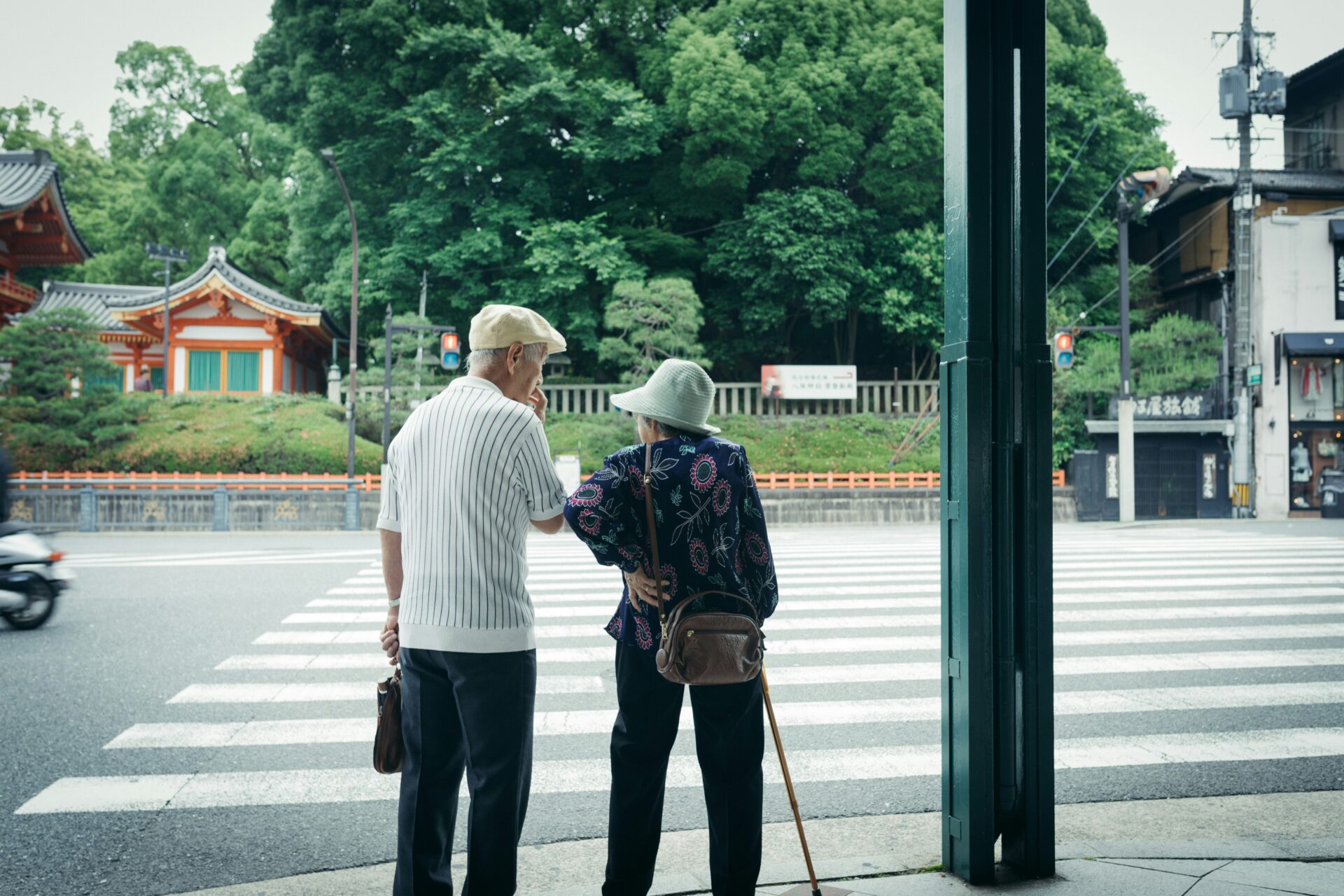
With one out of every three people aged 65 or above, Japan has one of the oldest populations in the world. In the near future, the advanced average age of the population will put strain on the integrity of the transportation system. Photo: Joey Huang, Unsplash
Inside Japan, the problem of an advanced average age touches every aspect of the lived experience, and the country’s leaders have responded accordingly. Repopulation initiatives have ranged from instituting AI matchmakers to jumpstart urban coupling to introducing a four-day workweek for government employees to increase family time to offering financial incentives to repopulate Japan’s dwindling rural communities, and varied widely in their success.
On the transportation front, Japan’s ageing population presents some operational problems. The country’s roadway saturation flowrate (the maximum rate at which cars can move through an intersection) is now 20% lower than it was in 1980, and the average overall kilometers traveled on roadways has fallen as the average age has risen. But according to Yoshioka, the primary threat posed by Japan’s advanced average age is not operational but maintenance related. As the population continues to age, there will simply not be enough people to maintain all of Japan’s roadway infrastructure.
Caring for Japan’s many, many, many traffic signals will pose a special strain. According to Yoshioka, there’s no way to put it other than Japan has too many traffic signals. (He cites a study that found Japan has about 1.5 traffic signals for every 1,000 people. The U.S., according to the same study, has 1.09. The per capita difference might not seem like much, but consider that Japan’s entire roadway network is about a fifth the size of the States’.) Already the country’s maintenance workforce is struggling to keep up with the needs of its transportation infrastructure, with the Ministry of Land, Infrastructure, Transport and Tourism noting “23% of towns and 56% of villages in the country have no civil engineering technicians for bridge maintenance in their workforce.” As the population continues to decrease, the number of traffic signals will effectively overwhelm the available workforce. In turn, widespread signal disrepair will amplify operational problems that already exist throughout the roadway network, including slow service speeds and irregular levels of service across roads that connect major cities.
For Yoshioka, especially in a country where roadways are overrun by cumbersome traffic signals, an intersection alternative that doesn’t require signalization for safety could represent a pathway toward a more sustainable transportation future. The only problem? The roundabout is, as of now, not that popular in Japan.
The Quest to Make the Roundabout Catch On
Many transportation cultures have spent the twenty-first century warming—slowly—to the roundabout. Throughout much of the twentieth century, and even in the roundabout’s ancestral home of France, roundabout predecessors such as the rotary and traffic circle were met with repulsion by the public and skepticism by engineers, who believed that in order to serve increasing vehicle speeds these intersections would need radii so large they would be possible only in the most rural contexts. America’s modern-day resistance to the roundabout has decades-old roots in arcane traffic laws that, by prioritizing vehicles entering the traffic circle over vehicles already in the circle’s center, effectively imprisoned travelers in the inner ring. In the face of lingering distaste and several other persistent myths, the roundabout has made gradual gains in the states, and today there are 12,986 roundabouts across the country.
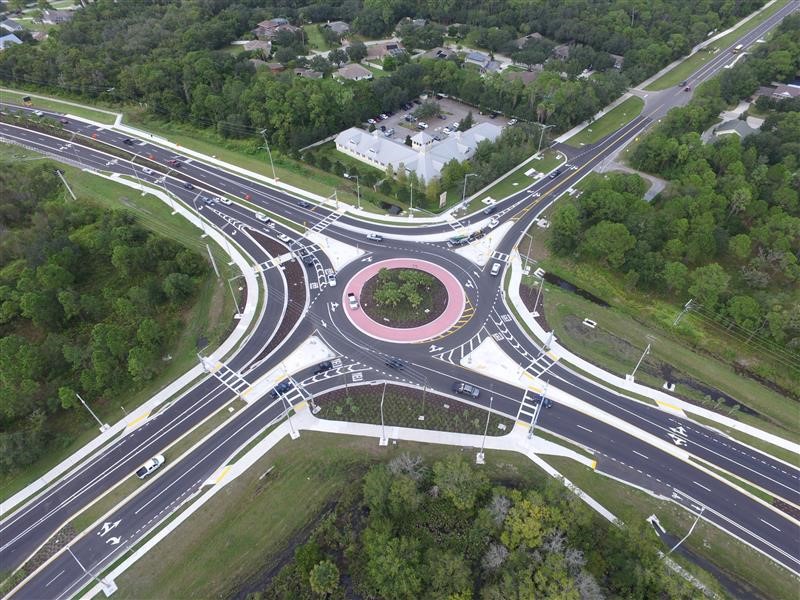
With geometry that organically encourages drivers to slow down, the roundabout can act as a natural traffic-calming treatment. It also would relieve Japan’s transportation officials of increasing maintenance burdens. Photo: Kittelson and Associates, Inc.
Even compared to these slow-burn roundabout romances, contemporary Japan’s courtship with the roundabout has been apathetic. Yoshioka’s research found that, as opposed to the United States, which saw an eight-fold increase in the number of roundabouts within 10 years of publishing guidance on them, or South Korea, which saw more than a five-fold increase in the same span of time, the number of roundabouts in Japan has only increased three-fold in the 10 years since the country first formalized roundabout guidance. According to the Roundabout Database of Japan, created by Yoshioka to track the spread of roundabouts in the country, Japan had just 184 roundabouts as of March 2026.
Yet the roundabout has unique potential to ease the effects of widespread population ageing on Japan’s roadway network. In addition to reducing the maintenance burden on the country’s transportation practitioners, roundabouts could further fortify Japan’s roadway network against natural disasters. Currently when natural disasters strike, their impact on Japan’s power grid means traffic signals throughout the network are downed for an amount of time; if traffic operations no longer depend on these signals, however, then there’s a greater chance of traffic continuing unabated in the wake of disruption.
Yoshioka maintains that the roundabout isn’t necessarily the only solution capable of addressing Japan’s unique circumstances; any alternative roadway form that eliminates the need for a traffic signal, including options like RCUTs (restricted crossing U-turns) or MUTs (median U-turns) can greatly help the country prepare for its future.
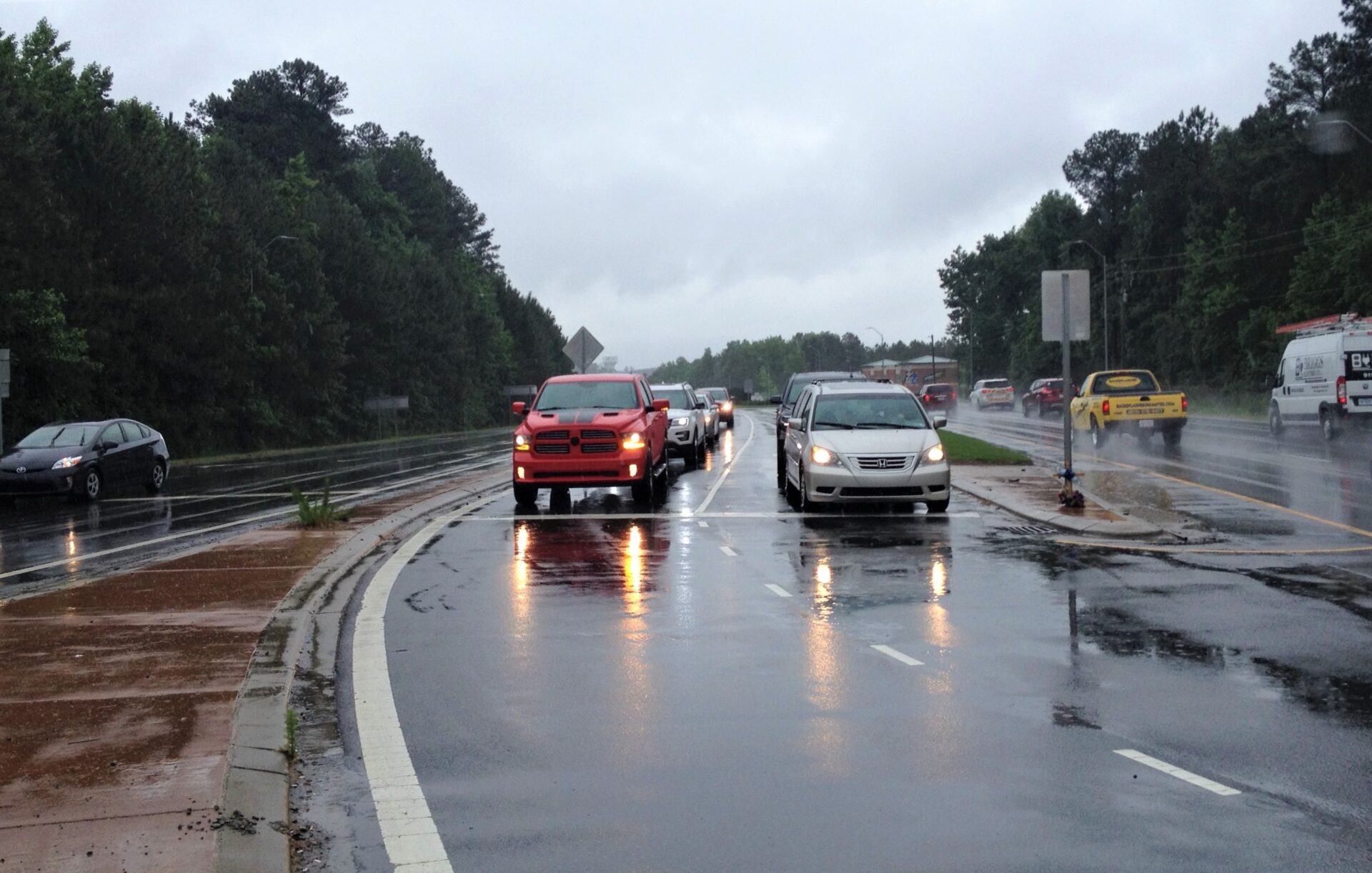
Like the roundabout, other alternative intersection forms—like this RCUT in North Carolina—use geometry to reduce the number of conflict points between users and clarify order of operations. Photo: Kittelson and Associates, Inc.
Yoshioka’s research has focused on understanding and reacting to the forces behind Japan’s slow adoption of alternative intersections. He’s identified a few trends that could point to the roundabout’s slow growth in the country, as well as a few notions of what could help it along.
More Local-Level Education Needed
A survey Yoshioka conducted of local governments in Japan found that only 10% have considered implementing a roundabout; the other 90% have never considered it. While some of these officials, especially those working in dense urban communities, repeated the same space-based arguments that have always plagued the roundabout, Yoshioka found that more commonly these officials simply haven’t been exposed to the performance and maintenance benefits of roundabouts. Given that the number of traffic deaths remain low in the country, there’s a widely held belief that the traffic signal is perfectly safe and convenient.
In the past, efforts to educate Japan’s transportation professionals have been largely limited to traveling workshops that might make it to a region once or twice a year. Yoshioka believes this is not enough to encourage mainstream adoption of the form. The way he figures it, it might be advantageous to flip the order of operations around: instead of trying to build consensus among a small cohort of regional leaders who must then convince their public to embrace the roundabout, it might be more effective to work from the bottom up. By developing educational materials that can be disseminated on grassroots platforms (like YouTube), the public could advocate for the adoption of roundabouts to their regional governments. The ultimate solution will likely require transportation officials to tackle the problem from both ends at once.
Update Design Guidance to Incentivize Adoption
Maybe the most concrete way Yoshioka is working to accelerate roundabout adoption in Japan is by contributing to the forthcoming third edition of the country’s Roundabout Manual. Originally published in 2016, the first edition of the manual drew upon international guidelines to enumerate the basic principles of roundabout design for a Japanese audience. A 2021 update archived crash data, included information about enhancements like truck aprons, and also began to consider the accessibility needs of the form by discussing ways to make roundabouts more usable for people who are blind or have low-vision.
Though so far the editions of the manual have focused on providing ever-more-encompassing design guidance for different types of roundabouts, they have yet to incentivize local governments to prioritize the roundabout over traditional signalized intersections. The forthcoming third edition hopes to make its mark by doing so, providing a revised approach to roundabout guidance that stresses its affordability and the ability of turbo and compact roundabouts to fit into urban streetscapes.
Adapt alternative intersection concepts to Japanese context
As the guidance for and awareness of roundabouts continues to proliferate, Yoshioka is also interested in ensuring that the form (and its component processes) reflects and perpetuates the implicit values of Japanese land use contexts. Just to import these concepts unmodified won’t be effective.
A 2024 study into what values should ground roundabout implementations in Japan suggested that qualities including “compactness, low cost, simplicity of design, accommodating diverse users, [and] consent forming” might go a long way in helping the form find a home in the country. Yoshioka himself suggested that accountability to the public would be an important ingredient for the form’s success. With a public and governance that retains a high degree of trust in the safety of signalized intersections, part of this accountability might look like a method to prove quantitatively that the roundabout isn’t going to introduce new safety risks on Japanese roadways. To make this possible, Yoshioka is currently working on a Risk Index that considers the “invisible probability” that a user entering a roundabout will be unable to recognize another vehicle as circulating. The goal of this index is to try to provide a mathematical reassurance that the roundabout’s geometry won’t endanger users on Japanese roadways who might not be accustomed to it.
A More Profound Shift
Although Yoshioka arrived this summer focused primarily on his research around alternative intersections, over the course of his stay he has also taken notice of by a broader difference between Japan and the U.S. in how transportation research occurs in the first place. According to Yoshioka, the transportation arts are separated into two distinct realms in Japan: transportation “research,” which is consigned entirely to academics (like Yoshioka) who have a monopoly on policy-making discussions with government bodies; and transportation “practice,” which is the domain of private transportation firms who exist mostly to put projects into the ground while complying with policies set by the researchers and government. Scarcely does an individual (or individual firm) work in both “practice” and “research” at once.
Meanwhile, his time researching in the States showed Yoshioka a transportation industry in which the barrier between research and practice is more permeable. TRB committees, for instance, are widely peopled by individuals working in the private sector. This isn’t to say that the research ecosystem the U.S. transportation industry operates in is without flaw; among other problems, research in the States is often subject to funding that depends on political priorities. Yet Yoshioka believes that the U.S.’s permeability increases the pace at which cutting-edge techniques can be both developed and applied in practice. It also expands the scope of questions that are addressed by research in the first place. As he returns to his home country, he’s interested in promoting more crossover between the two realms of Japan’s transportation industry.
There is a clear connection between the effort to introduce alternative intersection forms and an interest in strengthening collaboration between research and practice. Creating more opportunities for exchange between academic research and field practice can help support the adoption of new designs. When real-world practical insights are directly shared with research, it becomes much easier to shape design policies that outfit the country’s roads for its future.
The opportunity to work with and learn from Dr. Yoshioka this summer was one we won’t soon forget. Special thanks to Dr. Yoshioka for his support on this article. To discuss how to bring alternative intersection forms to your community, reach out!