
September 22, 2026

Dust off those detective hats: Transportation Myth Busters is back!
It’s always our goal to examine transportation challenges from every angle. In previous editions of Transportation Myth Busters, we’ve questioned if stop signs actually slow traffic. We’ve explored if one-way streets are better than two-way streets. We’ve debunked the idea that removing a travel lane always increases cut-through traffic. This time, we’re entering a more circular arena.
Few transportation concepts generate as many snap judgments as roundabouts. Some people grip the wheel tighter when they see one ahead. Others travel to Carmel, IN, just so they can traverse its roundabout-heavy streets for themselves. But beneath all the opinions, there are still many misunderstandings about this intersection form. Let’s take a look at some of the objections we hear most and provide some evidence-based responses.
So signal your skepticism, check your assumptions, and merge into the circle with us. We’re taking five familiar roundabout myths for a spin.
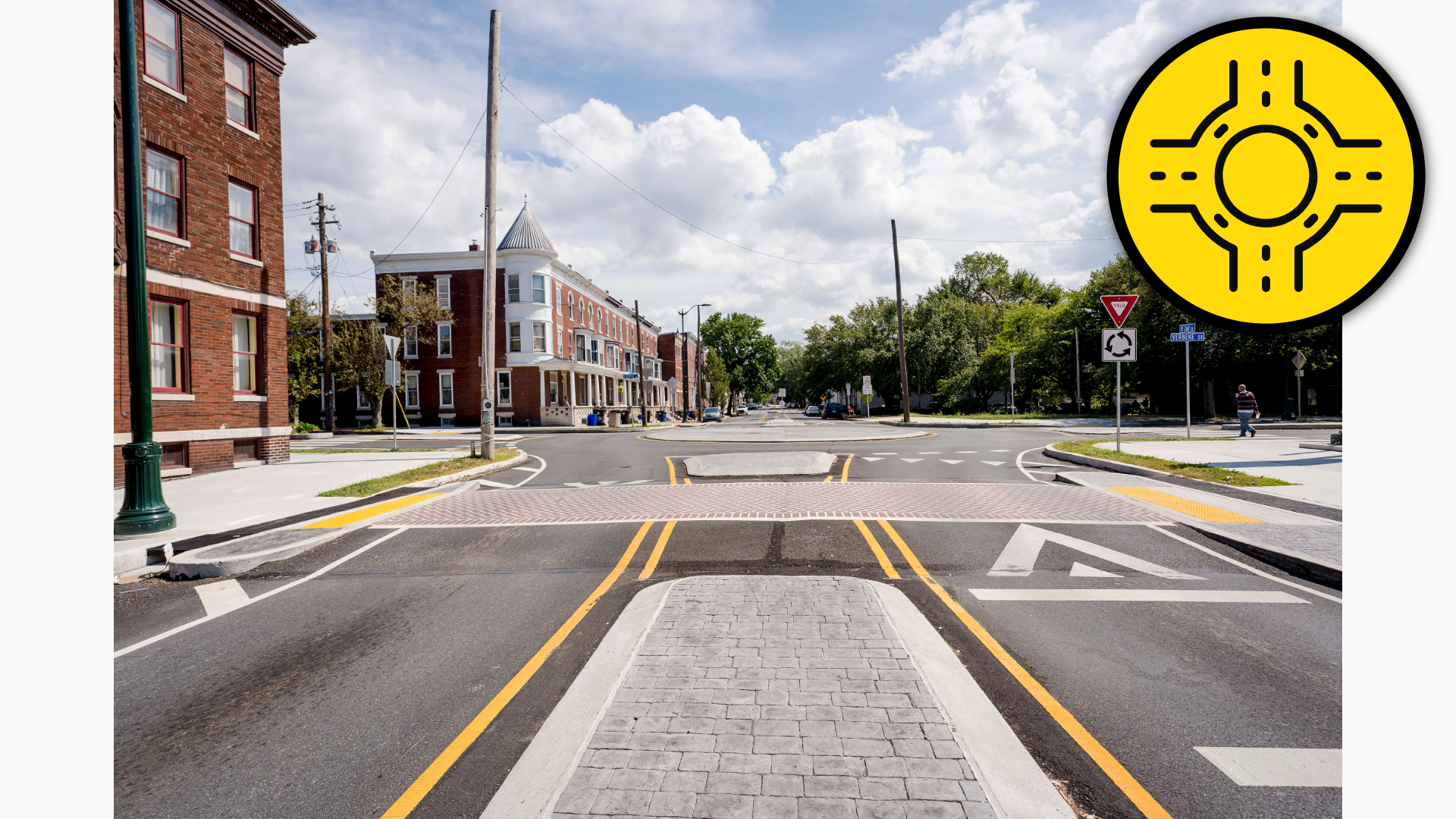
Few transportation concepts generate as many snap judgments as roundabouts. Credit: Kittelson & Associates.
Myth No. 1: Roundabouts only belong at major or complex intersections.
“We don’t have enough traffic to justify a roundabout.” “This seems like overkill. Why not just put up a stop sign or a traffic signal?” “Roundabouts are for congestion. We don’t have congestion.” “Our problem is speeding, not traffic volume.” “This is a small town. We don’t need roundabouts.”
These statements represent the assumption that a roundabout is a tool you bring in when there’s major congestion or a wonky juncture that doesn’t fit the mold of a traditional signalized intersection. Roundabouts are often associated with large capital projects, high-traffic corridors, or complex intersections. If the location is smaller, quieter, rural, or primarily dealing with speeding rather than congestion, a roundabout might not be the form of intersection control that comes to mind.
To this we say, not so fast (literally—speeding can be a great reason to consider a roundabout!). While roundabouts certainly can be the best solution at a bigger or complex intersection, we’re missing a big part of the story if we think that’s their only purpose.
Congestion is one of many reasons an agency might consider a roundabout. Roundabouts can also be used to manage speeds, improve safety, support side-street access, or create a clearer gateway into a neighborhood or campus. Mini roundabouts are specifically intended for places where space is limited or where a smaller-scale treatment better fits the context. In other words, a roundabout does not have to be a large, high-volume facility to be useful.
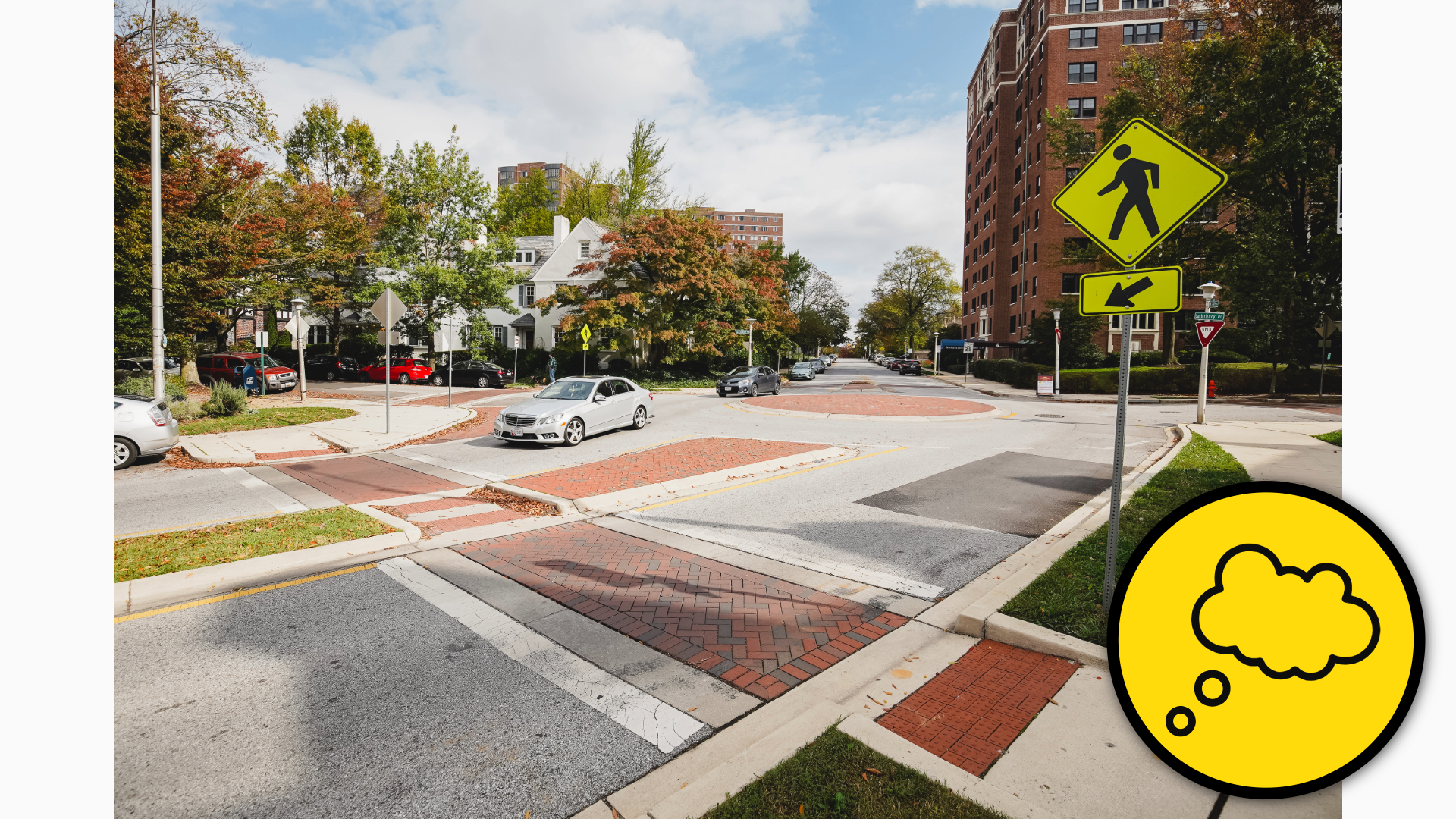
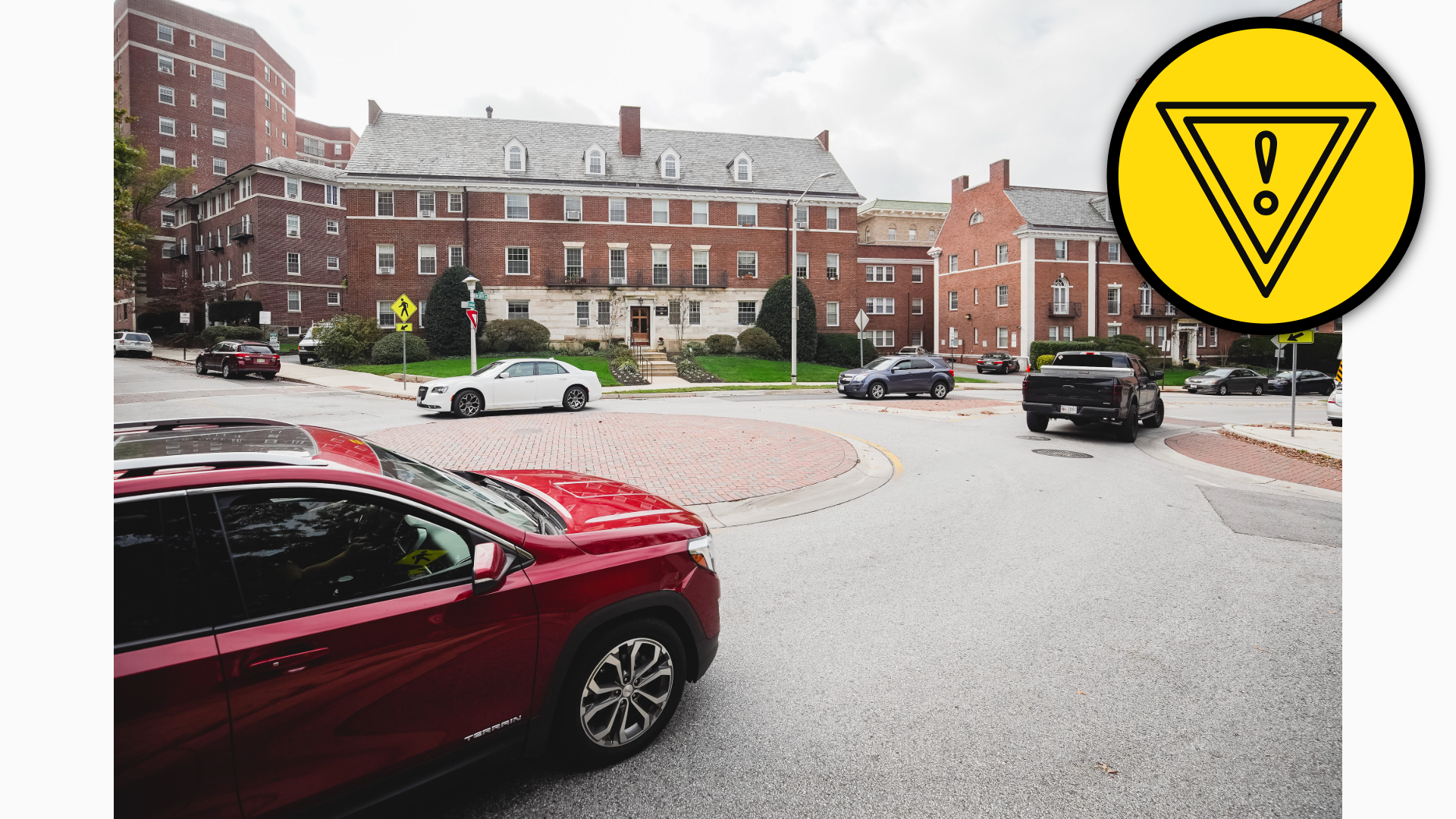
A mini roundabout in Baltimore, MD. Credit: Kittelson & Associates.
A stop sign or signal may be the best answer in some locations. But we’re underestimating roundabouts if we think they’re a solution only reserved for high-congestion intersections. Roundabouts are a powerful traffic-calming tool since they naturally slow vehicles. To navigate the tight radius, drivers are forced to slow down, often to about 15–20 miles per hour. Because they don’t require signal operations, many roundabouts have reduced ongoing costs compared to traffic signals. Roundabouts also are resilient during natural disasters since the intersections continue to function as designed when the power goes out. And we haven’t even talked about safety: converting a two-way, stop-controlled intersection to a single-lane roundabout has been shown to reduce fatal and injury crashes by 82%. (We’ll talk more extensively about this when we address Myth No. 3.)
The key question to ask is not whether an intersection is big enough for a roundabout. It’s what problem the community is trying to solve.
Myth No. 2: Roundabouts and pedestrians don’t mix.
“I would never walk through that.” “Drivers won’t stop for pedestrians.” “Crossing a roundabout looks confusing.” “I can’t tell when it’s safe to cross.” “It feels like roundabouts are designed only for drivers.”
The questions people ask at the curb are valid: Will drivers yield? Where should I cross? How do children, older adults, people using mobility devices, and bicyclists move through the space comfortably? A signal gives a familiar cue: wait for the walk phase, then cross. At a roundabout, the cues can feel less obvious, especially for people who are used to seeing vehicles continuously moving through the intersection.
If a roundabout does not work well for people walking, biking, rolling, or accessing transit, we’d say the design is not finished. These concerns are exactly what good roundabout design needs to answer.
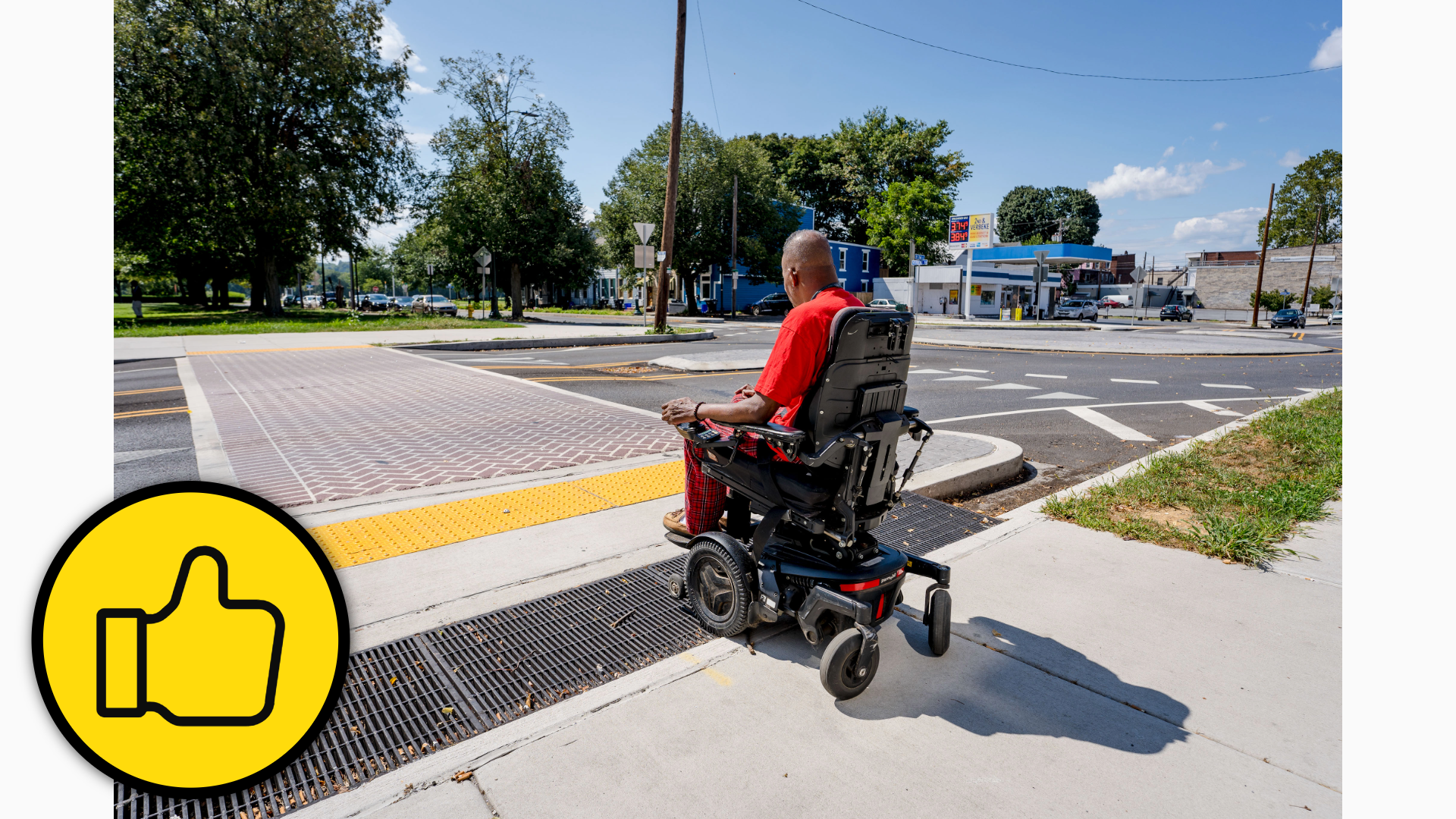
If a roundabout does not work well for people walking, biking, rolling, or accessing transit, we’d say the design is not finished. Credit: Kittelson & Associates.
Many roundabouts include features intended specifically to support people outside a vehicle, such as shared-use paths and separated bicycle facilities. (NCHRP Research Report 1043: Guide for Roundabouts—the latest edition of the national roundabout guide—provides roundabout designs where people driving, biking, and walking each have a dedicated space for navigating the intersection.) But even without these additional features, pedestrian safety is built into roundabout design. This is due to the slower speeds at which drivers travel when using a roundabout as well as the increased visibility of pedestrian crossings set back from the yield line and located where driving speeds are controlled through proper roundabout geometry. Compare this to a green movement at a signal, where a driver might be making a turn with no speed control.
Speed is a predictor of whether or not a driver will yield to pedestrians. A study of two-lane roundabouts in Maryland led researchers to estimate that the yielding rate of drivers traveling less than 15 miles per hour is about 75%, compared to a 50% yielding rate of drivers traveling more than 20 miles per hour. By getting drivers to slow down, roundabouts increase the likelihood that those drivers will yield to people on foot.
Roundabout design guidance continues to evolve, and the latest roundabout guide contains a wealth of information about pedestrian wayfinding and crossing, informed in part by prior research about crossings for people who are blind or have low vision. Public Right-of-Way Accessibility Guidelines (PROWAG) require additional treatments at multilane roundabout crossings, such as rectangular rapid flashing beacons or raised crossings.
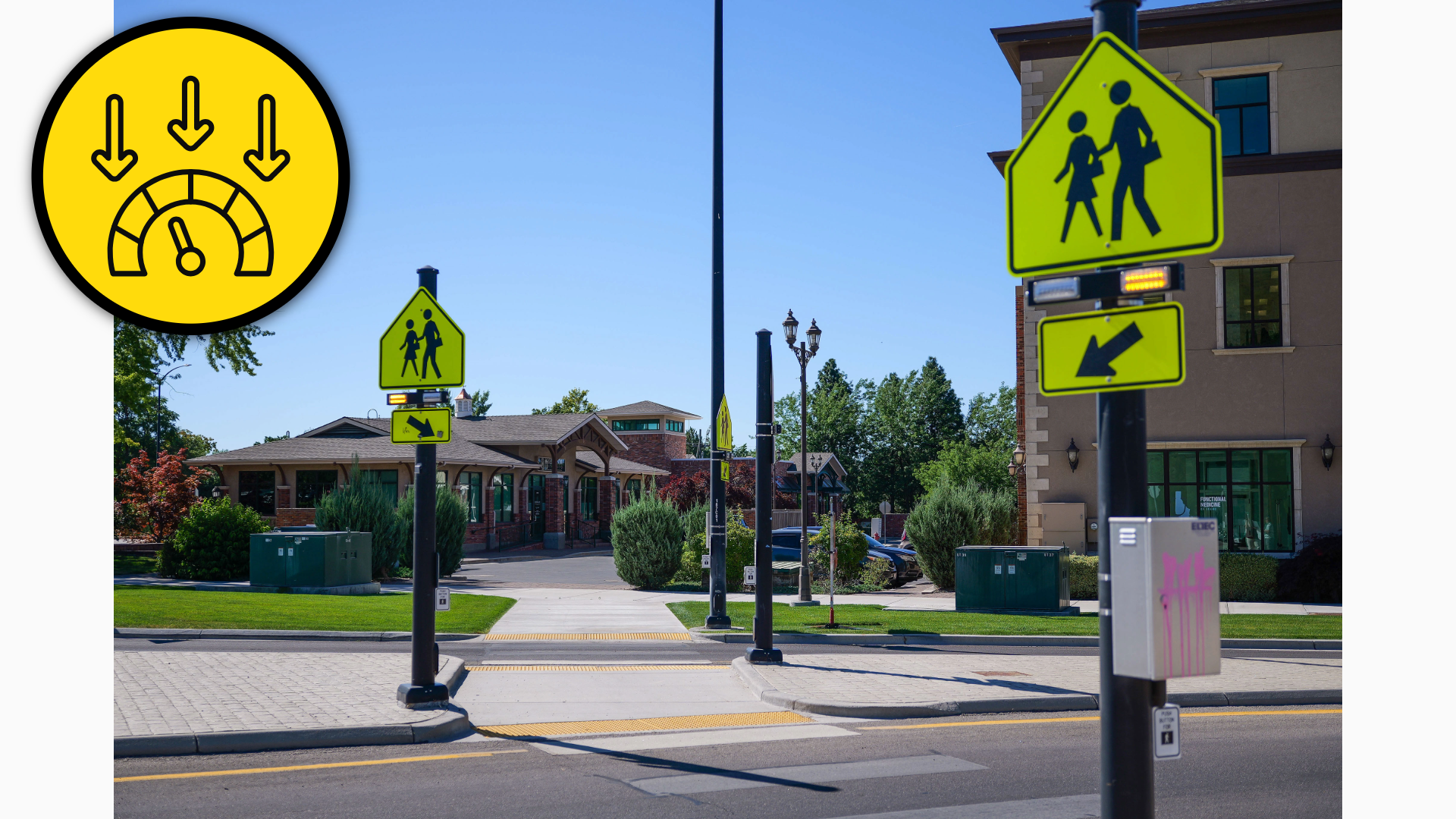
Public Right-of-Way Accessibility Guidelines require pedestrian safety treatments at multilane roundabout crossings. Credit: Kittelson & Associates.
That does not mean every roundabout automatically feels comfortable for every traveler. Context matters, and some locations call for more robust pedestrian and bicyclist treatments than others. But the assumption that roundabouts are only designed for drivers is increasingly out of step with current practice. In many projects, improving the walking and biking experience is one of the reasons a roundabout is considered in the first place.
Myth No. 3: Roundabouts cause more crashes.
“People don’t know how to use roundabouts.” “I heard there have been more crashes since it was built.” “Nobody understands who has the right-of-way.” “Roundabouts create confusion.” “I avoid them because they seem dangerous.”
This myth sticks because roundabouts can look busy. Drivers are yielding, choosing gaps, watching for people crossing, and navigating a path that may be less familiar than a signalized intersection. It is easy to see hesitation, near misses, or low-speed conflicts and assume the roundabout is more dangerous.
This might be our favorite roundabout question to respond to because it allows us to highlight just how cool roundabout design is. There’s a reason the Federal Highway Administration identifies roundabouts as a Proven Safety Countermeasure. There are a few things that are going on within roundabout design that put safety at the front of the conversation:
- Lower driving speeds. Have we mentioned roundabouts force drivers to slow down? We’ll just add that since most drivers travel at similar speeds through the intersection, roundabouts tend to have smaller speed differentials, which also reduces crash severity.
- Fewer conflict points. According to NCHRP Research Report 1043, in a conventional four-legged intersection, vehicles can cross, turn across, merge, and diverge in many different ways, creating 32 potential conflict points. By organizing traffic into one-way, lower-speed movements, a comparable single-lane roundabout reduces that number to eight. Fewer conflict points mean fewer opportunities for drivers’ paths to cross.
- The angle of conflicts. Consider a right-angle (or “T-bone”) crash in a signalized intersection, where the front of one vehicle collides into the side of another. Especially when high speeds are involved, this is a very dangerous conflict type. With roundabouts, most vehicle conflicts are merging, diverging, or sideswipe-type interactions. The shallower angle combined with a lower driving speed means even if a crash does occur, it is much less likely to lead to severe injury or death.
Lower driving speeds, small speed differentials, one-way movement, and fewer conflict points contribute to roundabouts’ safety benefits. Credit: Kittelson & Associates.
From a safety perspective, while the number of crashes is important to pay attention to, it’s the severity of those crashes that transportation engineers are most focused on. A fender bender and a T-bone crash are both crashes, but the latter is far more likely to have a severe outcome.
FHWA reports a 78% reduction in fatal and injury crashes (the more severe crash types) when signalized intersections are converted to roundabouts, and an 82% reduction when two-way, stop-controlled intersections are converted to roundabouts. It’s worth noting that much of what we know about roundabout safety comes from the study of single-lane roundabouts, and that multilane roundabouts do introduce more potential for conflict; but the ingredients of lower speeds, same-direction travel, and shallow conflict angles are still at work in multilane roundabout designs as well.
The question of, “Can a crash still happen here?” doesn’t tell the whole story (though the broader safety record for roundabouts is strong with overall crashes, too). A conflict can still occur. The better question is, “What kinds of crashes are more likely, at what speeds, and with what consequences?” That is where roundabouts tell a stronger safety story.
Myth No. 4: Roundabouts are designed the same way everywhere.
“The design guide tells you exactly how to build it.” “All roundabouts look the same to me.” “Isn’t there a standard template?” “Why would state guidance need to differ from national guidance?” “If it’s proven, why are there so many design options?”
A circle’s a circle, right? From a distance, many roundabouts share common visual elements: a central island, curved approaches, splitter islands, and yield control at entry. The myth that roundabout design is a copy-and-paste exercise can also be reinforced by the existence of national guidance, which may give the impression that there is one accepted way to design a roundabout once the decision has been made to build one.
In reality, roundabout design is much more complicated (job security for us transportation engineers!). A national guide can provide principles, performance checks, and tools, but it’s not what we would call a template. Roundabouts can actually look quite different from one place to another. A rural, high-speed location may call for a design that is visible well in advance and clearly signals a change in speed environment. An urban intersection may need to fit within a tight right-of-way, connect to sidewalks and bikeways, and accommodate transit. A freight route may require a truck apron or different geometric choices than a residential neighborhood street.
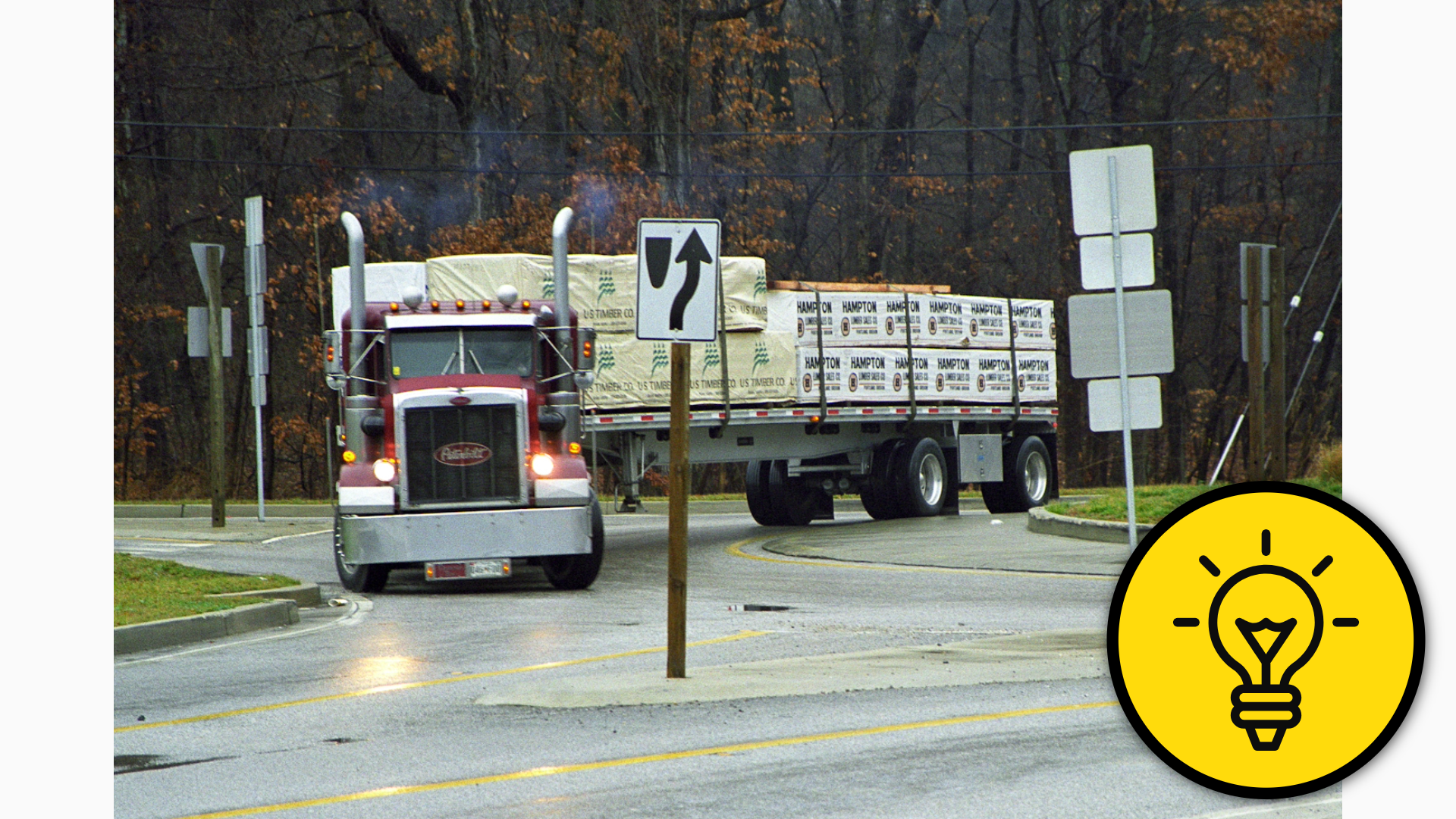
A freight route may require a truck apron or different geometric choices than a residential neighborhood street.
Roundabouts come in all shapes and sizes. Here are some of the most unique and creative roundabout projects we’ve had the privilege of working on. We’ve helped design a peanut-shaped roundabout in Boise, a “comma-about” in Boston, and a pair of roundabouts in Bend that come together to look like a dogbone. These projects demonstrate just how much roundabout geometry can flex to fit the space it’s in.
Agencies may also adapt national guidance to reflect their own policies, design preferences, climate, pavement practices, and intersection control evaluation processes. The underlying principles are consistent, but the final design still has to work in a specific place. We recently wrapped up a project helping the Iowa Department of Transportation develop a state-level roundabout guide. The state now has a single source that pulls together principles from the national roundabout guide, PROWAG, and their articulated preference on optional features outlined in both of those national publications.
In all of this, roundabout design is both technical and creative. Designers are testing how the design manages speed, accommodates expected vehicles, supports people walking and biking, fits the available space, and meets the community’s goals.
Myth No. 5: Roundabout design is all digital.
“Can’t you just plug the intersection into a software program and let it generate the roundabout?” “Once you know the specs, isn’t the layout obvious?” “Why sketch it by hand when CAD can make it precise?” “Wouldn’t starting in software be faster?” “Why spend time drawing options if the final design has to be digitized anyway?”
With today’s sophisticated modeling, design, and visualization tools, it is natural to assume that the most efficient way to design a roundabout is to enter traffic volumes and design requirements into CAD software and let it do the heavy lifting. Why make manual calculations with pencil and paper when a computer can do it with more speed and precision?
Call us archaic, but we’ll argue that sometimes the smartest tool in roundabout design is still a pencil, especially in the early stages. Gathering a design team around a drafting table is our favorite way to kick off the conversation. This is because early stages of roundabout design are supposed to be more conceptual than specific. How might the approaches line up? Could one leg be realigned? How much space is available? Where are the crossings? What design vehicles need to be accommodated? Which alternatives seem promising enough to study further? Sketching ideas gives a project team room to ask important questions before every dimension has to be precise.
Of course, a hand sketch is not a substitute for analysis. It’s a way to move quickly through possibilities, make design tradeoffs visible, and focus the team on the biggest questions before investing time in a detailed digital model. Once the most promising concepts emerge, software helps refine the geometry, test performance, and communicate the design more precisely. But the process of hand-sketching first can ultimately be a time saver because it allows the team to narrow in on the most promising layout before needing to spend a lot of time plugging in specific dimensions.
A sophisticated 3D model in the Stafford/Elligsen/65th project outside of Wilsonville, OR, started with a hand sketch. These three streets converge in an “offset T” intersection that was seeing a concerning pattern of crashes. An intersection control evaluation process led Clackamas County to choose a pair of roundabouts as a replacement for the existing intersection forms. Not only was the intersection unusually configured, but the surrounding landscape includes a creek, wetlands, and steep topography and called for a thoughtful design process. The photo below shows Senior Principal Engineers Hermanus Steyn and Wade Scarbrough sketching in the early stages to explore the intersection’s layouts, alignments, and tradeoffs before moving into detailed CAD and 3D modeling.
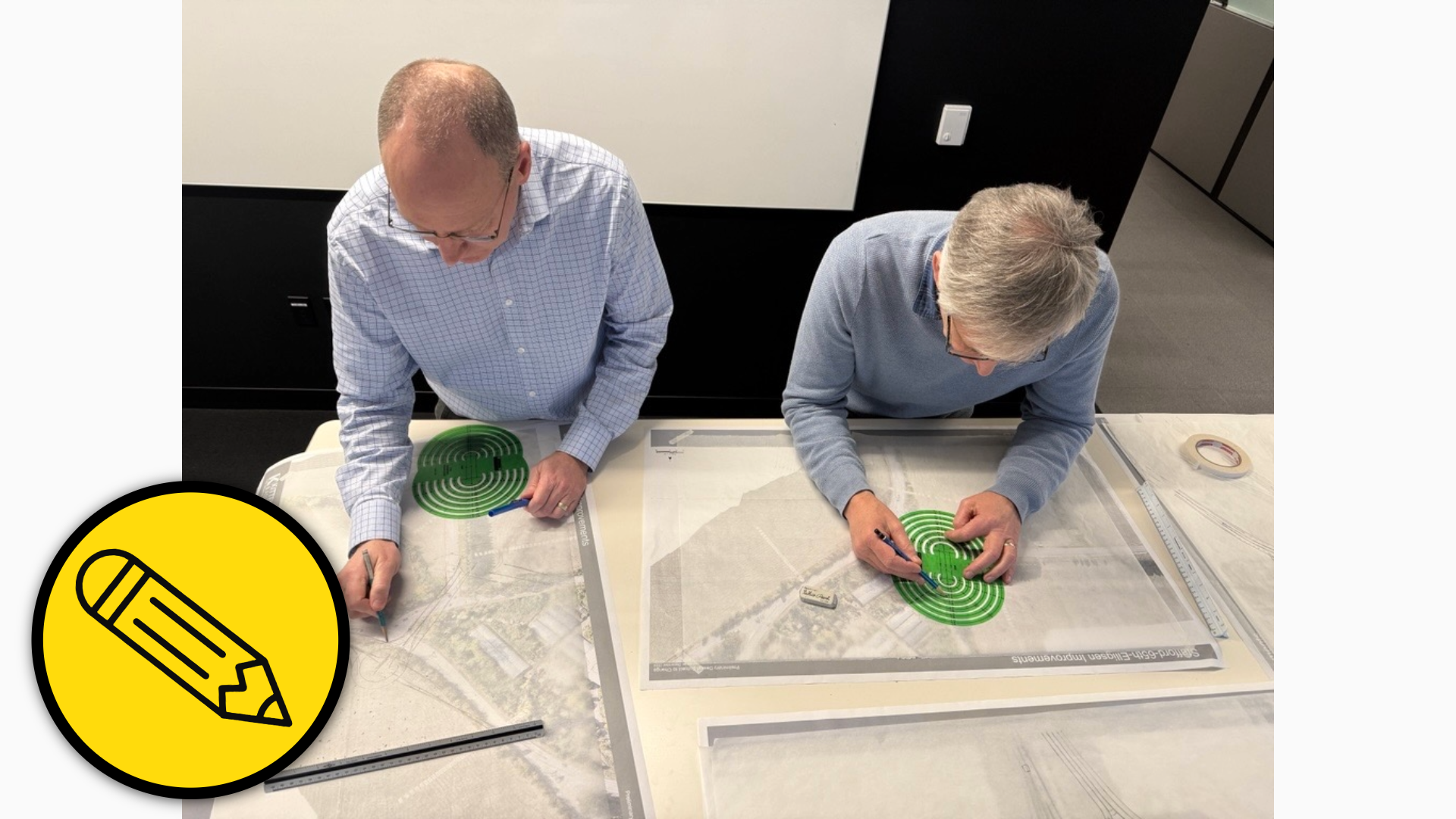
Hand-sketching allows the team to narrow in on the most promising roundabout layout before needing to spend a lot of time plugging in specific dimensions. Credit: Kittelson & Associates.
The final visualization (below) was used in a public meeting to address concerns of property owners and residents.
Even for a highly technical intersection type—and even as the technology behind that intersection type evolves—roundabouts are designed to serve humans, and good design begins with a collaborative, human process. Hand-sketching helps us shape a design around the place it will serve.
Bust More Transportation Myths with Us!
Thanks for joining us for this edition of Transportation Myth Busters! If you want to bust more myths with us, check out:
Are Long-Range Traffic Forecasts the Best Tool to Guide Decisions about our Streets?
Are Bike Lanes Bad for Business?
Will Removing Parking Minimums Put a Strain on Existing Parking Supply?