
November 19, 2026

Special thanks to Nathan Jerke, Executive Director of the Magic Valley Metropolitan Planning Organization, for his generous participation in this article.
The middle of the twentieth century brought an economic prosperity to America that, in turn, transformed how “community” functioned and looked. A new species of community—the suburb—emerged as a coveted status symbol, its prestige defined in equal parts by its connection to and distinction from the city it orbited.
Phrases like “Tri-State Area” came into the public vernacular during this time thanks to the rising emphasis on regionality. The increase in the number of people commuting daily between a suburb and a city—perhaps not even the city they’d initially moved out of but another neighboring one—fueled an already present effort to prioritize mobility and connectivity between hubs. It became more common for an individual to live in a suburb, work two towns over, and then go into the city on the weekends for socialization. Greater interactivity between communities led to endless instances of symbiosis, cooperation, competition, and specialization: increasingly, the markets of several proximate cities agglomerated into “economies of scale.” No longer were America’s cities siloed in their day-to-day stories of life, work, and play; the postwar boom meant that many communities were able to expand their horizons and include more than their immediate surroundings in their understanding of “place.”
Urban development began to sprawl in the 1950s, connecting existing cities and spurring the creation of suburbs. Now, sights like these expansive neighborhoods surrounding New York City are common. Source: Adobe Stock
But who was supposed to lead planning efforts of a “region?” The work didn’t comfortably fit under the purview of either state departments of transportation or individual local governments. For this reason, a piece of federal legislation in 1962 conceived of a new type of authority, the metropolitan planning organization (MPO), which was tasked with molding the roadways of urban areas into transportation networks that matched the regional scale of their economies. In the ensuing decades, MPOs have become important fixtures throughout the American transportation ecosystem and play an integral role in ensuring transportation is cooperative, inclusive, and strategic.
Today, we’re taking a moment to recognize the special place MPOs occupy in the planning milieu. The consummate collaborator, MPOs exist to bring disparate voices together, make sure everyone has a seat at the table, and find unity within difference. We’ll talk about how MPOs form in the current transportation landscape, explore how no two MPOs are exactly alike, and investigate projects MPOs across the country have taken on to better their regions. We’ll also hear throughout from Nathan Jerke, the current and inaugural Executive Director of the Magic Valley Metropolitan Planning Organization (MVMPO), Idaho’s newest MPO, on what it’s like to build an MPO from the ground up.
Nathan Jerke, the current Executive Director of the MVMPO, inaugurated the position in 2024. Photo courtesy of Nathan Jerke.
What Is an MPO?
U.S. law requires the creation of an MPO whenever the most recent U.S. Census discovers an urbanized area has a population of at least 50,000 people. When this population threshold is triggered, the governor of the state works with the individual local governments within the affected urbanized area to form an MPO. The MPO must include the local governments that, when combined, represent at least 75 percent of the total area’s population. Additional surrounding communities can volunteer to join the MPO, as well.
Coming in all shapes and sizes, MPOs tend to reflect their jurisdiction’s extents and diversity of land use. Despite their variability, every MPO has the same goal: to provide a decision-making forum where planners can come together, find balance between a wider state vision and the goals of its local communities, and use this balance to fashion a coherent regional network. The work of an MPO is steered by its Policy Board, which brings together representatives from the cities, counties, schools, transit agencies, state transportation agencies, and other public entities within that MPO’s jurisdiction. This board collaborates with the MPO’s full-time staff to advance planning, data analysis, public engagement, funding, and programming efforts, as well as to navigate partnerships with local, state, and federal partners.
These partnerships are sacred to an MPO, because while an MPO may establish regional priorities, it very rarely controls the roadways, funding sources, or project-development decisions needed to fulfill its vision. No matter the scale at which they work, MPOs often work in step with state DOTs to promote consistency throughout the regional roadway network. The result is an organization whose very structure is designed around—and depends on—collaboration.
MPO Spotlight: The MVMPO Builds a Regional Table from Scratch in Idaho’s Magic Valley
The western United States has a history of population boom and bust. Even today, the growth of many of its communities can’t always be perfectly anticipated. This isn’t the issue in Southern Idaho, however: the cities of Twin Falls and Kimberly—the urban centers of the Magic Valley’s urbanized area— have seen steady growth in the last decade, and so it came as no surprise when the 2020 Census confirmed that the Twin Falls urbanized area had surpassed the 50,000-person MPO threshold.
The Magic Valley has been steadily growing throughout central southern Idaho, and the Twin Falls urbanized area recently met the population requirement to form an MPO. Source: Adobe Stock
Just because local authorities knew the Twin Falls urbanized zone would need an MPO didn’t mean assembling one was straightforward. Whereas most bureaucratic institutions have a history of operations and procedures to draw from, each MPO is created by the unique arrangement of its region’s relationships and thus determines its policies effectively from scratch. We helped transportation leaders in Twin Falls and at the Idaho Transportation Department (ITD) start to envision what their regional planning authority could look like by working to translate federal requirements into a structure that suited the region.
While only the Cities of Twin Falls and Kimberly were required to participate as members in the MPO, our team worked together to approach other surrounding communities and gauge their interest in membership. Today, the Magic Valley MPO, led by Executive Director Nathan Jerke, comprises eight member communities. Most of these member agencies chose to participate voluntarily once they had a better understanding of how an MPO could help them prepare for the future. “It was a process of reassuring partners that the area growth was real,” says Jerke. “We wanted our partners to see they could be a part of the growth instead of an observer of it.”
What It Takes to Build Regional Connectivity
Although MPOs range in size and reach, they all share the same mission and core duties:
1. MPOs establish a guiding vision for planning efforts throughout their region.
Most fundamentally, MPOs exist to take stock of the communities within their urbanized area from a very specific distance: while they don’t have to attend to the needs of the entire statewide network or of every community in the state, neither can they favor a single community or completely discount the state-owned roads that connect their jurisdictions. From this middle distance, the MPO has to establish a regional vision that both cooperates with the larger aims of the federal and state government while being responsive to local communities’ individual needs and to the identity they possess as a collective. The power—and challenge—of an MPO’s unique position resides in the fact that, although neither state- nor local-level planner, the visions they set respond to and advance both.
The Magic Valley MPO, along with Kittelson staff, gathered input from Twin Falls community members on the 2026 Metropolitan Transportation Plan, shaping long-term visions around needs at the individual level. Source: Kittelson & Associates, Inc.
According to Jerke, by encouraging local transportation authorities to make decisions for their respective communities collaboratively with the MPO, versus simply on their own, the MVMPO encourages its member communities to “work backwards from a vision down to what’s happening on the individual level,” in order to “think about the greater needs of the community, long-term instead of piece by piece.” The traveling public doesn’t see the boundaries of jurisdictions when they’re using the roads—so jurisdictions should work to plan as if those boundaries don’t exist. The unique vantagepoint of the MPO positions it to help these communities collectively identify project funding that supports the end result of a frictionless transportation experience.
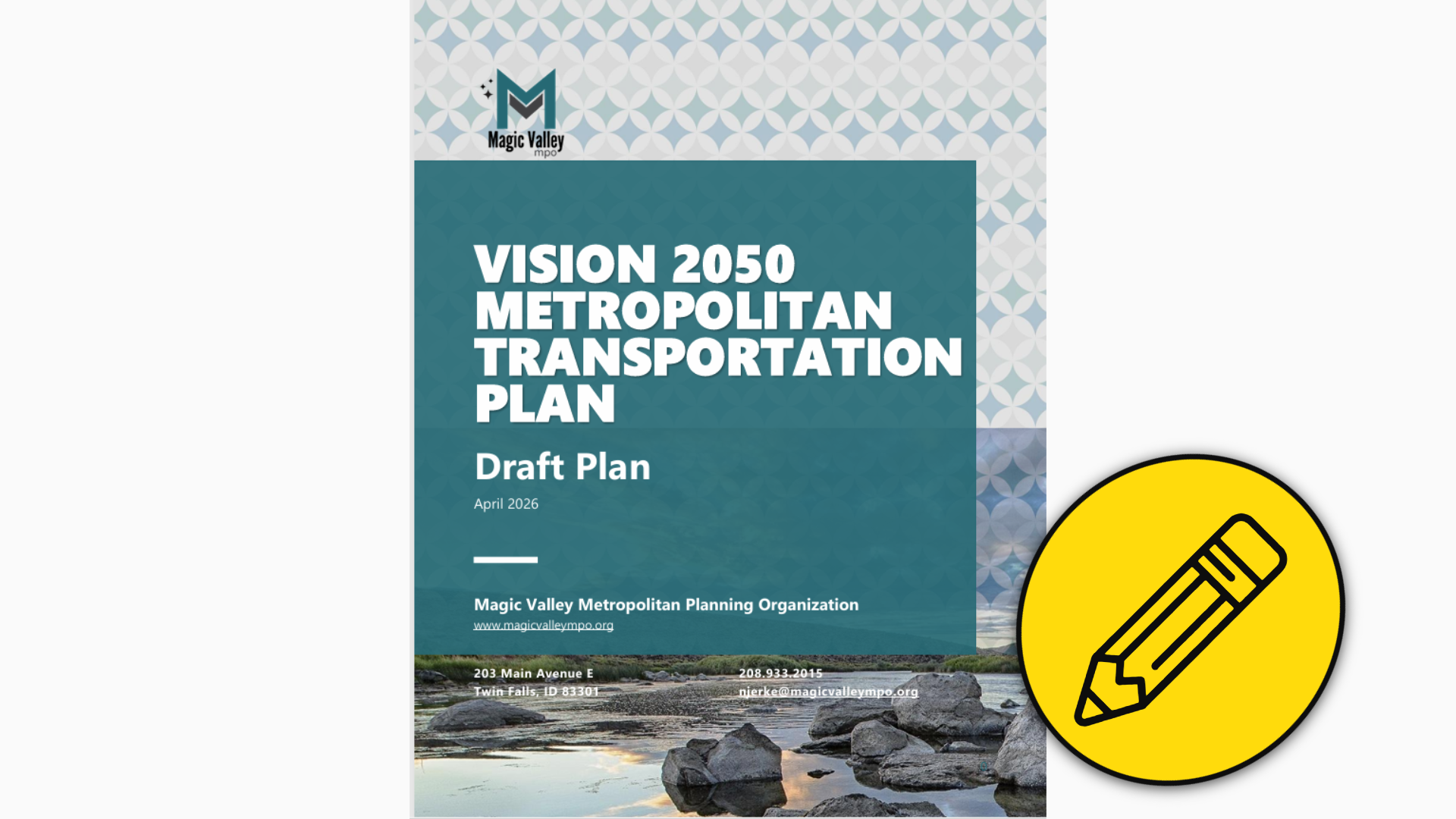
The 2050 MVMPO Metropolitan Transportation Plan. Source: MVMPO
Alongside identifying funding, MPOs tend to publish four types of visioning documents, each of which works in its own way to establish a long-range vision for how the MPO’s roadways should grow and change into the future. These documents include:
- Transportation Improvement Plan (TIP): A document that asks, “What are we investing in now?” and translates regional priorities into a shorter-term program of funded transportation investments.
- Long-Range Transportation Plan (LRTP): A document that asks, “Where are we going?”, establishes the region’s long-range transportation vision, and identifies future needs and investments.
- Unified Planning Work Program (UPWP): A document that asks, “What planning work will we do?” and sets the MPO’s planning activities, responsibilities, costs, schedules, and funding.
- Public Participation Plan (PPP): A document that asks, “How will the public have a voice?” and determines how the public and stakeholders can participate in regional transportation decisions.
Together these documents transform regionalism from an aspiration into a repeatable process: establish the destination, decide what comes first, organize the work, and give the public meaningful opportunities to shape all three. MPOs’ focus on long-term vision is also what allows them to nimbly adapt a long-range plan every five years to ensure it stays relevant to changes in government policies and appealing to funding sources. “There’s always a lively conversation about the connection between the existing long-term plan and the reality of what’s actually happening in the community,” says Jerke. MPOs are perhaps the most vital actor in that conversation.
MPO Spotlight: Planning Across Two States in the Greater Pacific Northwest
The need for regional connectivity doesn’t always respect state lines. The Lewis-Clark Valley MPO needed a plan that would work for an urbanized area spanning Idaho and Washington and that coordinated the transportation needs of bi-state communities, including Lewiston, Clarkston, Asotin, and portions of Nez Perce and Asotin counties. We had the opportunity to work with the MPO to produce its Valley Destinations 2050 LRTP, which navigated both state’s distinct funding pipelines to provide a clear path to promoting the region’s priorities for multimodal mobility, safety, accessibility, and sustainability. The Valley Destinations plan is a perfect illustration of why planning warrants an authority that responds not to state boundaries but to the reality of urban growth.
2. MPOs help communities prioritize their work programs.
While the signature visioning work of MPOs means they specialize in taking a top-down view of their regions, MPOs can also have a more granular, ground-level effect by helping their member agencies prioritize the funding they receive to maximize impact.
One of Jerke’s first projects as the Executive Director of the MVMPO was to create a long-term travel demand model for the Magic Valley region. This demand model helped the MVMPO’s policy board to understand where—down to the level of specific corridors—the ongoing and anticipated residential and industrial growth throughout the region was going to affect traffic volume and safety. By identifying specific corridors, the model helps the member agencies responsible for maintaining those locations know which projects to tackle first.
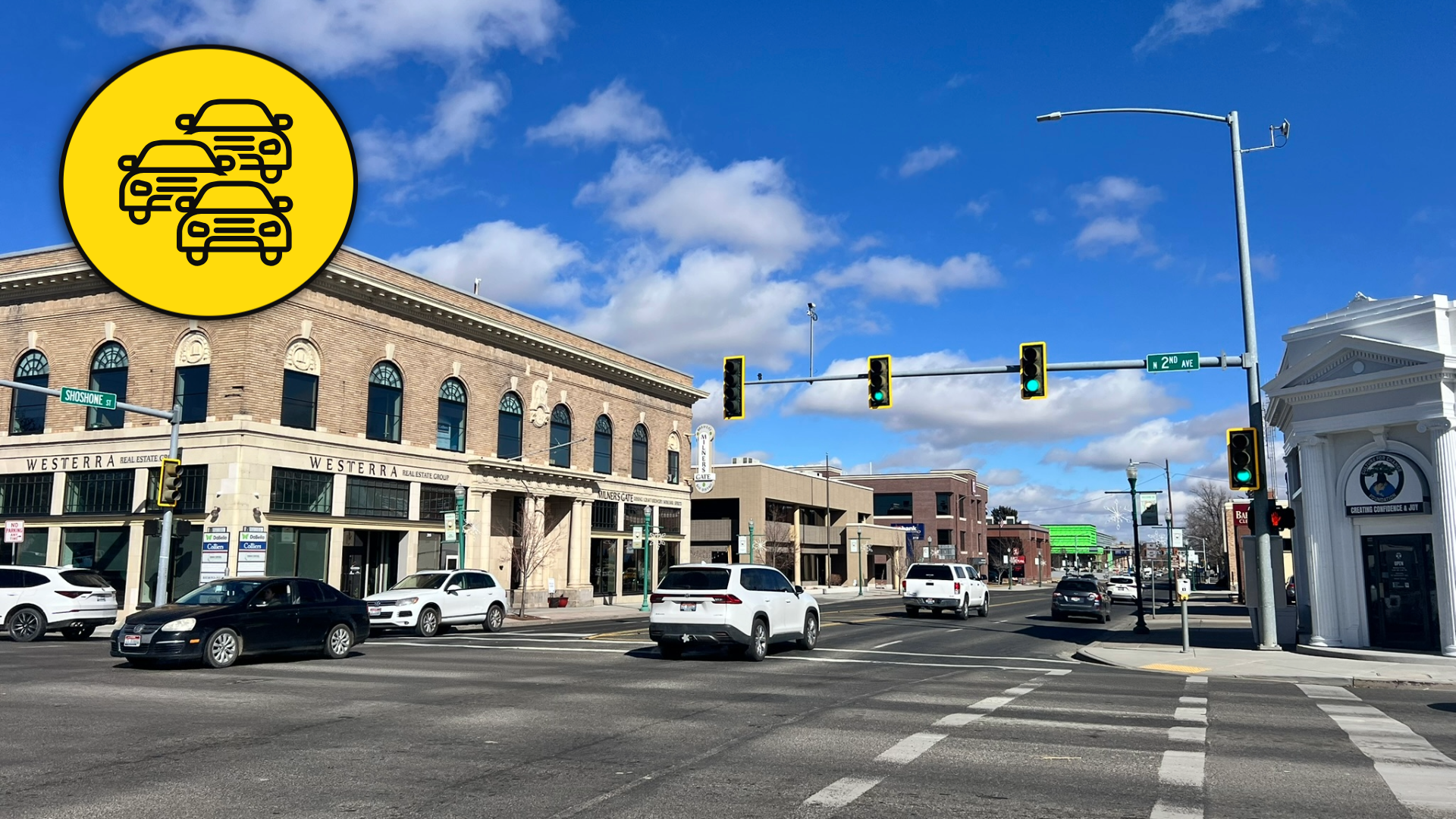
Downtown Twin Falls is a key area that the team analyzed to understand how traffic demand will continue to change throughout the Magic Valley region. Source: Kittelson & Associates, Inc.
MPO spotlight: Offering Programs to Fund High-Value Local Projects in the Mid-Atlantic.
Sometimes MPOs act not as financial navigators but as funders themselves. In the D.C. region, the Metropolitan Washington Council of Governments (MWCOG) administers small but powerful grants through their Transportation Land Use Connections and Regional Roadway Safety Program. These programs provide grants to local jurisdictions to help jumpstart local projects with regional significance. These projects include everything from developing curb space allocation tools to traffic garden guidebooks to stress testing roadway reconfiguration projects. MWCOG staff collaborate with local jurisdictions to select consultant teams to deliver the projects. The MPO’s staff also serve as advisors on each project from kickoff to close-out.
3. MPOs commission and oversee specialty studies.
In addition to the visioning documents that are at the heart of an MPO’s mission, these organizations often use federal and state funding to conduct specialized studies that individual communities wouldn’t be able to fund on their own and that might cross regional boundaries. By pooling funding, data, technical expertise, and stakeholder relationships, an MPO can study a problem as part of a network rather than as a collection of isolated locations. The resulting studies can identify needs shared by several communities, establish common approaches or design principles, and create a pipeline of projects that local and state partners can carry forward.
These specialty studies can include efforts such as:
- Safety plans, such as Vision Zero and Safe Streets and Roads for All action plans, Safe Routes to School plans, and systemic safety studies
- Active transportation plans, such as bicycle/pedestrian plans, trails and greenways, complete streets
- Corridors and operations plans, such as corridor studies, congestion management, freight, and rail-crossing studies
- Resiliency plans, such as vulnerability and environmental preparedness plans
- Mobility plans, such as multimodal mobility plans, transit studies, access-to-opportunity studies
Some of the MVMPO’s mid-range goals are to improve its region’s network of bicyclist and pedestrian amenities, and to grow its on-demand transit system into a service with fixed, reliable routes. A large part of accomplishing these goals will be understanding what needs to happen to make these pedestrian, bicyclist, and transit offerings adaptable and durable to future growth both inside and around the MPO’s borders. “We want to make decisions that won’t be outdated or need substantial retrofitting in 30 years,” says Jerke. These specialized plans can help the MVMPO “develop multimodal amenities that could, one day, connect not just to each other across member agencies’ jurisdictions but also expand outside the boundaries of Twin Falls.”
MPO Spotlight: Bringing Vision Zero to the Space Coast
The Space Coast TPO illustrates how an MPO can take a regional safety challenge and build a shared framework for addressing it. The TPO adopted a Vision Zero resolution in 2019 and published its first Vision Zero Action Plan in 2020. By December 2022, Vision Zero resolutions had been adopted by every municipality in Brevard County, Brevard County itself, and Brevard Public Schools.
We supported the TPO’s Vision Zero work, including development of the updated 2024 Action Plan. Among other things, the plan incorporates a High Injury Network based on 2018–2022 crash data, targeted safety corridors, and updated objectives and strategies. The example shows the multiplier effect an MPO can have: a regional organization can establish the framework, convene partners, and help communities move toward a common safety objective while individual agencies pursue the improvements appropriate to their own streets.
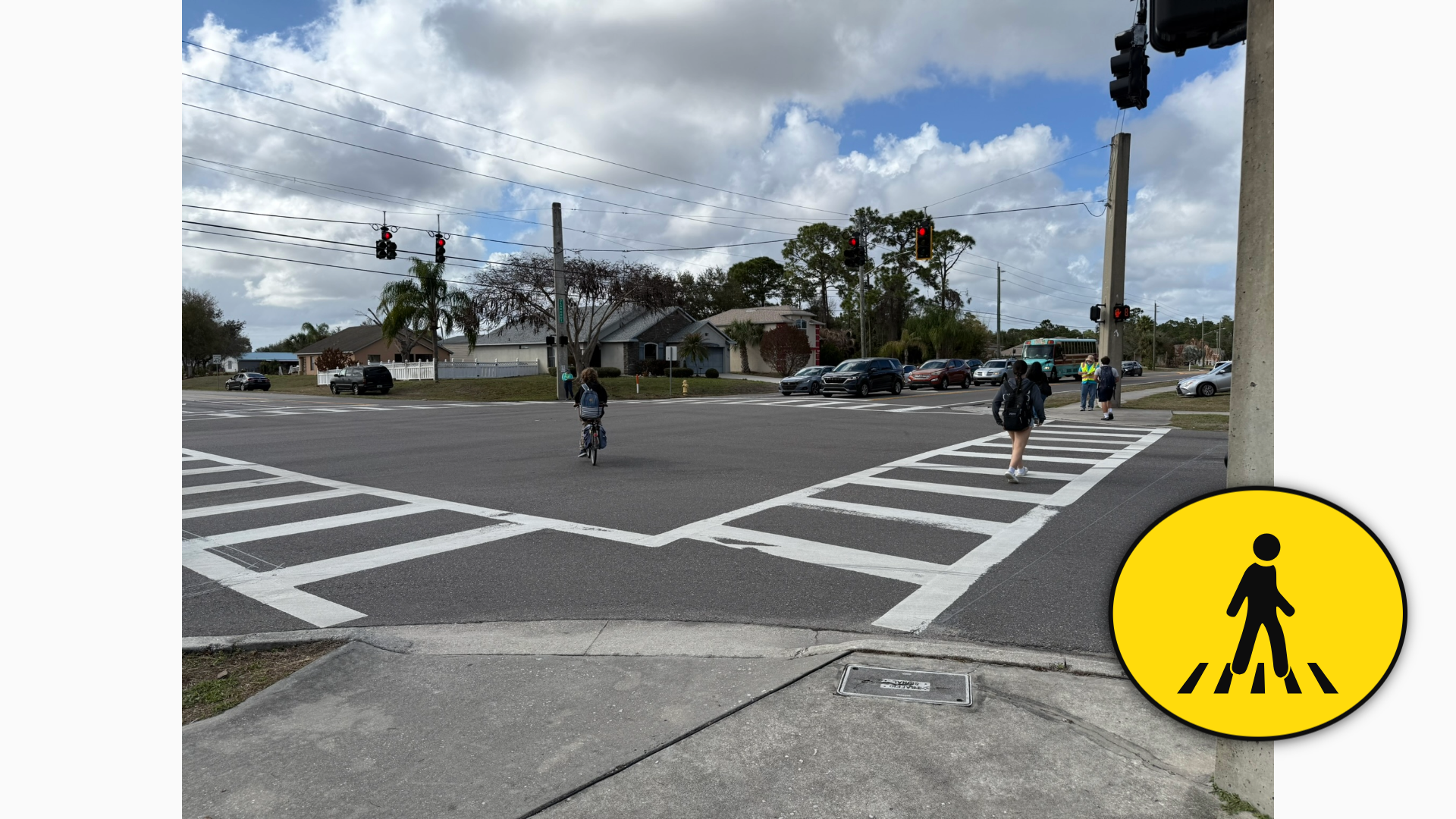
The Space Coast TPO works together to achieve transportation goals across Brevard County. This intersection is a window into one of many efforts, a Safe Routes to School Analysis. Source: Kittelson & Associates, Inc.
4. MPOs provide jurisdictions with administrative and skill-building support.
Not every contribution an MPO makes is visible on a map. MPOs also build the institutional capacity that allows transportation projects to happen, helping their partners navigate funding programs, develop strategic plans, coordinate across agencies, share technical knowledge, and learn from one another. Particularly for smaller jurisdictions with limited transportation staff, that regional support can expand what a community is capable of pursuing and delivering.
An Ever-Expanding Table
As he looks to steer the MVMPO into the future, Jerke has started participating in conversations held by the Urban Balancing Community, an informal group of MPOs throughout Idaho that convenes occasionally to talk through common issues and divvy up money from a shared bucket of funding. In other words, it is like an MPO of MPOs.
Jerke mentioned that this group has begun to discuss formalizing itself for the long-term health of every MPO throughout the state. While the MVMPO is the newest organization in this group by some margin (the second-youngest group was formed in 2000), Jerke pointed out that many leaders of the more established MPOs are likely to retire in the coming years, and that Policy Board makeup often changes in the aftermath of elections. “Changeover is a fact of life with MPOs,” says Jerke. “Education is always a component.”
In addition to functioning as a forum for knowledge-sharing, assemblies like the Urban Balancing Community represent the logical next step in the fundamental mission guiding all MPOs. If an MPO is an acknowledgment that no community can ever function truly independently—that we all are connected to and depend on our neighbors—it’s equally true that no single region operates entirely independently. The value that birthed the MPO—collaboration in the face of greater interconnectivity—applies at every scale.
MPO Spotlight: Three Counties. One Traveling Public.
For an example of why the type of association Jerke is picturing (an alliance of MPOs that themselves represent an alliance of local governances) is sometime necessary, look no further than Southeast Florida. The Southeast Florida Transportation Council (SEFTC) is a formal partnership among the Miami-Dade, Broward, and Palm Beach MPOs that was created to coordinate transportation planning across all modes. Its succinct motto, “Three counties. One traveling public”, echoes Jerke’s earlier point that the public doesn’t delineate where one agency cedes jurisdiction of the roadway network to another.
We’ve helped SEFTC develop multiple regional-level tools and Regional Transportation Plans. The first regional LRTP brought three individual MPO long-range plans together into one regional vision. Subsequent planning from the group expanded that vision to address transit and nonmotorized transportation. SEFTEC’s 2050 Plan uses a web-based format designed for easier access and incremental updates that allow planning to continue serving the journeys people actually make.
The Power of Coming Together
The very existence of MPOs reminds us that we’re stronger when we work together. Without the work MPOs do to coordinate transportation between neighbors and within regions, authority would be too diffuse throughout the transportation ecosystem, resulting in less coherent, less predictable, less efficient, and less safe roadways. We’re thankful for our partners who offer us a seat at their table and a chance to make their roadways work for everyone.