
May 19, 2026

Two weeks ago, Streetwise released the first of two issues celebrating Bike Month. The issue included, among other treats, our first-ever audio story, which you can listen to here. Like the best bike rides, this audio story takes the winding path through the various considerations that go into making a bike commute wonderful, with friends from Kittelson offering tips on topics like gear and route-planning that will help you maximize your comfort as a bicyclist no matter your experience level.
One of the points the story makes clear, however, is that individual measures, like making sure you have the proper safety gear and a buddy to ride with, are only half of the equation when it comes to helping people feel more confident as bicyclists. To build a culture of bicycle commuting, community leaders need to make sure the built environment supports active transportation, as well.
That’s why, as Bike Month speeds to its finish line, we’re taking the opportunity to review just a handful of different ways in which transportation leaders have taken steps to make their communities’ streets friendlier to bicyclists. We’ll also explore the myriad additional benefits that doing so have brought to these communities, whether incidentally or purposefully. Active transportation is a powerful catalyst for community reinvention, and whether to reconnect a community split by large infrastructure or to give a community a travel option that works with its history, so many places have turned to active transportation as a means to a greater end.
Read through our roundup below, and then click on each section heading to get a deeper debrief on the projects discussed!
Source: Kittelson & Associates
Using quick-builds to achieve a community’s new standard of connectivity
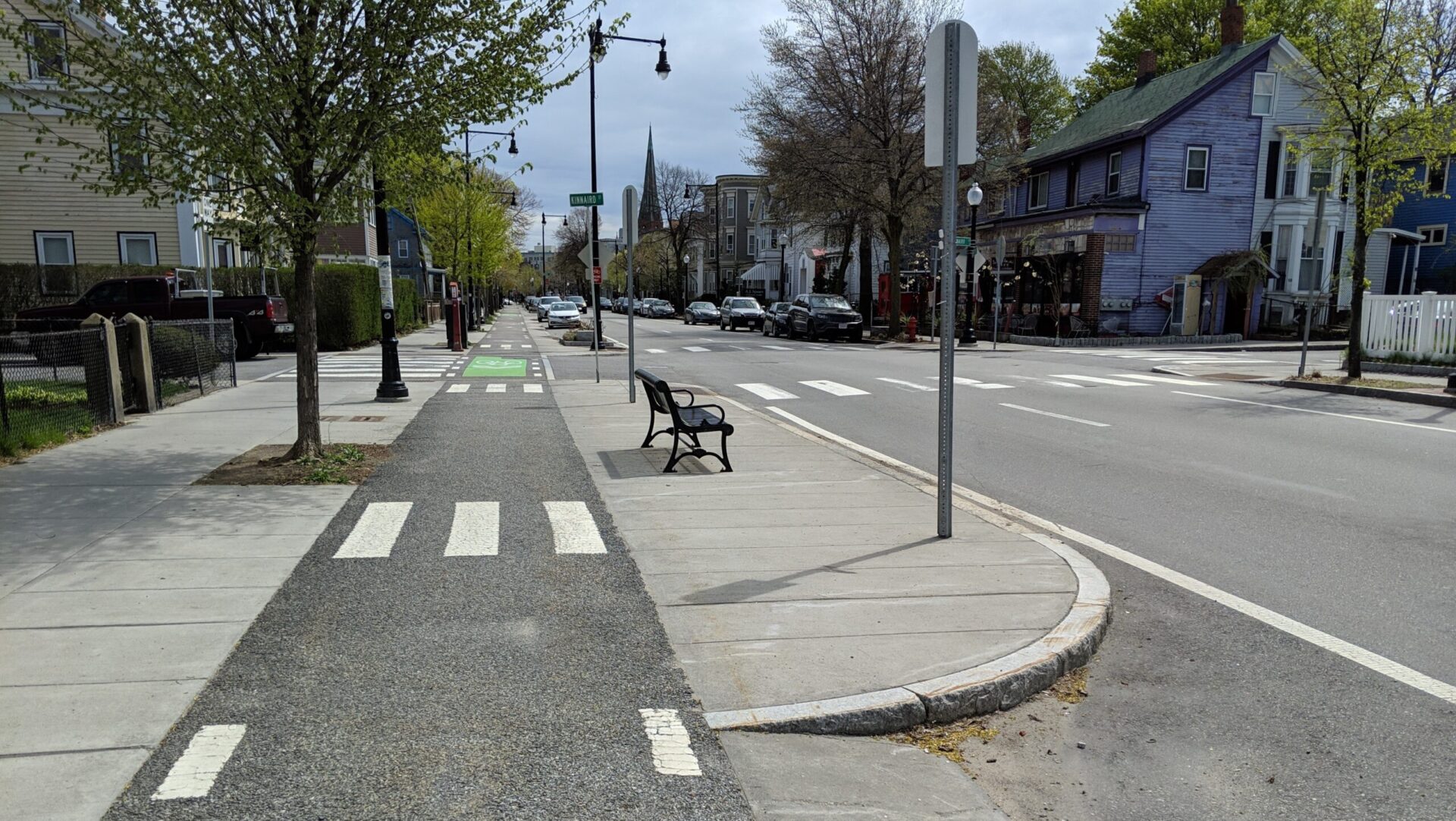
In 2019, the Cambridge City Council first passed the Cycling Safety Ordinance (CSO), requiring the city to construct separated bike lanes when streets are reconstructed as part of the City’s Five-Year Plan for Streets and Sidewalks. To comply with this ordinance, the City of Cambridge needed to quickly add separated bike lanes and associated roadway improvements along portions of Massachusetts Avenue to Brattle Street and Main Street to Sydney Street. However, each corridor featured constraints that limited the City’s ability to implement them, including complex intersections, high transit activity, and accelerated project timelines.
To help Cambridge comply with its new standard in the face of these constraints, we produced a quick-build design for each corridor based on findings from existing conditions inventory and operational analysis. Each quick-build design focused on achieving separated bike lanes using pavement markings, flex posts, signs, and signal improvements. Along certain corridors, like Massachusetts Avenue, the separated bike lanes were designed to run along major commercial centers, like Porter Square.
Kittelson’s designs and final quick-build implementation plan enabled the City to achieve its new goal for connectivity by creating spaces for bicyclists along constrained corridors.
Adding bicycle facilities that help all users reach their destination sooner
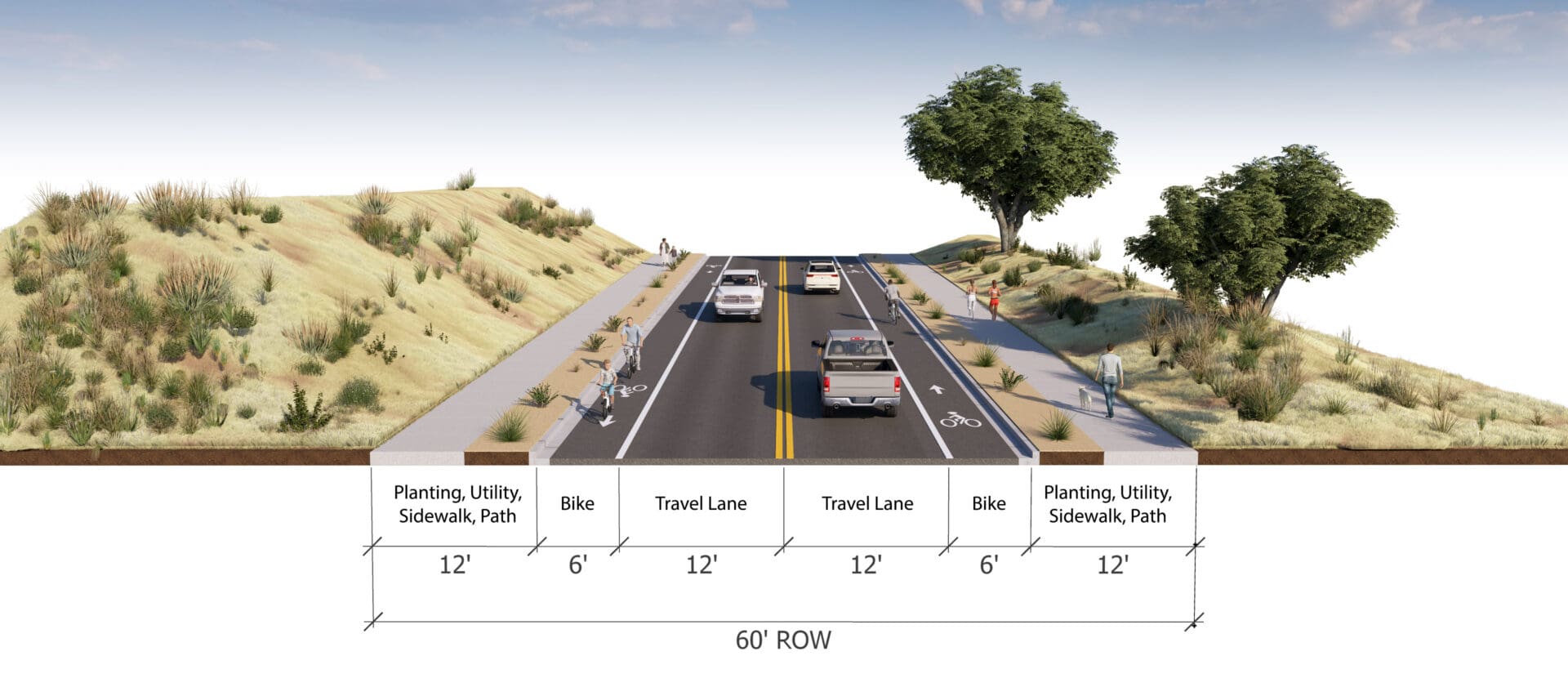
The Market Street corridor in Lemoyne and Wormelysburg Pennsylvania is commonly referred to as the “Lemoyne Bottleneck.” Although an important connection point between the City of Harrisburg and communities in Cumberland County, this half-mile, four-lane roadway is often highly constrained and impeded travel times for all users. The roadway needs several safety improvements as it is a key component of the active transportation network in Pennsylvania.
We provided PennDOT with three alternative concepts to determine the optimal solution for the corridor. The designs included various multimodal facilities such as redesigned curbs and sidewalks, dedicated bicycle facilities, buffered bike lanes, shared-use paths, corridor access management, slope cut-backs, and signal upgrades. Following public engagement and PennDOT’s selection of a preferred alternative, Kittelson is set to lead the preliminary and final designs that will, through the inclusion of active transportation facilities, help everyone get to where they need to go sooner.
Source: Kittelson & Associates
Repairing access in a community split down the middle with active transportation
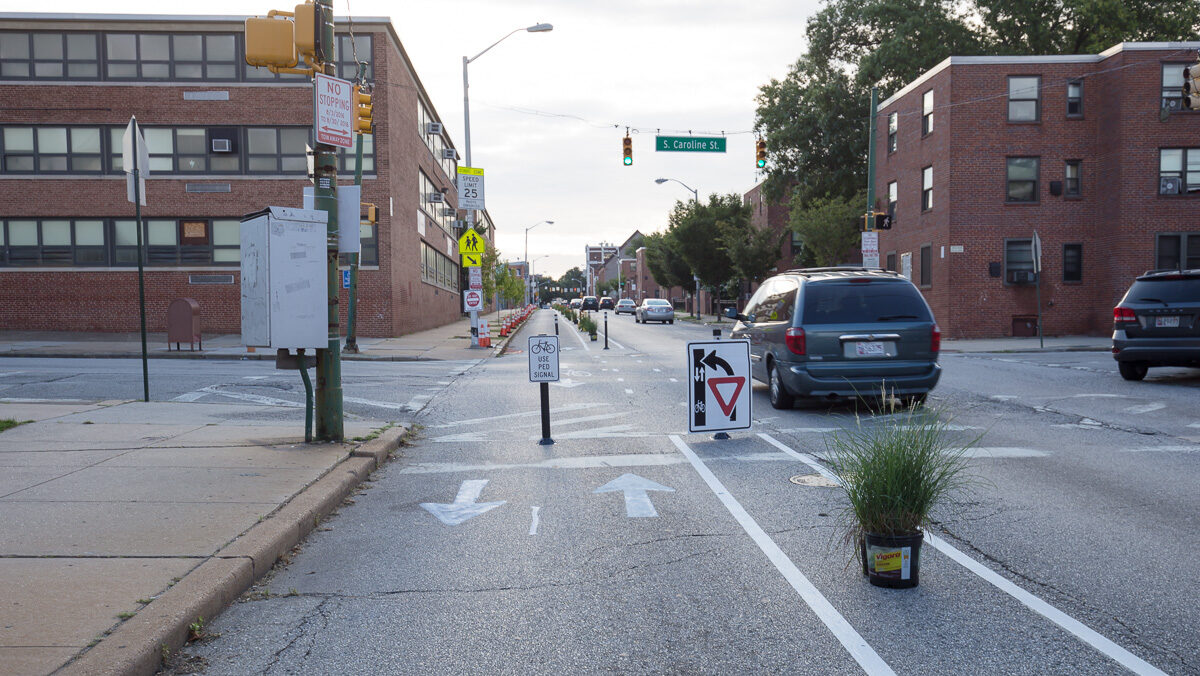
The City of Rufus, Oregon, is a small but growing recreational destination nestled along the Columbia River. The city is home to about 250 residents who need a transportation system that supports their community. Currently, there are no sidewalks, bike lanes, or safe crossings; as it is, people who want to walk or bike along 1st Street have to share the road with freight trucks and through traffic. Most problematically, massive infrastructure including a railroad and I-84 create a physical barrier between the downtown commercial area and Rufus’ crown jewel: its riverfront, a regional destination for kitesurfing and swimming.
We turned to active transportation to work around the highway bisecting Rufus. By authoring an Active Transportation Plan, we prioritized walking, biking, wayfinding, and traffic-calming projects to improve connectivity between its downtown and its riverfront. For the two highest community priorities, 1st Street and Main Street, Kittelson developed detailed planning-level concepts that show how new sidewalks, buffers, enhanced crossings, and streetscape improvements could be implemented to meaningfully improve mobility, comfort, and safety for all users.
Source: Kittelson & Associates
Affecting systemic culture shift with policy
In 2023, Maryland Department of Transportation (MDOT) launched its Model Complete Streets and “Serious About Safety” initiatives to fight back against the troubling trend of people walking and bicycling sustaining fatality or serious injury. A statewide Complete Streets policy followed soon after, but it was important to the agency that the policy be backed up by a robust implementation program to create on-the-ground change.
Our team helped MDOT develop and implement its Complete Streets policy. To do this, Kittelson first performed a literature review of all MDOT’s related guidance and policies, detailing sections of each document that require updates and shared the findings with MDOT’s six modal administrations—quasi-independent agencies that each oversee an element of the transportation system (e.g., highways, transit, aviation, etc.).
Next, Kittelson worked with each modal administration to develop its own plan. We relied on a template to act as the basis for these counterpart plans, tailoring each one to its modal administration’s specific needs depending on their answers to a series of questions we asked them. We also worked with MDOT and the modal administrations to identify performance measures, implementation timelines, and key champions to progress the statewide policy.
Balancing irreplaceable history with modern safety
Lancaster has a rich history, even serving for a time as one of the earliest capitals of the nascent United States. Its downtown is highly walkable, but a transportation network that was established in colonial days left the city with narrow streets and very few bicycle facilities. One of the top priorities of the 2019 Lancaster Avenue Transportation Plan was to create a high-quality bicycle route on Walnut Street, the main westbound street through downtown Lancaster.
Kittelson developed plans for two one-way separated bike lanes through the City that would improve bicycling conditions while preserving history. We began by conducting a careful block-by-block evaluation to address varying site conditions such as street width, drainage, parking, and intersection traffic control, all information that informed the ultimate decision to prioritize a left-sided separated bicycle lane. In addition to the separated bike lane itself, the project included safety elements such as corner daylighting and slow turn wedges.
Since its completion, this separated bike lane has proven a popular route for cyclists to and through downtown Lancaster and has acted as proof of concept for several more separated bicycle facilities throughout the city,
How will you bring bicycling to your community?
Improving bicycle infrastructure does more than encourage the people living and visiting your community to try a new way of getting around: it makes communities healthier, safer, and more connected. As Bike Month comes to a close, we’d love to hear your ideas for how you want to facilitate more biking in your community. Get in touch!