
July 29, 2026

Baltimore Region’s Red Line Internship Program Brings High Schoolers into Transit Planning
How would you feel about having high school students contributing to your project team?
For most capital projects, youth involvement is limited and sporadic. Maryland Transit Administration’s Red Line project has taken a different approach: they invite high schoolers to participate directly in the work as paid summer interns!
The Red Line is a major transit investment project to build the next link in the Baltimore region’s premium transit system. The line’s 25+ stations will expand access for its neighbors to some of Maryland’s highest concentrations of jobs, schools, shopping, entertainment, and health care. It’s the kind of project where students have much to offer to project designers. As it turns out, the lived experiences of students navigating trips without a car and often long school and work commutes on public transportation bring valuable insight as planners and engineers work to align the Red Line with community needs.
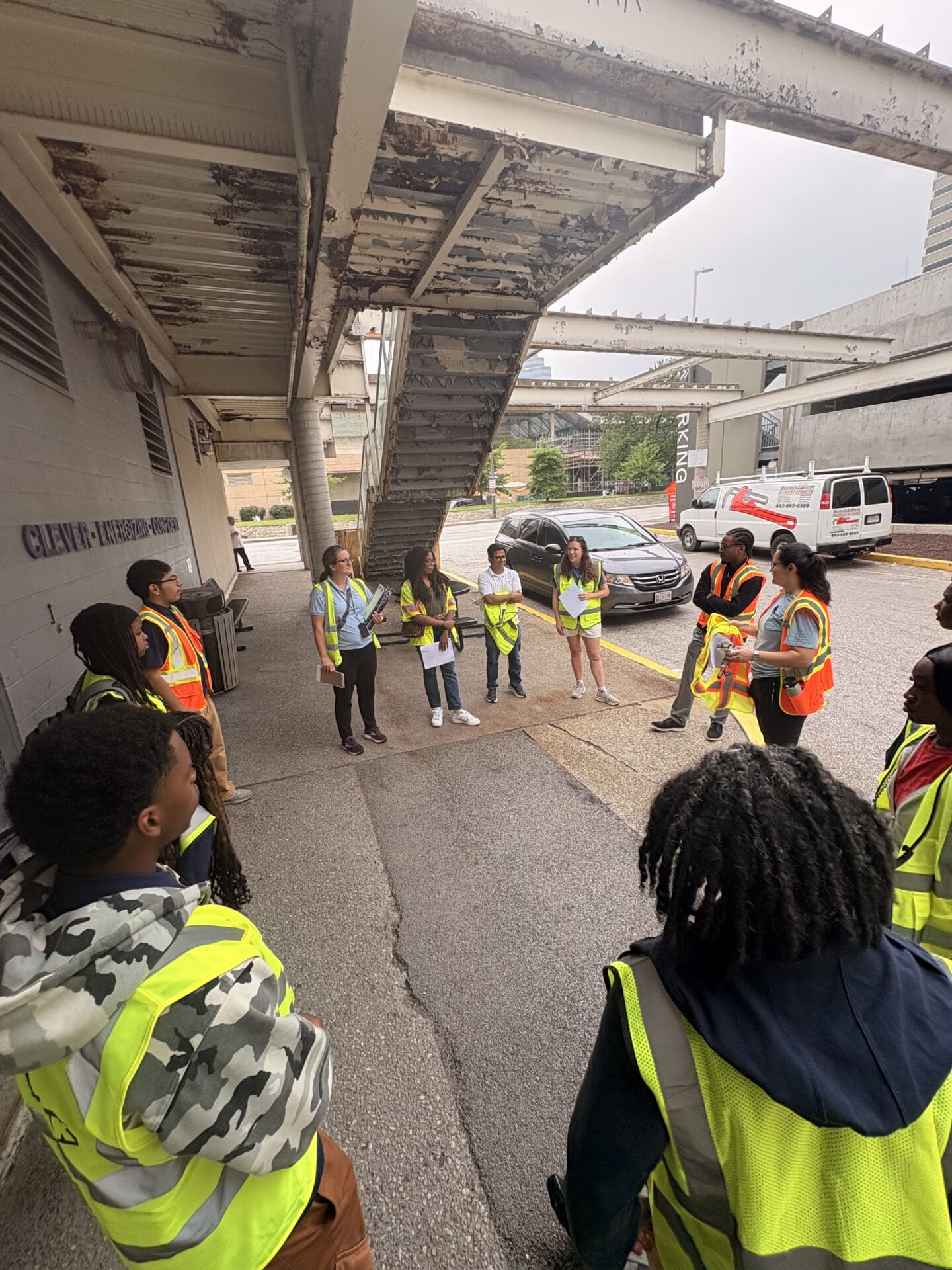
Through the Red Line High School Summer Internship Program, students explore and grow professionally. They learn how projects come to be and about the organizations that manage planning, financing, operations and advocacy. They visit projects and meet community leaders. They speak about the project at community pop-up events. They redesign open house materials, conceptualize future stations, and create social media messages and videos.
The program has inspired education and career goals for its 120+ graduates while building confidence and new skills. Take Kenneth’s story. Before interning with the Red Line in Summer 2025, Kenneth wasn’t excited about the career paths he assumed were available to him. His summer experience began to shift his aspirations, inspired by his curiosity and fueling his motivation. A few months after completing the program, he texted the team with the news that he had been accepted into an honors program at the University of Maryland, College Park and planned to enroll in the fall.
What changed for Kenneth over the course of a summer? Here’s how, and why, the program works.
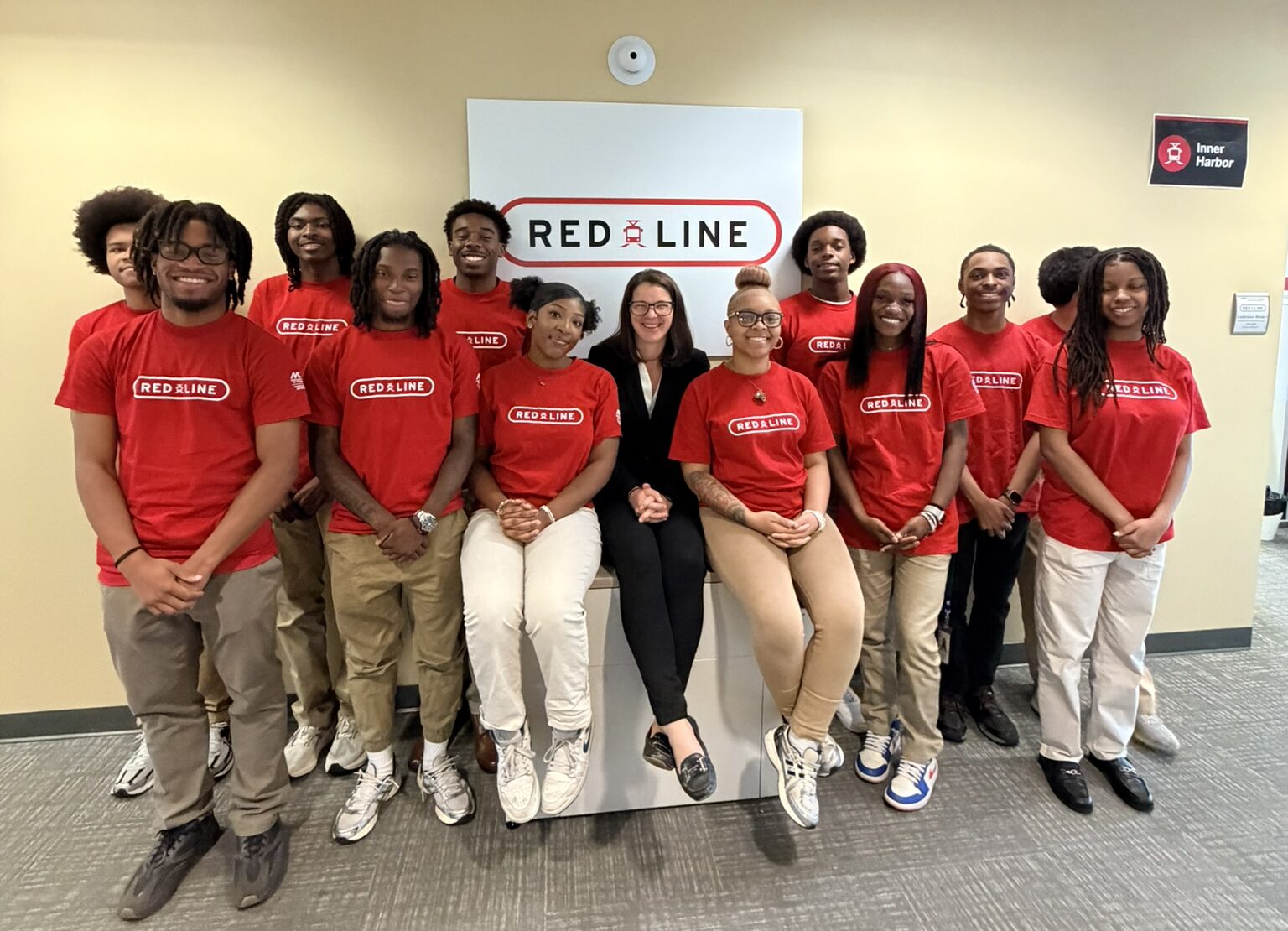
2026 interns with Red Line Project Director Caitlin Tobin.
Mind the Age Gap
In community engagement, we talk a lot about representation: neighborhood, income, race and ethnicity, language. But age isn’t always explicitly considered. On projects like the Red Line, that’s a miss: high school students can be some of the most transit-dependent riders in the corridor, and their daily realities don’t look like an adult’s. Many teens don’t have a driver’s license and/or access to a car, and their travel choices are shaped by constraints adults may not feel as sharply.
In community engagement, we talk a lot about representation. But age isn’t always explicitly considered.
And yet, traditional outreach rarely captures that important perspective. Open houses and public meetings tend to happen at times and in formats that don’t fit a student’s schedule or style. While online options can be easier to access, it’s difficult to motivate youth to participate and make a meaningful connection with a project via a project website or map.
The Red Line Project’s Answer
When Tranell Guthrie, now an associate planner at Kittelson, was working on the Red Line project as a Maryland Transit Administration (MTA) employee, she observed this gap. With a dedicated team of MTA staff and project partners, Tranell launched the first iteration of the Red Line High School Internship Program in 2009 as a pilot. It ran through 2015, was relaunched in 2024, and has served more than 120 high school and college students to date. Now, while the MTA remains the lead agency, Kittelson and other consulting firms on the project host and deliver the day‑to‑day internship experience.
“From the beginning, the goal has been to give students a meaningful role in one of the largest transportation investments in the Baltimore region—working alongside transportation professionals and contributing ideas that help shape the future of the communities they call home,” says Tranell.
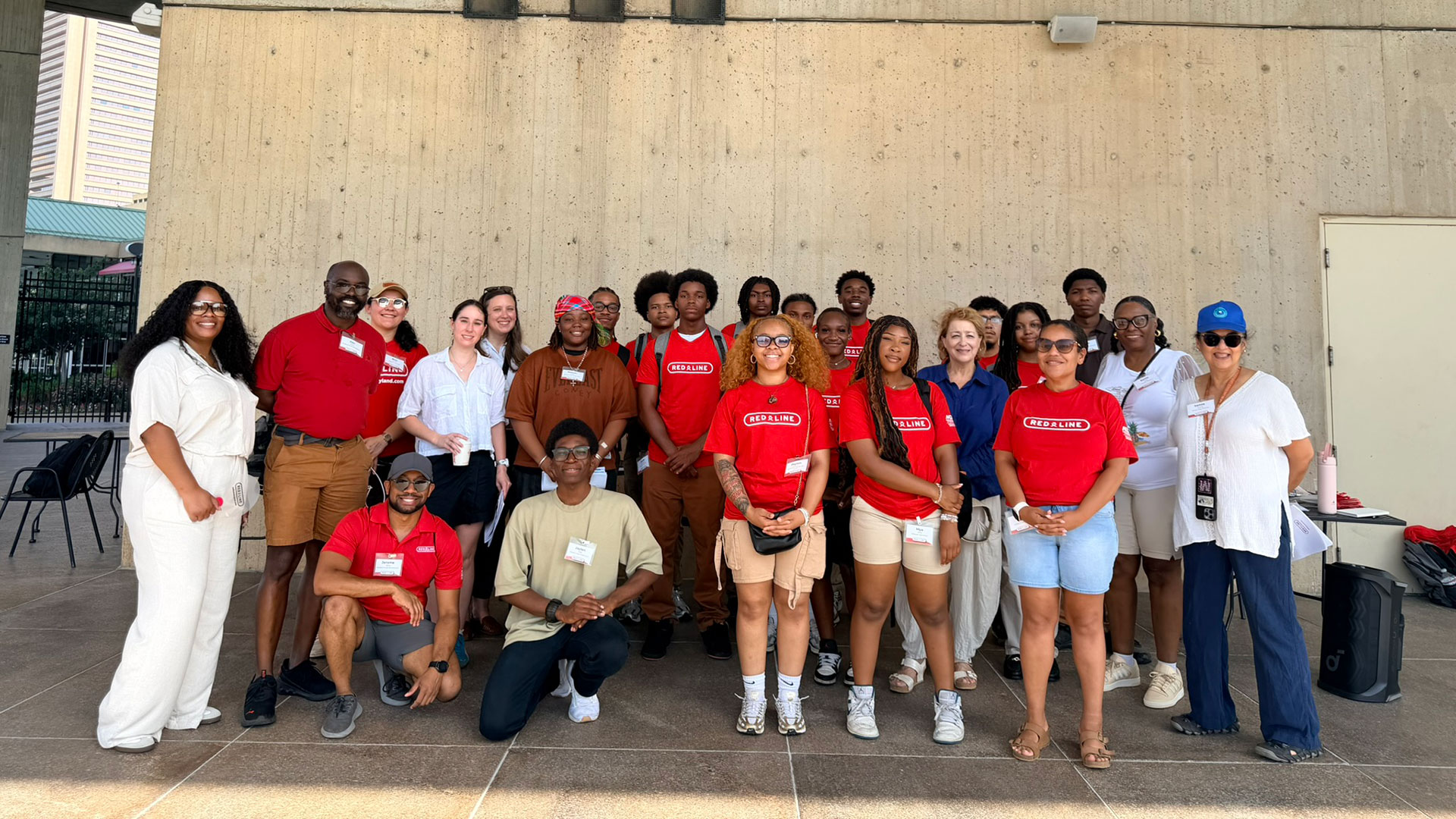
2026 Red Line high school interns with MTA staff, Red Line Community Advisory Team members, and City of Baltimore staff.
The Red Line High School Internship Program is a six-week, paid summer experience for students from three high schools along the Red Line corridor. The program is delivered through a partnership among the Maryland Transit Administration (MTA), consultant firms supporting the Red Line Project, local high schools, and Morgan State University. High schools recommend students with interest and potential, while MTA, its consultant partners, and college assistants work together to provide mentoring, hands-on learning, and real-world transportation project experiences.
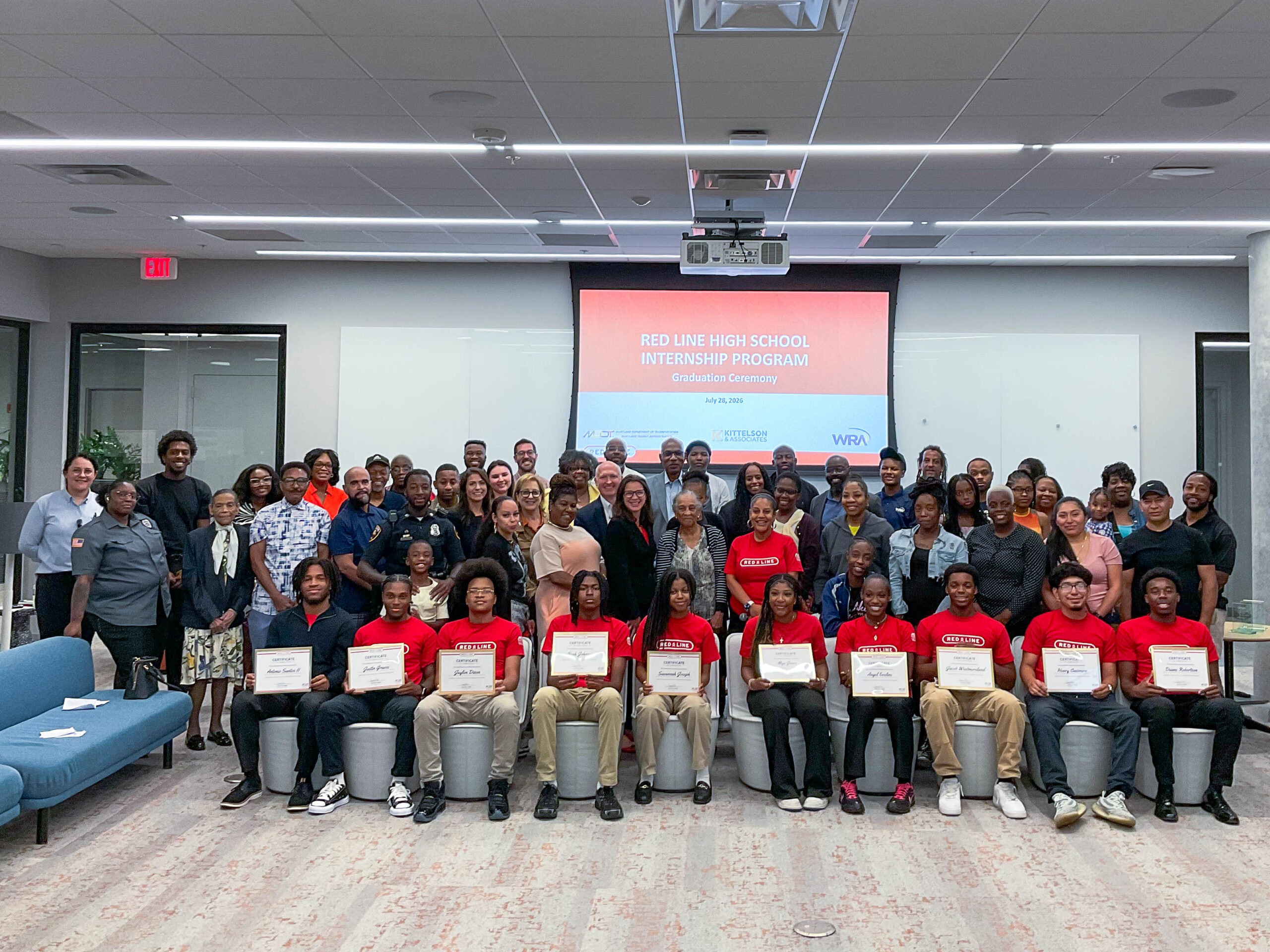
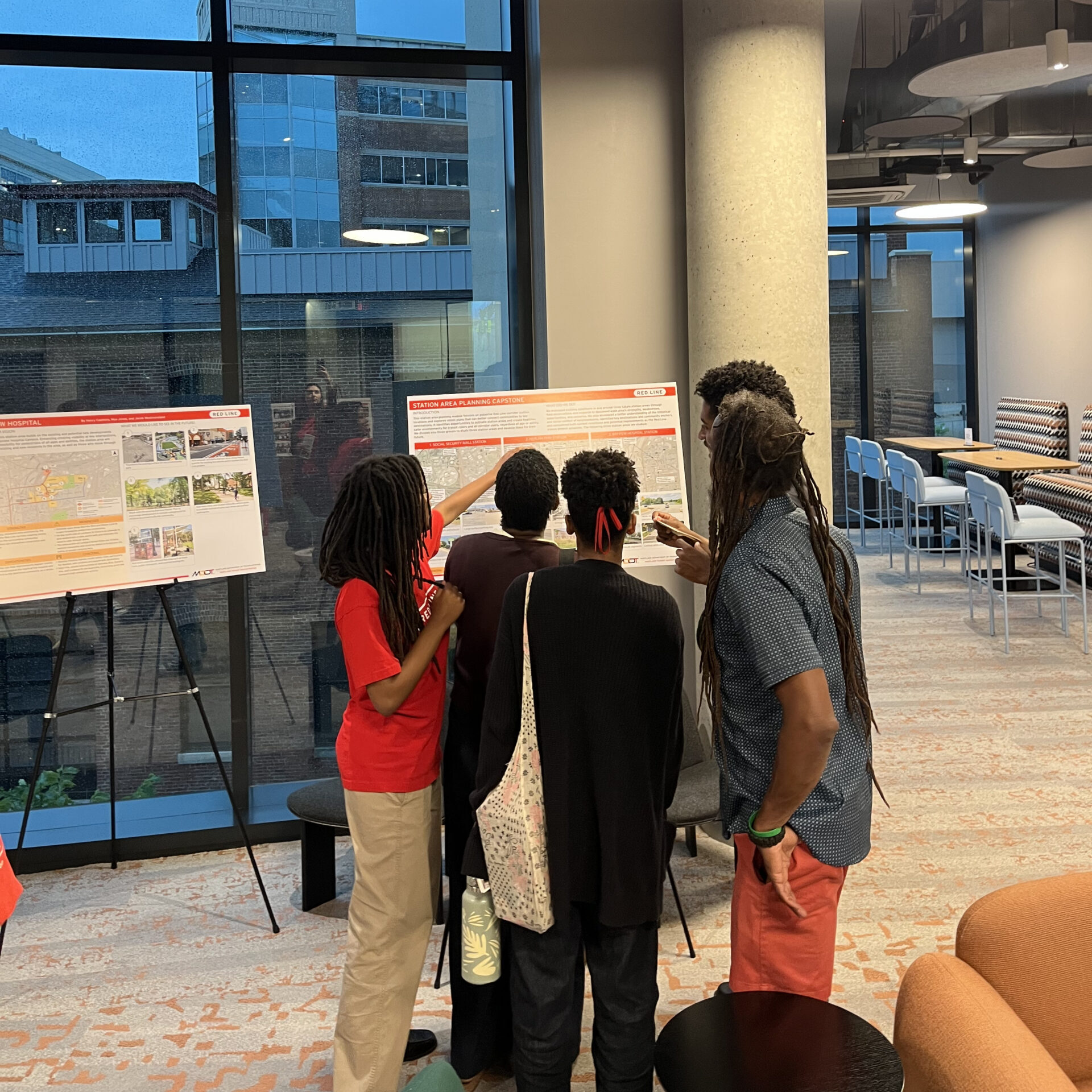
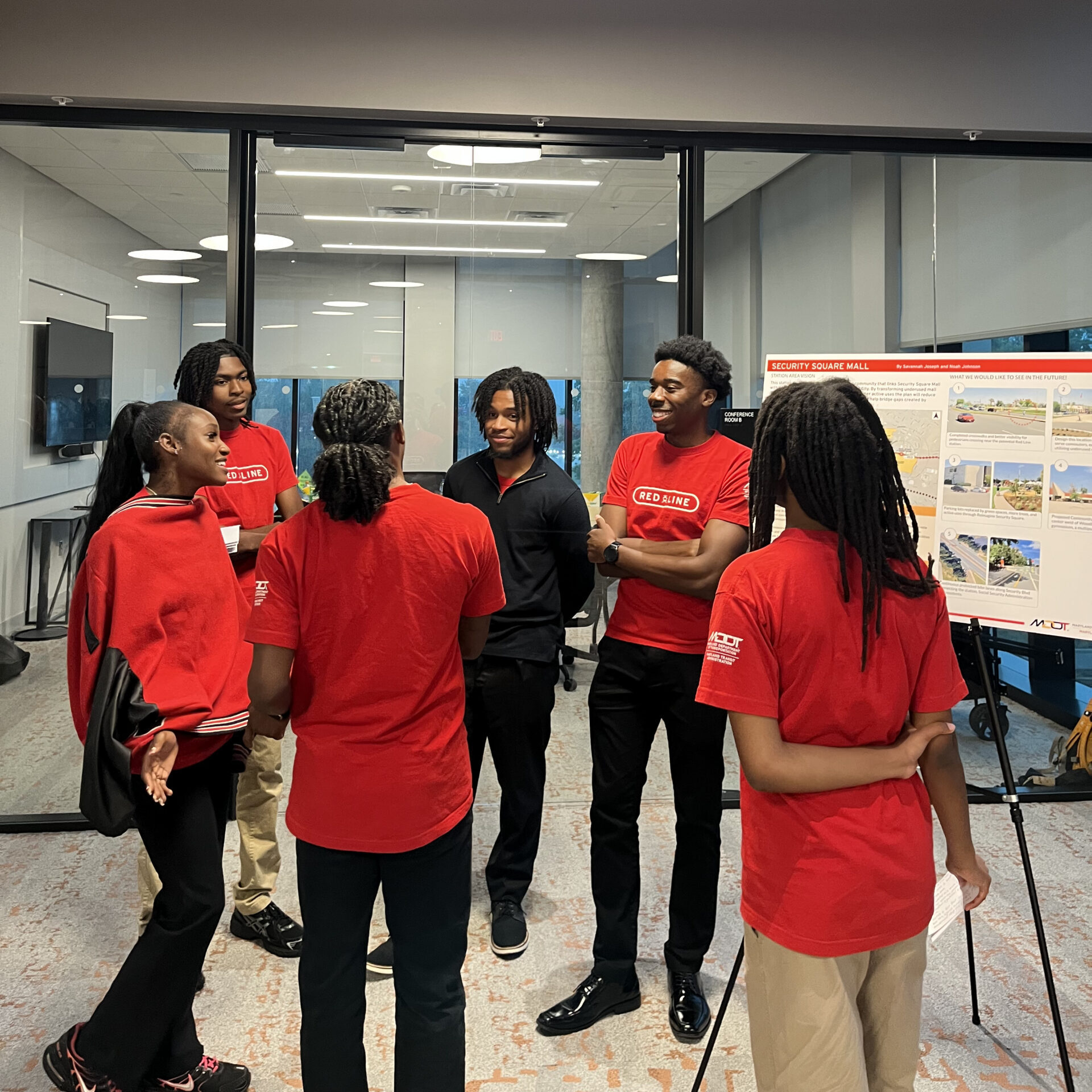
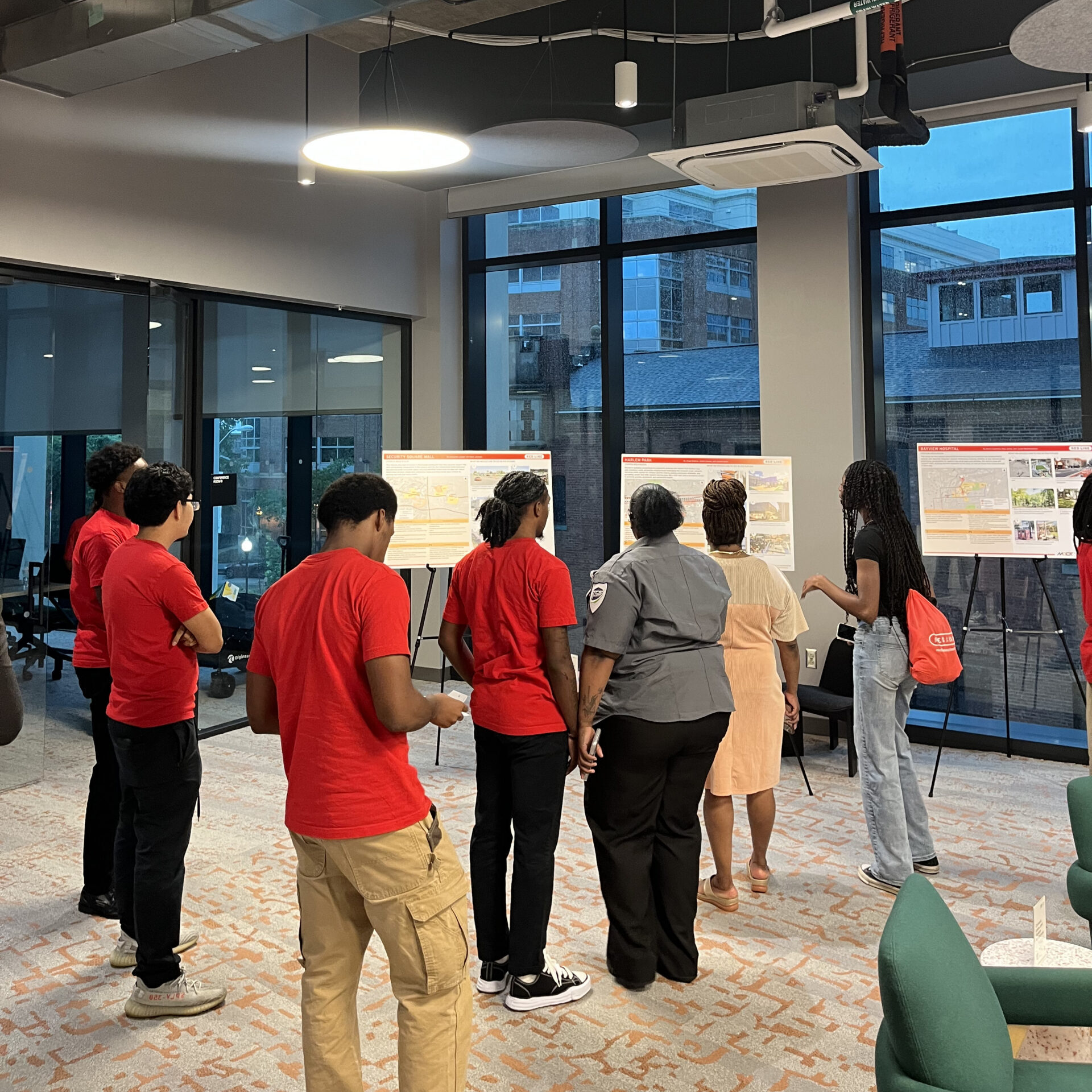
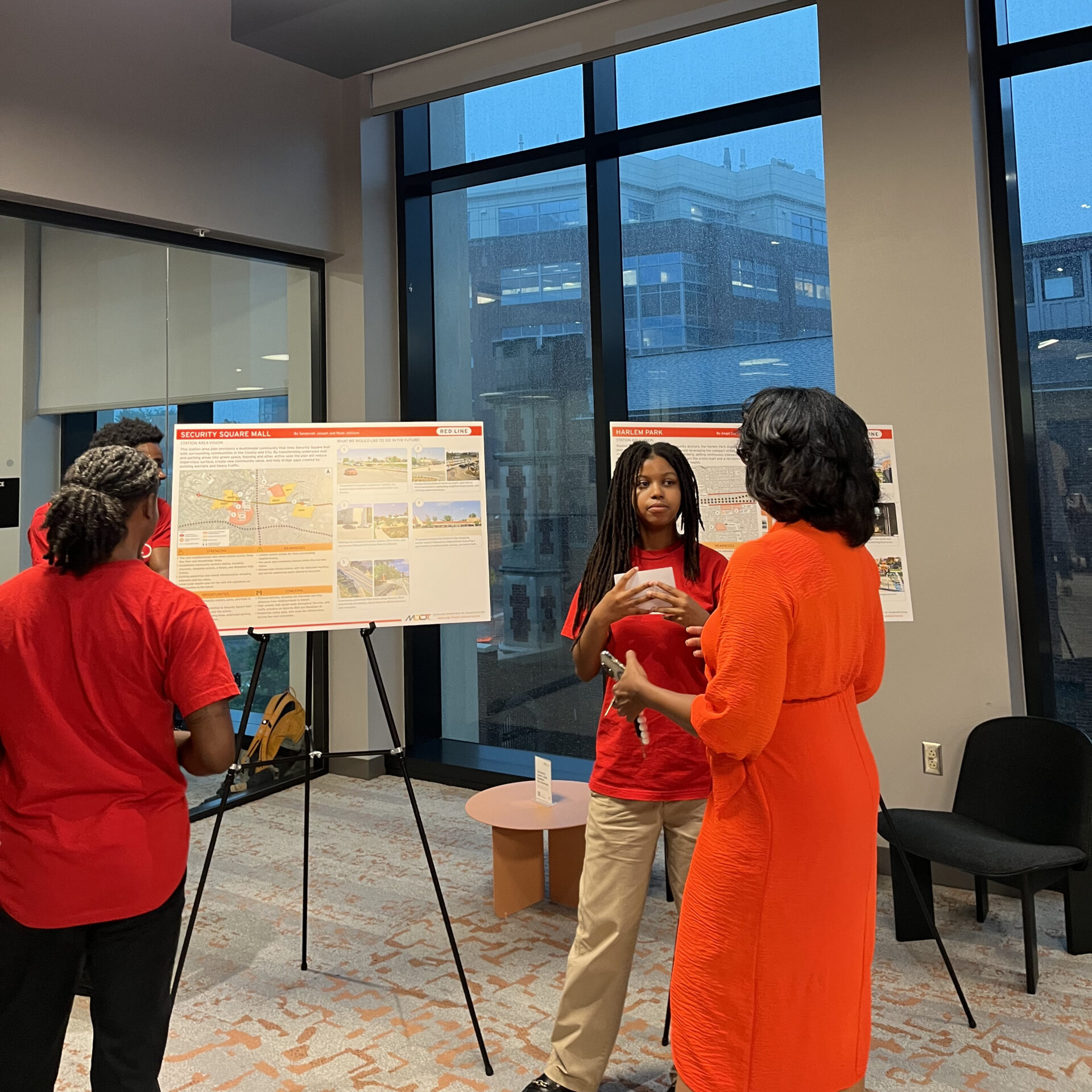
For most interns, it’s their first exposure to the professional world. They work a consistent daily schedule, showing up from 10am–4pm four days a week during June and July. Across the six weeks, students move between office and field learning. They go on project tours, sit in on panels and interviews with agency and project leadership, visit industry sites, and participate in skill-building sessions that help them make sense of what they’re seeing. The program concludes with a graduation ceremony, where interns present their capstone projects to MTA leadership, project partners, family members, and community members, helping expand awareness of the Red Line project throughout the community.

What High Schoolers Can Offer Transit Projects
Involving high schoolers in this way adds voices to the conversation that can change what the team can produce and learn while the project is still taking shape. Interns contribute to the project’s community engagement efforts, such as open houses and Community Advisory Team discussions that bring together perspectives from neighborhoods around the corridor. Students have facilitated sessions, designed station area plans, and developed open house boards with teen-centered messaging and visuals. In one discussion, a student made a case for shifting a proposed stop by a full quarter mile based on how students actually approach the corridor on foot and by bus. In short, teens can share experiences that might not be intuitive to adults, while also shaping community engagement activities that better connect with other young people.
Perhaps no one articulates this better than the interns themselves! Here’s how a few 2026 interns responded to a question about why the internship program is important to the Red Line project:
- “It’s important to hear from younger people who will be directly impacted.”
- “It gives the company a new look at a problem.”
- “It opens doors for teenagers in school who may be interested in helping be a part of it, even past the internship.”
- “It gives students the opportunity to learn about transportation, community engagement, and career paths.”
- “It’s important due to us being school kids and catching the MTA almost every day.”
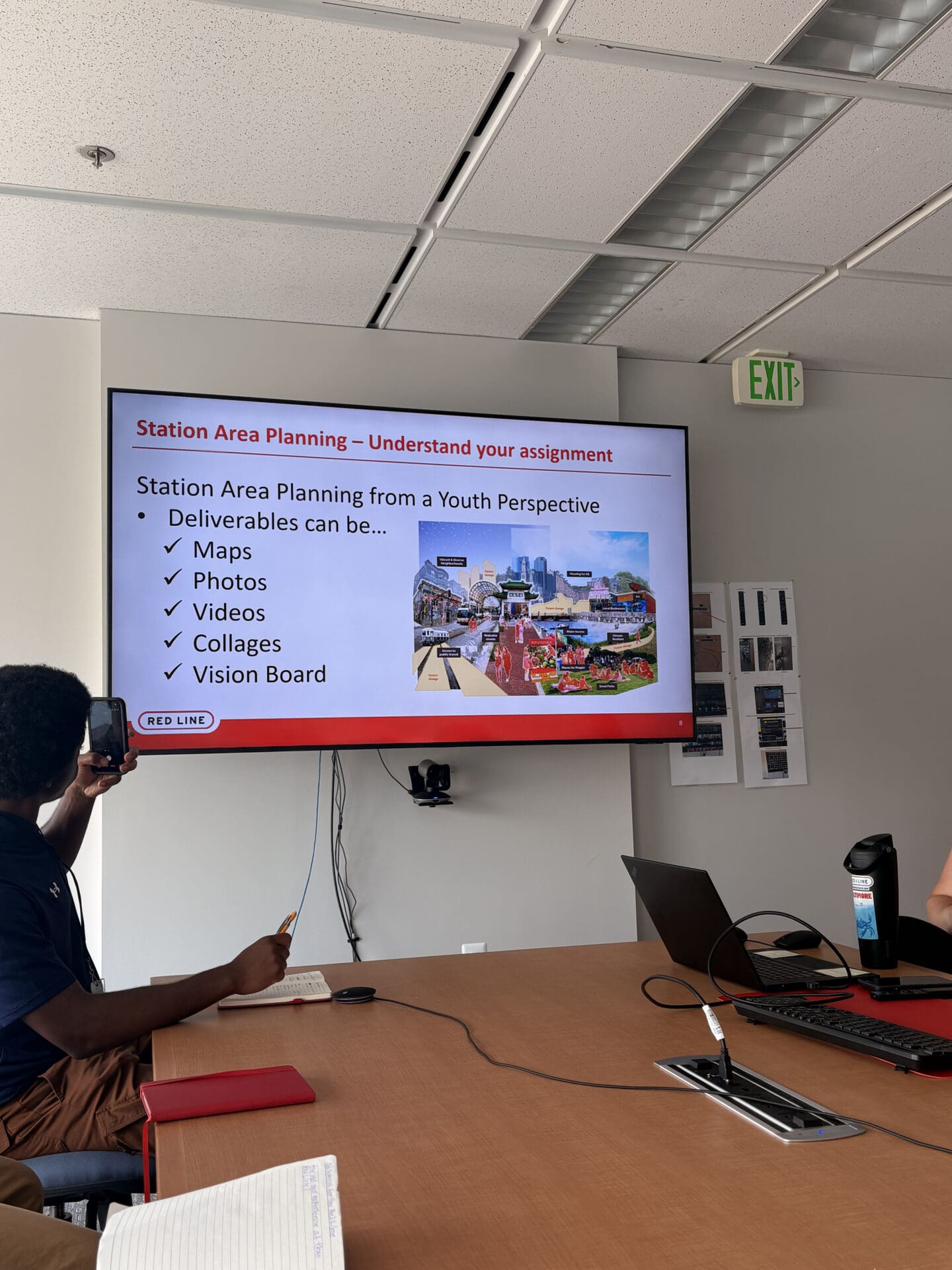
Interns have also helped translate project concepts into short videos that explain a single idea at a time in a format that better connects with their peers. These clips fit the platforms young people are actually paying attention to, and they’re easy for agencies to share on social media without requiring a long attention span or a planning vocabulary.
What Transit Projects Can Offer High Schoolers
Along the way, students pick up practical tools they can carry into any career path: team collaboration, conflict management, relationship-building in a professional setting, and how to manage money when a paycheck arrives. Concluding the capstone with a 60-minute presentation is no small task, and working through it boosts public speaking and overall confidence. Even the process of applying for the program gives students useful experience. Those who advance to the interview stage are first offered a mock interview as an opportunity to practice, then an official interview, each just 15 minutes long.
Perhaps more powerful than teaching fundamental workplace skills, the internship program gives participants a peek behind the curtain at how major transit projects move from idea to reality. Interns learn what decisions get made when, who makes them, and what tradeoffs shape the final outcome. That context is likely to foster a personal investment in the project’s success, and it equips them to bring the project back to their own circles—another way to connect the project with its significant youth rider base.
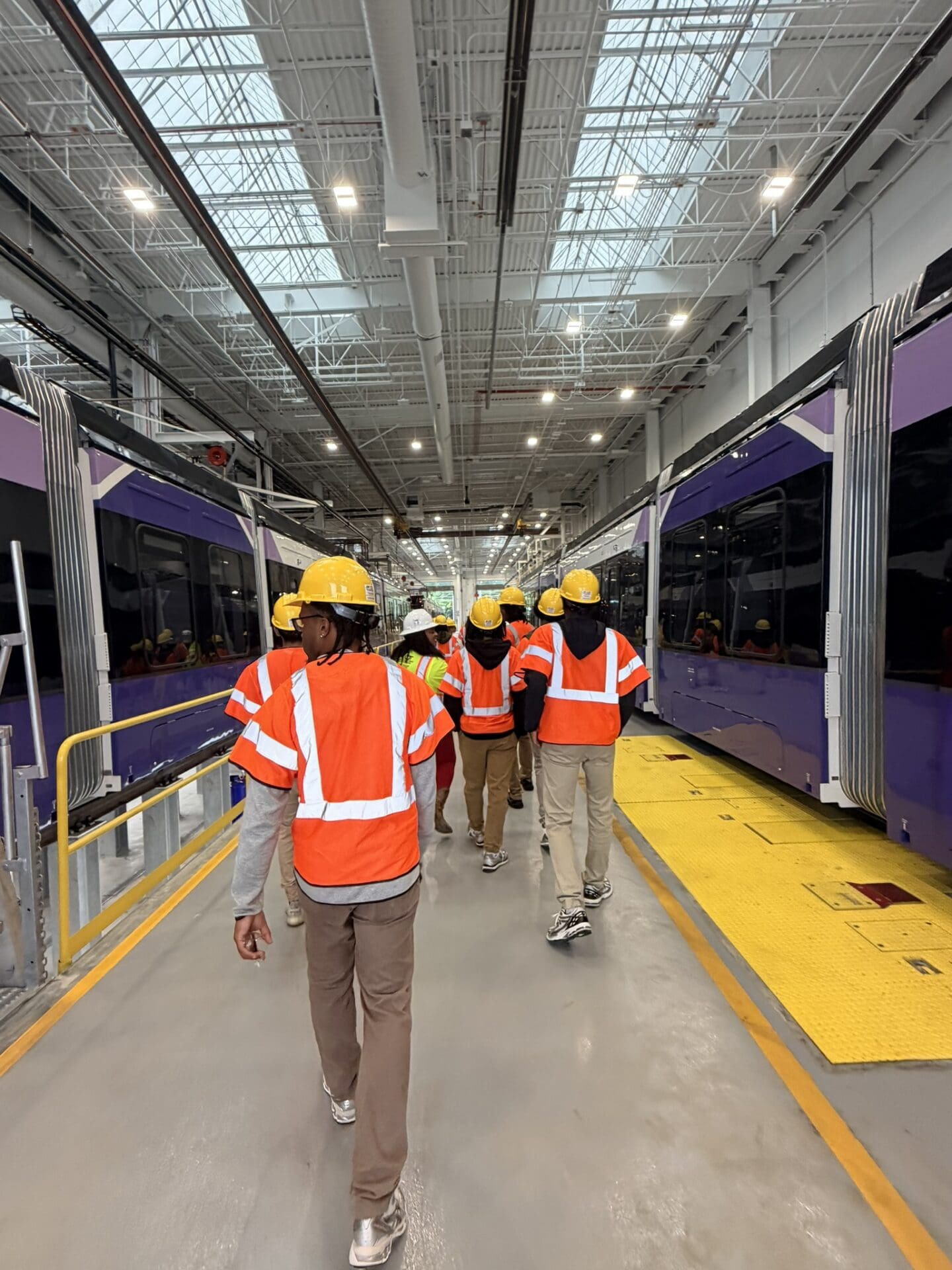
Interns take a tour of the Purple Line, a light rail line currently under construction.
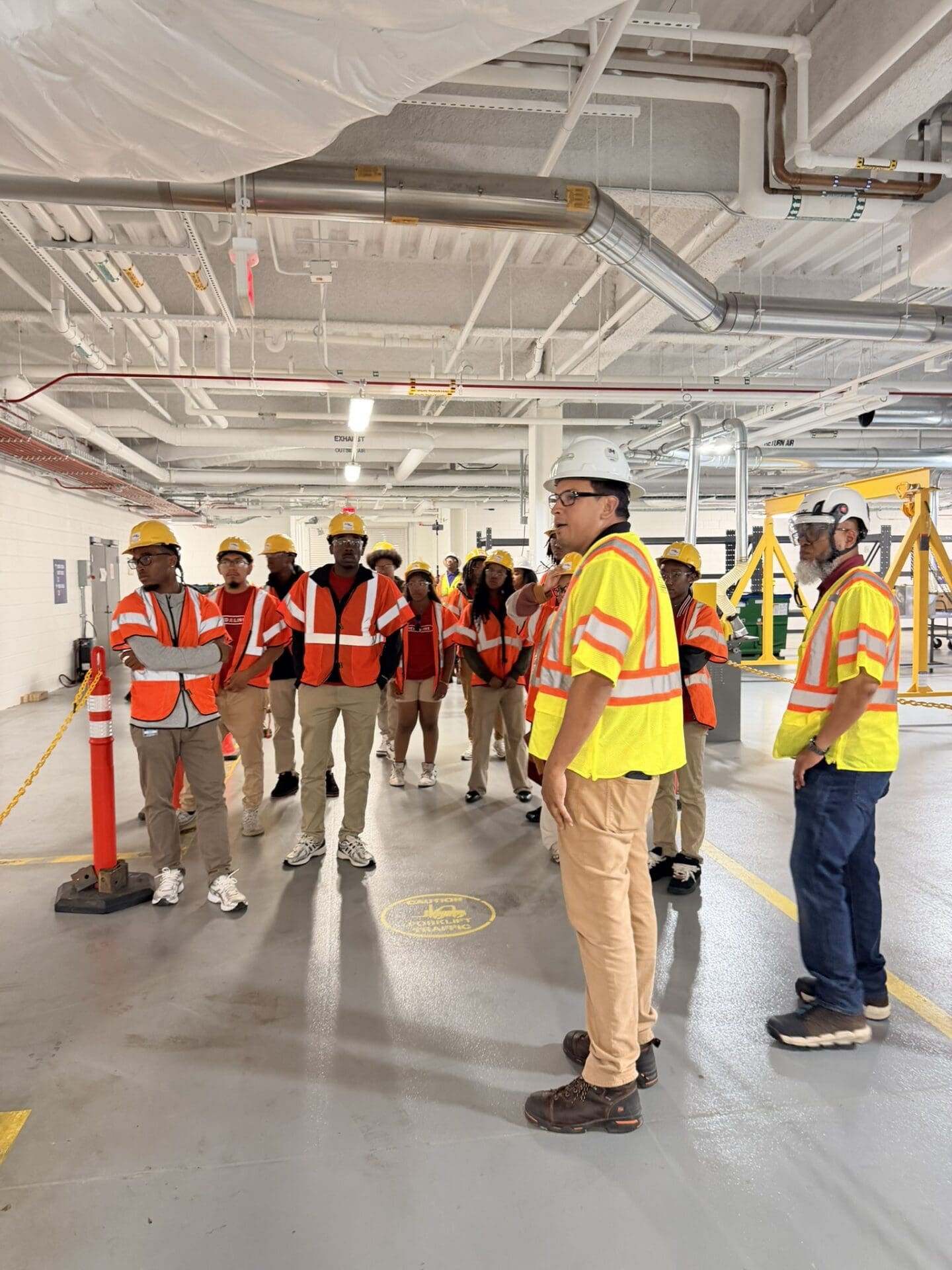
Students leave with a broader picture of transportation careers and a set of contacts cheering them on as they start piecing together their own careers. Several alumni have gone on to study transportation-adjacent fields and work in public agencies and consulting. Read on to meet two of them!
Alumni Spotlights: Anton and Lyneisha
Anton’s connection to the Red Line internship goes back to the program’s earliest years. He first interned in 2009 and returned the next summer as an intern leader, experiences that pulled him out of his comfort zone and into a professional world he hadn’t imagined for himself. He remembers the unfamiliarity of wearing dress shoes, sipping office coffee, navigating new bus routes to get to work, and spending long stretches behind a computer—and the simultaneous sense of purpose in carving a new path for himself.
“None of my friends were doing a program like that,” remembers Anton. “I learned I needed to go at my own pace and make the right decisions for me. I had to put the fear and the peer pressure aside. I learned what it meant to make myself accountable for my success.”
“I learned what it meant to make myself accountable for my success.” – Anton Christian, 2009 Red Line High School Summer Intern
Anton says the program sharpened his focus and confidence, shifting how he approached school. It prompted him to take the SAT seriously, pay closer attention to grades, and help peers find scholarships and grants. Field trips and conversations with staff exposed him to MTA roles he hadn’t known existed, expanding his view beyond the limited set of jobs he saw around him growing up. That exposure helped put him on a path to a career with the MTA Police Department. Though he says carving his own path felt at times like moving forward without direction, it’s become a source of pride as he’s visible to people from his own community on the light rail and buses. Anton is motivated to give back by encouraging students to aim high and make decisions with the long view in mind.
Lyneisha joined the program as a college assistant in 2010 and later became a program manager, continuing through 2015. At the time, she was a college junior, and the role became her first internship with a planning and engineering firm. It also became the foundation for her career, giving her early exposure to the professional world and leading to a full-time job after graduation. She now works as a community planner with HDR.
For Lyneisha, the lasting lesson was the power of early exposure. Whether students ultimately pursue transportation or another field, seeing the range of careers connected to a major project can reveal options they may not have known existed. Her advice to today’s students is, “Try everything! Even if you think you may not be interested in a field like transportation, you never know what jobs are involved, from marketing and communications to planning and policy. The more you can expose yourself to, the better.”
“Exposure to available careers can create opportunities students otherwise would not have known existed and can literally change the trajectory of a young person’s life.” – Lyneisha Jackson, 2010–2015 Red Line High School Internship Program college assistant and program manager
Anton’s and Lyneisha’s stories show what can happen when students are invited into professional settings with support and real responsibilities. As Tranell puts it, “The people they meet today may be leaders, collaborators, or mentors in the future, just in different roles. Maintaining those connections can open doors and create opportunities throughout their careers.”
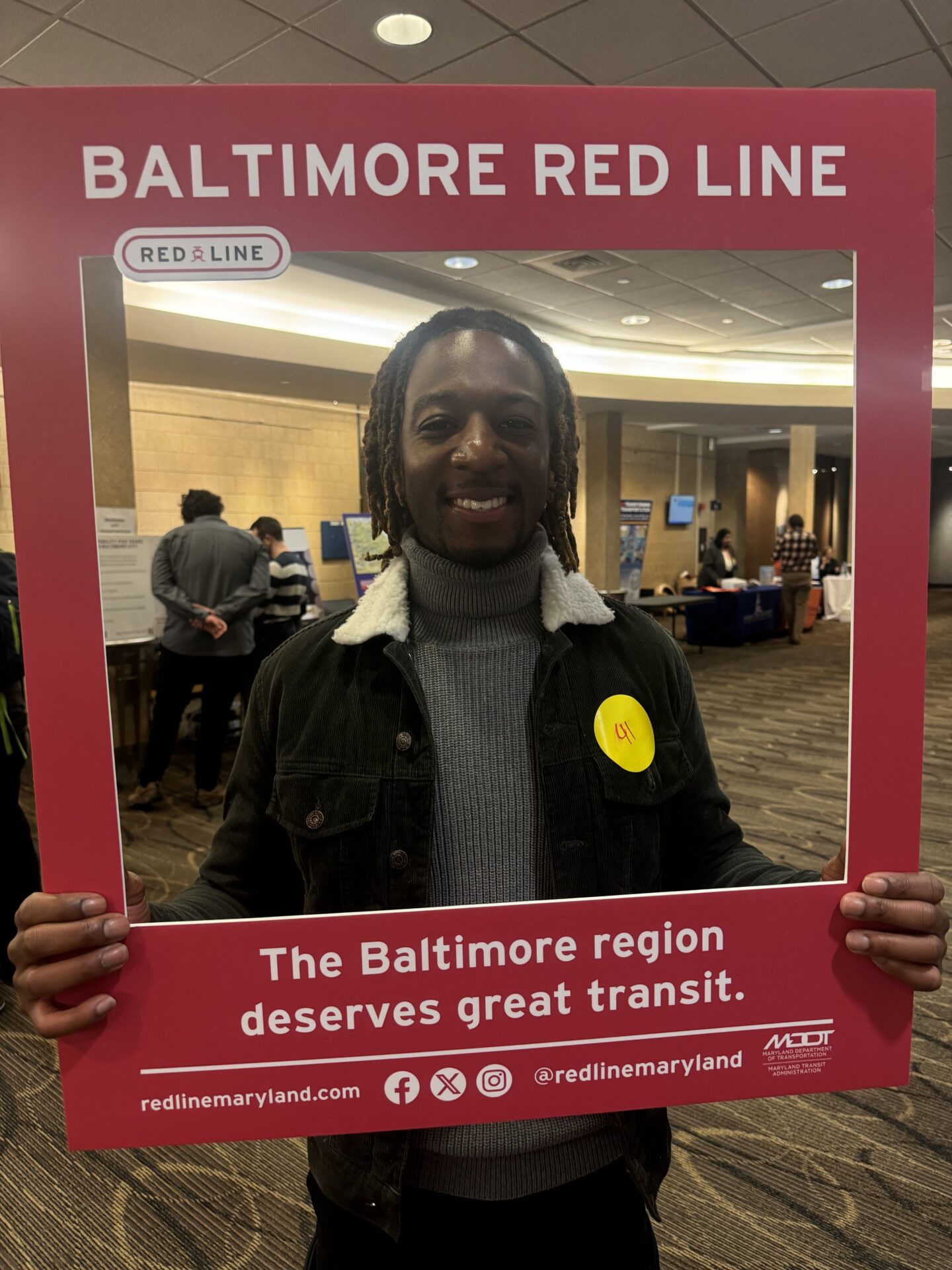
Anton at a Red Line community engagement event.
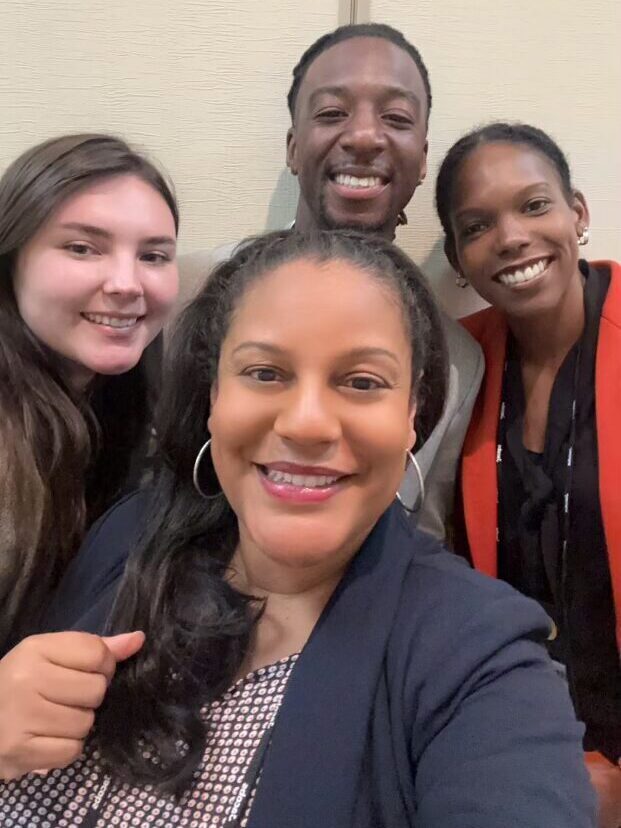
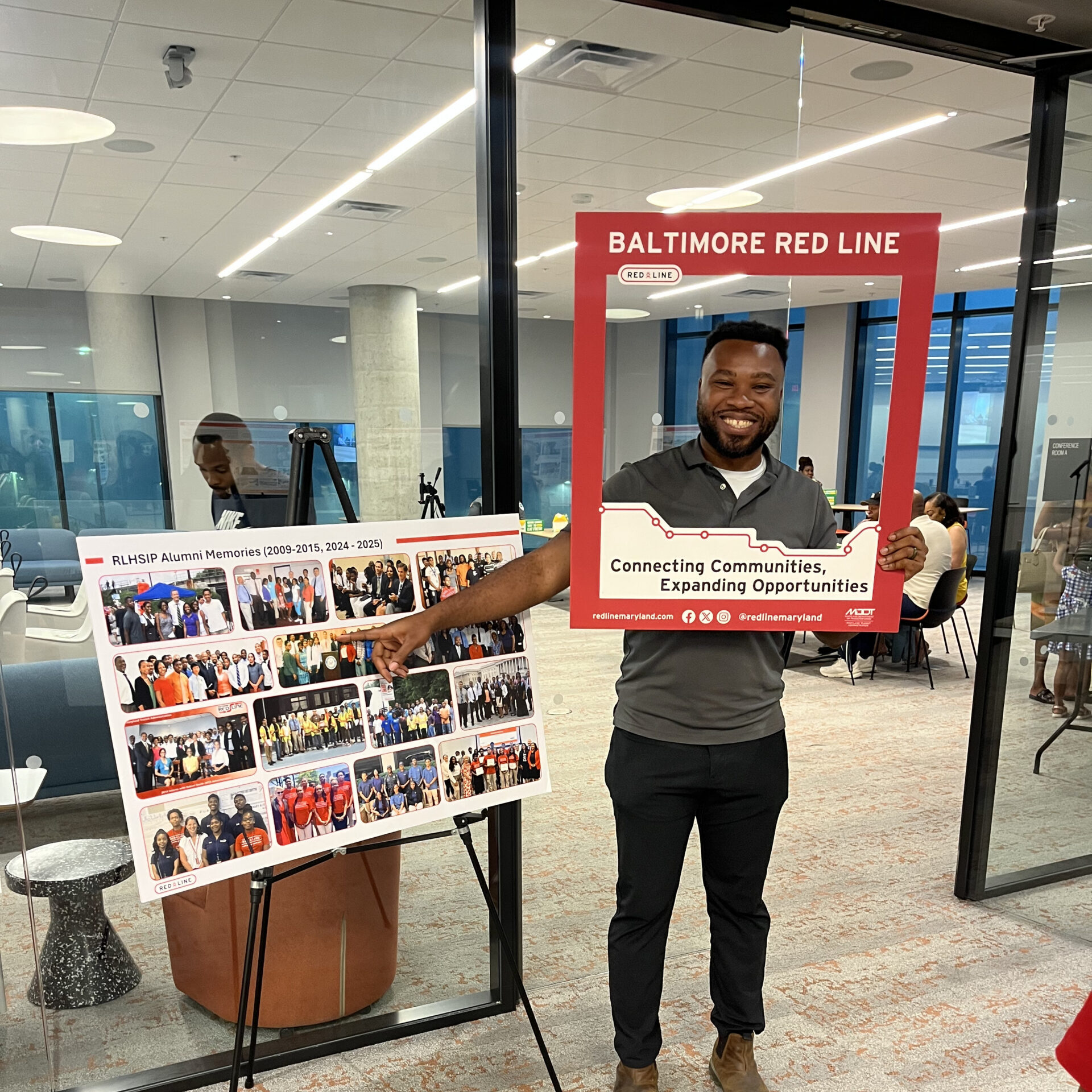
Anton and Lyneisha snap a selfie with Kittelson’s Sarah Brown and Tranell Guthrie at the 2024 Mpact Transit + Community Conference.
So, Why Is a Consultant Involved?
All of this raises a practical question: who is positioned to create a meaningful internship experience on a live capital project? It’s common to associate youth development work with schools and nonprofits. While both are essential partners, when the goal is to connect student perspectives to actual project decisions and deliverables, who hosts the program matters.
Consulting teams can be especially useful in that role because they sit close to the technical work while often having enough flexibility to shape the day-to-day learning experience. Because consultants are already translating between agencies, technical disciplines, and the public, they can design intern experiences that contribute to the project as it moves forward rather than functioning as parallel efforts. For Kittelson, serving as one of several consulting firms to host the program since its relaunch in 2024 has expanded our view of what it can mean for a transit project to benefit its community.
Through investing in community members who are usually overlooked, project teams can deliver better projects and leave behind stronger communities in the process. And the pieces that make it work are replicable on other capital projects! In our case, the working relationship between MTA and its consultant teams gives interns access to agency leadership, subject matter experts, and the broader project team while keeping much of the administrative lift off the agency. Partnerships with local schools are equally essential, since school staff help identify and recommend students who are ready for the commitment.
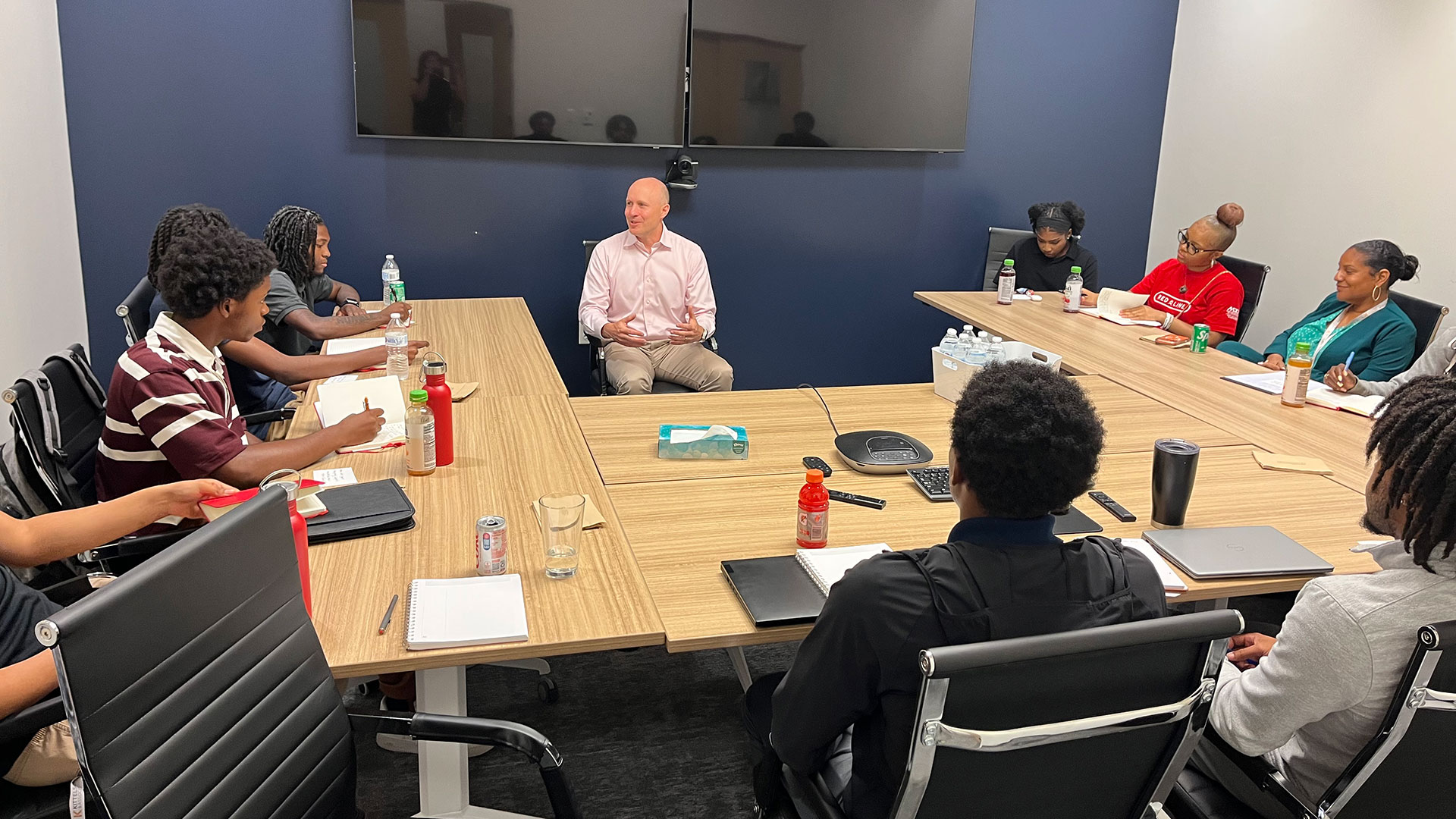
2026 interns meet with Kittelson CEO Brandon Nevers.
Investing in People As Well As Infrastructure
Back to our opening question: how would you feel about having high school students on your project team?
If your first reaction is “hmm,” you’re not alone. But based on our experience supporting the Red Line high school internship program the past few years, we’d suggest that reaction is less about capability and more about habit. Our field has built strong norms for engaging adult stakeholders; we have fewer norms for engaging the young riders who often depend on transit most and will live with today’s decisions the longest.
Our field has built strong norms for engaging adult stakeholders; we have fewer norms for engaging the young riders who often depend on transit most and will live with today’s decisions the longest.
Programs like the Red Line high school internship program offer a practical way to close the transit project age gap. They create a structured, ongoing channel for youth perspectives while also investing in students’ confidence, skills, and career horizons. When we invest in people as we move through projects, we don’t just build better projects. We help build the future teams, riders, and leaders those projects are meant to serve.