
August 26, 2026

In an era of more digital distractions, many parents want their kids outside and active more than ever. Once upon a time, kids had a reliable reason to go outside in the form of the bikeable or walkable school commute. But a sobering statistic found that, across the last 40 years, the share of American children between the ages of 5 and 14 who walked or biked to school experienced a 73% decline, going from 48% of children in 1969 to only 13% of children in 2009.
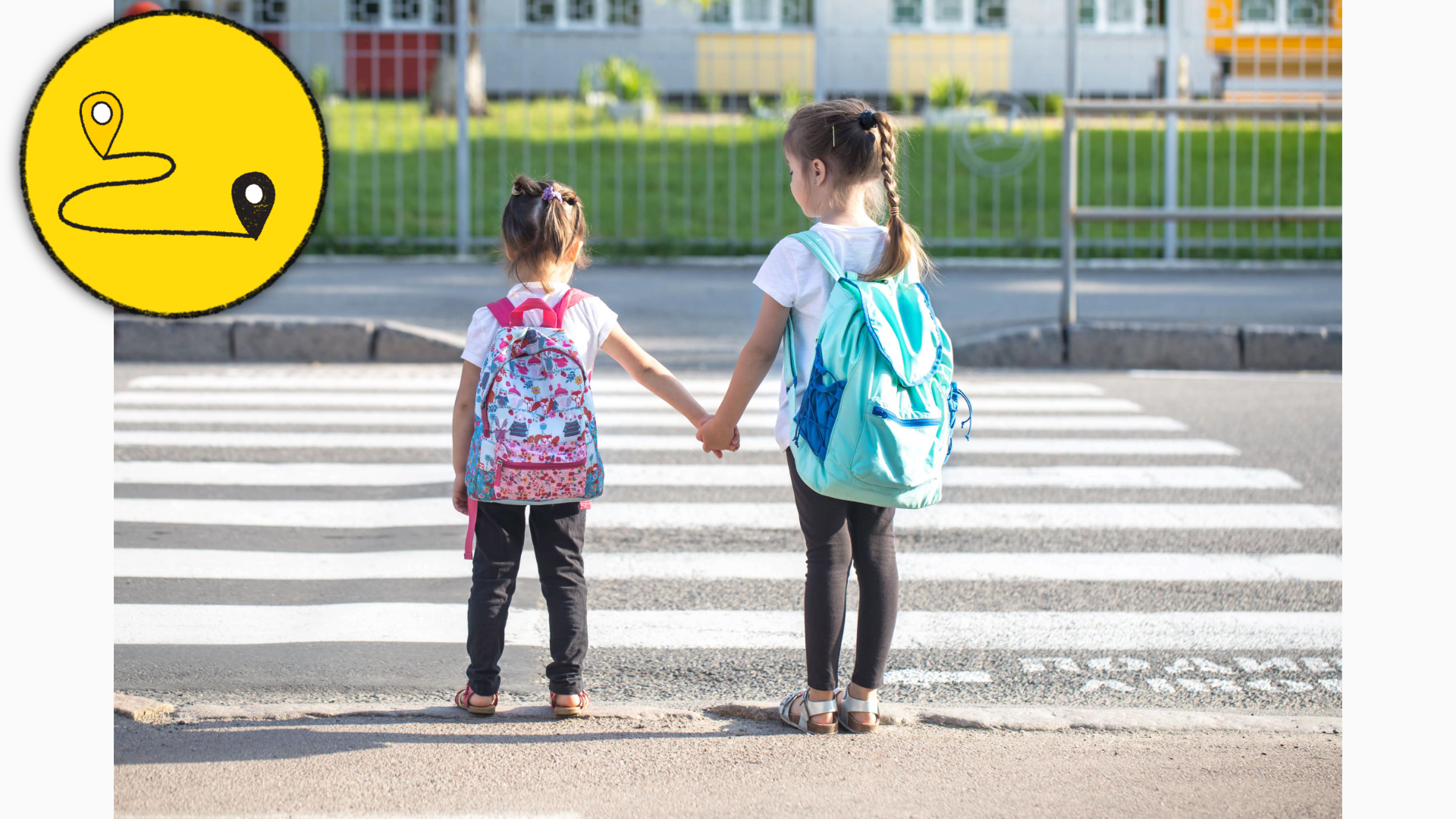
Children have overwhelmingly stopped walking or biking themselves to school. This is more important than simply losing a way of life. When kids lose the ability and capacity to travel independently, they lose opportunities to practice decision-making, form healthy habits, and socialize with one another. Photo: Adobe Stock
Safe Routes to School (SRTS), an international movement to make it safe, easy, and convenient for kids to walk and bike to school, has emerged as a cultural response to this decline. Like many concepts on the transportation vanguard, SRTS is Scandinavian in its origins (Denmark) and extends all the way back to the 1970s, although it didn’t make it stateside until 1997. In 2000, using National Highway Traffic Safety Administration funds, Congress funded the first SRTS pilot projects. One of these projects was an educational initiative in Marin County, CA. In addition to improvements to the built environment and community rallies, this project involved extensive outreach and education efforts, including an SRTS instructor who visited schools to provide students with safety training. The successes of these pilots ultimately led to the creation of a federal SRTS program in 2005.
School campuses enjoy primacy in the conversation about childhood roadway safety because of the orbital pull they exert over children themselves: not every student goes to the same afterschool extracurricular, or the same park, or the same neighborhood, but nearly every child goes to a school in their community. It is from those community schools that nearly every child goes on to their myriad activities. In other words, schools are community hubs where efforts to improve infrastructure or education will reach a critical mass of children. But it’s not simply that schools are the physical nexus of so much of children’s daily travel that give them such an important role in youth roadway safety: these institutions also play an important role in shaping what young minds will prioritize for the rest of their lives, including, if foregrounded, the concept of roadway safety and active transportation habits.
And these are worthwhile concepts: embedding them into a child’s routine early can lead to better long-term academic performance, mental and physical health outcomes, and social development. When cultivated on a widescale, active transportation habits can also improve community environmental sustainability.
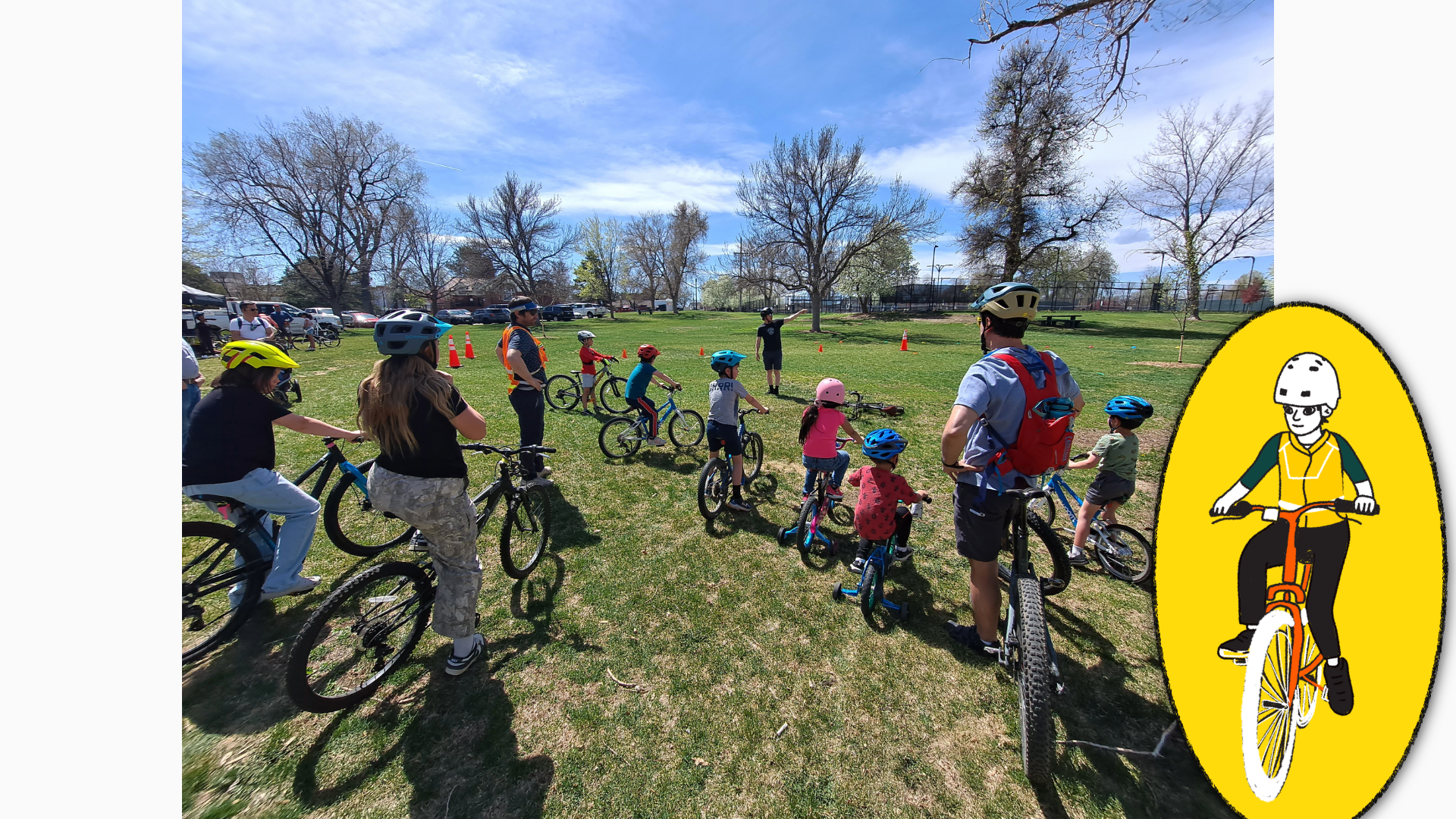
A group of kids saddle up for a bicycle rodeo: an event designed to teach safe bike behaviors. Photo: Jenn Superka
Yet despite the obvious benefits of using school curriculum to teach kids about roadway safety and the different ways to commute, schools are too often left out of the transportation safety conversation. The reality is that, for so many understandable reasons, activating schools to prioritize SRTS on their campuses is difficult. Schools often operate on tight budgets, leaving 94% of educators to use their own money to equip their classrooms with supplies and putting even more pressure on already overburdened and undercompensated staff. Campuses must also strike a balance between accessibility and security amidst growing safety concerns. Because of these challenges facing the American educational system, schools often don’t have the bandwidth to take on yet an additional labor of teaching kids how to navigate their communities safely.
To understand how transportation professionals can help fill this gap, we interviewed two people who dedicate their time and energy to integrating schools into the transportation safety conversation. Today, we’ll go over some of the key insights from this dialogue about how to form and nourish partnerships with schools. We hope the following tips will give you some inspiration to tackle what is, as one of our guest contributors refers to it, “the school partnership puzzle.”
Approaching Schools from Different Directions with the Same Goal: Dave Cowan and Jenn Superka
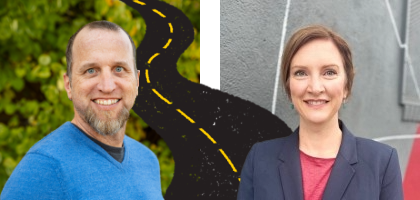
Dave Cowan, left, courtesy of SRTS Partnerships; Jenn Superka, right, courtesy of the individual.
First, some introductions are in order. Dave Cowan has spent his career growing school participation in the SRTS movement, working, among other positions, on the education team at Bicycle Colorado, as the SRTS State Coordinator at Minnesota Department of Transportation, and now as the Deputy Director of Safe Routes Partnership, where he focuses on projects that make SRTS concepts, policies, and initiatives more accessible to communities throughout the country. Since 2021 alone, Safe Routes Partnership has worked with Congress to increase SRTS funding by 60%. Meanwhile, Jenn Superka tackles the issue from the other end of the scale, working locally to build relationships with schools in Northwest Denver as one of the City of Denver’s Safe Routes Advocates.
Both Dave and Jenn are driven by an unshakeable belief that the impact of giving families safe routes to walk or bike to school goes beyond the inherent benefit of having options: they believe that having modal choice that feels durable and systemic fundamentally transforms how people engage with their communities and their personal relationships. They also agree that the work isn’t easy and that encouraging change at schools is often the hardest part.
While Dave and Jenn emphasized the importance of a holistic approach, they also made it clear that success in relationship-building with schools has to be as personal as the outcome itself: with the human-first qualities of empathy, curiosity, and care.
On the Ground: Keep Showing Up
In a May webinar hosted through the Safe Routes Partnership, Jenn walked attendees through the approach she uses to build relationships with schools. Her initial overture is often a simple e-mail to a school principal or administrator. The key word here is “simple”: Jenn emphasizes the importance of keeping the correspondence brief, and, as she puts it, of “putting an offer in the ask.” Although you’re asking the school to dedicate precious time to meeting and working with you, you’re hoping your collaborations will make the types of positive impacts that superintendents and local communities crave: higher student academic performance, reduced truancy, and better mental and physical health.
But because many of the schools she works with are historically disadvantaged and under-resourced, these initial contacts are often lost in the shuffle. This is a sad irony that often thwarts SRTS efforts: the schools who are most in need of dedicated SRTS programming and resources are the least equipped to take advantage of them.
Jenn makes headway in the face of this irony by grounding her approach in consistency. While she supports following up an email with a call, or messaging a PTA leader, or connecting to school staff via LinkedIn, she’s found that the best way to make inroads with overburdened school officials is to make herself consistently visible. The best way to make herself visible? By making organic, valuable contributions to the school’s environment.
You don’t need to have a child enrolled at the school in question (or a child at all) to do this; all you need is access to a school’s calendar. Jenn monitors the calendars of the schools within her district for events she feels she could make a legitimate contribution to: in one instance, this meant volunteering to help with a bicycle giveaway event at a hard-to-reach elementary school. She used this event as an opportunity to demonstrate her value as a network and community-builder to the school, assisting PTA members and volunteers to assemble bikes and fit kids with their bikes. She used her time at the event to learn from school officials what problems the student body was facing. From an interaction with the school’s PE teacher, she learned that many of the kids who were being fitted for bikes had never been given any instruction on how to ride them. From this conversation, Jenn connected the PE teacher with contacts from the city’s Parks and Rec department who could offer instructional programming. She also enlisted the teacher into the Teacher Champion program which offers teachers a stipend to include bicycle safety in their classroom instruction.
Ultimately, becoming a familiar face at the schools in her district is always Jenn’s goal. The surest way she’s found to do this is by continuing to show up, using her appearances to learn about a school’s challenges, and then demonstrating her usefulness to a school by offering them resources and support.
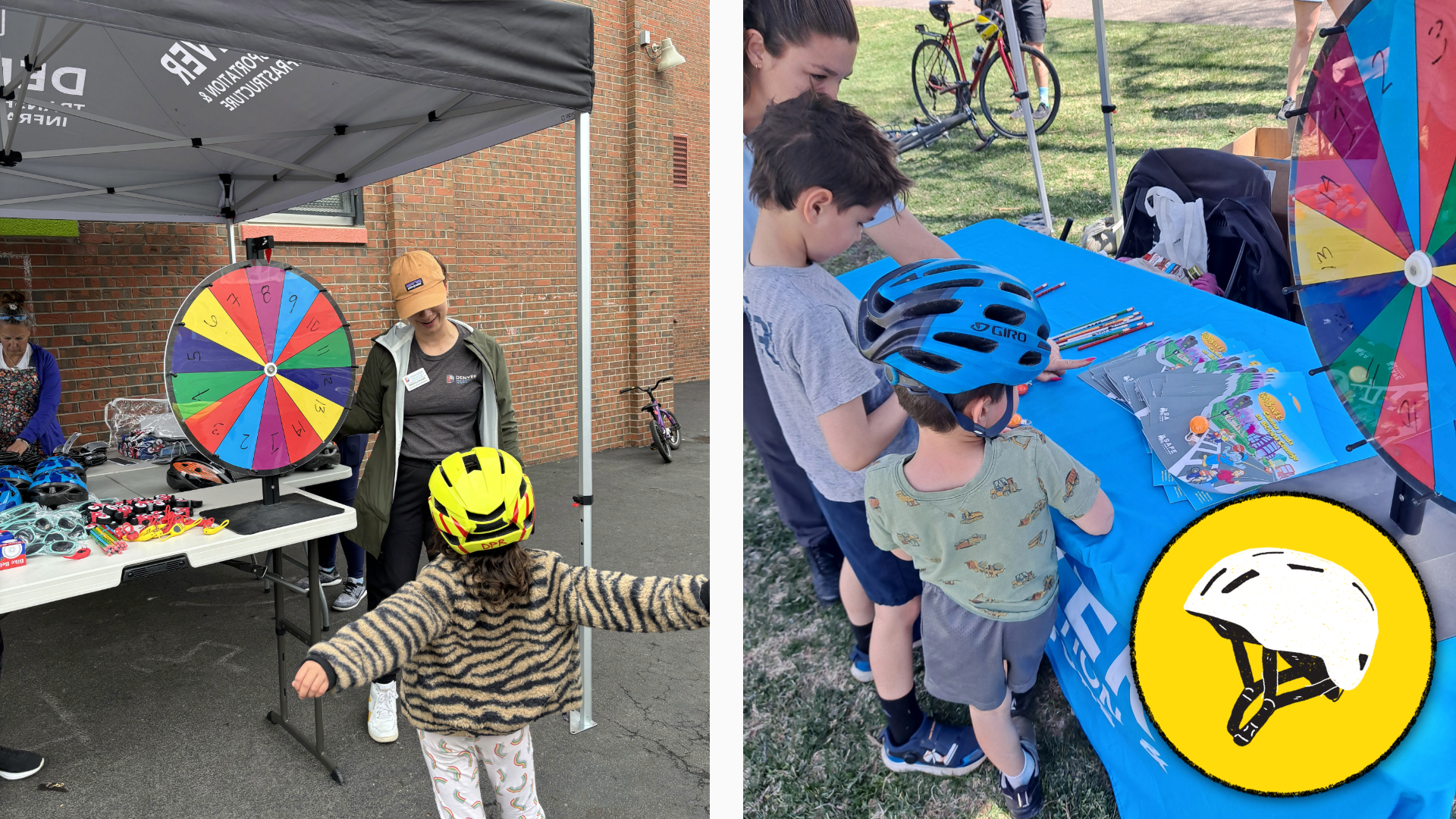
It often takes time to make inroads with schools. The most reliable route to success is finding ways to fit organically into school community events. Photos: Jenn Superka
If you don’t see an upcoming event that feels natural for you to participate in, consider other touchpoints offered by schools to engage with the wider community. These can include gatherings like:
- PTA/PTO meetings
- Coffee with the principal
- Back-to-school nights
- After-school program meetings
- School arrivals and dismissals
- School carnivals/festivals
- Field days
Remember that your goal during these early points of contact is to build relationships with schools that are grounded in trust. Even if you haven’t yet been able to form a connection with a school official, don’t show up to campus as a stranger. During your visit, always first make your presence known to the school administration, wear a nametag that explains your professional affiliation and topic-specific clothing (like a high-viz vest), and bring SRTS literature with you.
When an Advocate Isn’t Immediately Apparent
Over and over again, Dave and Jenn emphasized the importance of having a champion who’s dedicated to building relationships with schools by using the types of on-the-ground tactics described above. Remember those first SRTS pilot projects funded by Congress in 2000? Those happened in large part because an advocate, Deb Hubsmith, brought sustained attention to the issue.
Having a champion concentrates the work of SRTS; that champion is the contemporary equivalent of the figure from that first Marin County SRTS pilot program, who went around to various schools educating children in transportation safety. Now, these individuals help align projects with school priorities and decisions, sustain initiative momentum, coordinate across departments, and advocate for implementation over time. They’re essential for the long-term health of area SRTS programs, because they seek ways to expand the resources available to the program, making communication easier and growing engagement with the program.
But the need for a champion returns us to the most important irony plaguing SRTS work: the schools who would benefit most from SRTS-focused initiatives are often the least likely to have a champion like this in their corner. In well-resourced communities, it’s often easier for a champion to emerge for several reasons: a wealthier municipality may have the funds to hire an SRTS coordinator; a parent may be more able to donate their time compared to members of less-resourced or historically disadvantaged communities. Under-resourced schools also have often experienced histories of neglect from their local government that leaves them disincentivized from joining into city initiatives that might produce a champion. One of the schools Jenn approached expressed their reluctance after several city transportation projects sought input from their school community but then seemed to ignore their contributions. If left undisturbed, these barriers create a dynamic that naturally widens the safety and access gaps between wealthy and lower-income communities over time.
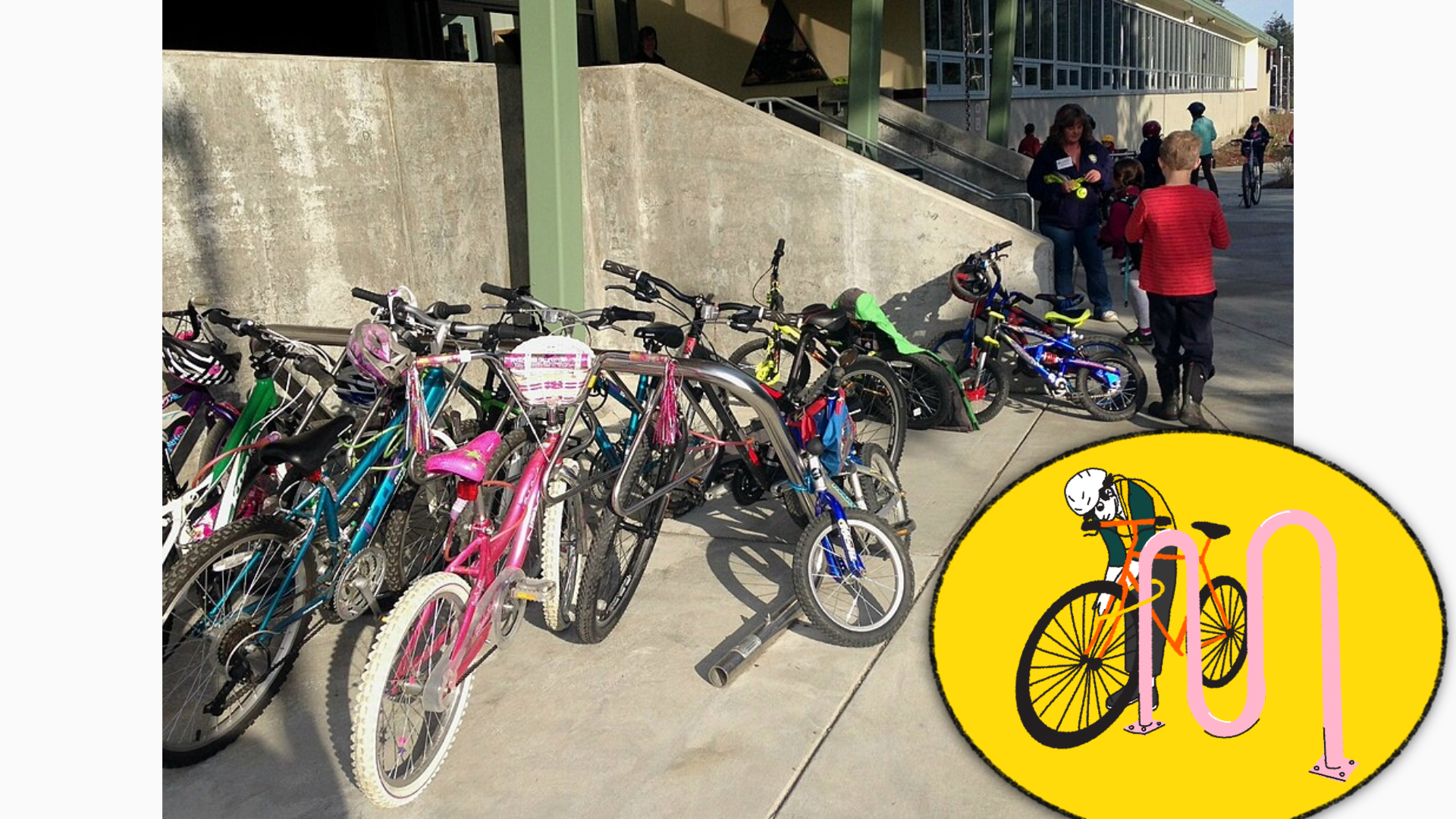
Some schools – like Gastineau Elementary, in Juneau, Alaska – might already have substantial support for active transportation habits, like their Bike to School Day. But other schools might not. These schools are often the ones most in need of SRTS support. Photo: Wikimedia Commons
Both Dave and Jenn agree that the simplest and most effective way to break out of this dynamic is to pay individuals to perform SRTS work at equity-needs schools. An SRTS champion can root their work in passion, but at the end of the day, it’s still work. But what if there’s no obvious way for a school district, or to any single municipality department, to compensate an individual in exchange for doing the work of a champion?
From Above: Create Materials That Incentivize Schools to Integrate Walking and Biking into Their Campuses
The presence of an SRTS champion is critical when it comes to encouraging schools to take walking and biking seriously, but it’s not the whole equation. Municipal and state authorities can make it easier for schools to want to work with their champions by offering incentives to schools who promote active transportation.
Dave’s work as Deputy Director of the Safe Routes Partnership has been all about identifying these incentives and encouraging local and state governments to leverage them. The Safe Routes Partnership’s Local Policy Guide contains a multitude of opportunities for policy change at the local level, including policies that work on the school district level. For superintendents who want a dedicated tool in figuring out which policies can help their district get friendlier to people walking and biking, look no further than the School District Policy Workbook.
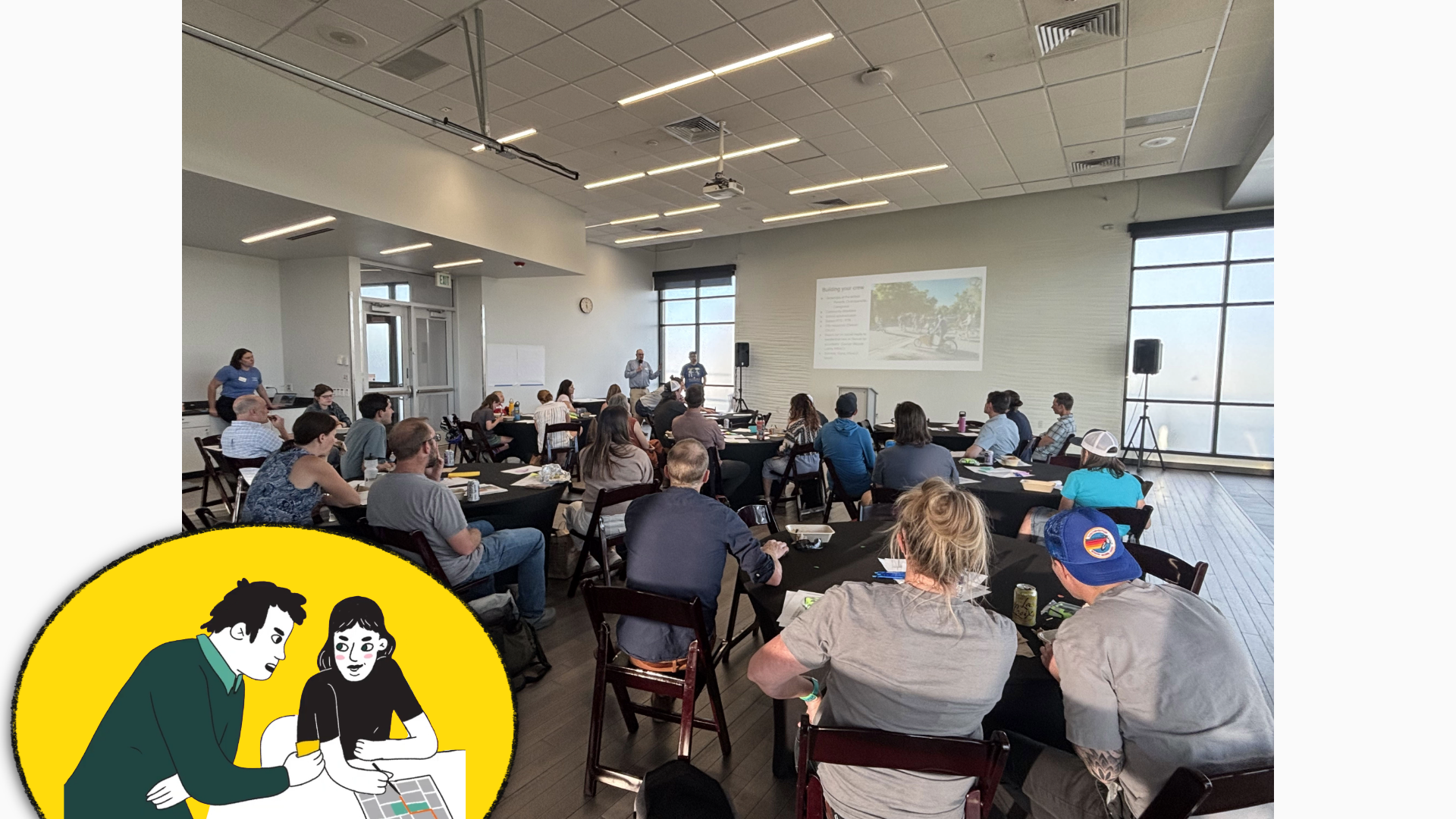
Getting kids excited about transportation requires adults, too. Without grownups working together to establish policies that incentivize schools to prioritize transportation safety and champions to come forward from communities, it’s tough to create meaningful culture shift. Photo: Jenn Superka
The Safe Routes Partnership has also created materials with which interested parties can advocate for their state governments to take a more involved role in promoting walking and biking. Every other year the nonprofit puts together a set of report cards that rank states on their walk/bike-friendly policies and funding commitments. Per the Safe Routes Partnership site, “These report cards provide a snapshot of where states are making progress, where gaps remain, and where there are opportunities to further support walking, biking, rolling, and Safe Routes to School. They are intended to support learning and encourage community conversations about how to best support walking, biking, and rolling.”
The report cards evaluate states based on 26 different indicators organized into four categories:
- Complete Streets and active transportation policy and planning
- Federal and state active transportation funding
- SRTS funding and supportive practices
- Active neighborhoods and schools
You can see how your state ranked in the newly released 2026 report cards.
Create Policies That Embrace Grassroots Efforts
Local governments especially have an important role to play in fostering SRTS champions. Even if it might not always be the case that a municipality can provide the schools in its district with an SRTS champion, it can take steps to make sure a champion from the community feels supported when they step forward. Twenty years ago, Denver had its first dedicated SRTS advocate come forward from the community when a nurse troubled by a proliferation of brain injuries from lack of helmet use began looking for ways to spread transportation safety best practices. She was successful because there was a grant ecosystem in place that helped her to fund several demonstration events that taught bicycle safety to community kids.
Today, microgrants continue to support ground-level active transportation safety efforts in Denver. The Denver Office of Transportation and Infrastructure (the same office that oversees SRTS Coordinators like Jenn), in collaboration with the Denver Community Active Living Coalition, offer residents the chance to apply for grants from $500 to $2,000 to realize their ideas to support safe and active transportation in their communities.
Programs like this are a great start when it comes to encouraging community members to take initiative, but they’re even more impactful when there’s a champion who can parlay the energy established by a one-time event into an ongoing, continuous program of biking and walking safety education.
Expect—and Celebrate—Little Steps
The school partnership puzzle is intricate and difficult to solve. As our conversation with Jenn and Dave impressed upon us, it’s essential to support schools from two directions: on the ground and from above. While many SRTS practitioners may feel powerless to drive change at the decision-making (and funding) levels, their grassroots efforts can have an impact: when the community is talking about SRTS and is excited about building support around safe and active transportation for kids, those conversations tend to influence action. SRTS personnel play a key role in fostering that energy and offering their communities small wins that lead to big impact.
Jenn and Dave had one parting piece of advice: remember, in the process of building a relationship with a school, all progress is progress. In a moment where schools have to process many difficult questions and shortages, SRTS demonstrations and relationships can offer them small wins—but first you have to get your foot in the door.
Special thanks to Dave Cowan and Jenn Superka for their participation in this article. For more information on Safe Routes Partnership, find their website here.